
Forbidden City (Palace Museum)
The Forbidden City in Beijing is a vast imperial palace complex from the Ming and Qing eras, now the Palace Museum and a UNESCO World Heritage Site, celebrated for its architecture, layout, and cultural collections.
The Forbidden City, commonly known today as the Palace Museum, is the large imperial palace complex at the heart of Beijing. Constructed in the early 15th century under the Ming dynasty, it served as the principal residence and administrative center for emperors through the end of the Qing dynasty. The site is now a public museum and a UNESCO World Heritage Site, recognized for its historical importance and architectural integrity; more information about that designation is available through official heritage sources at UNESCO.
Image gallery
10 Images
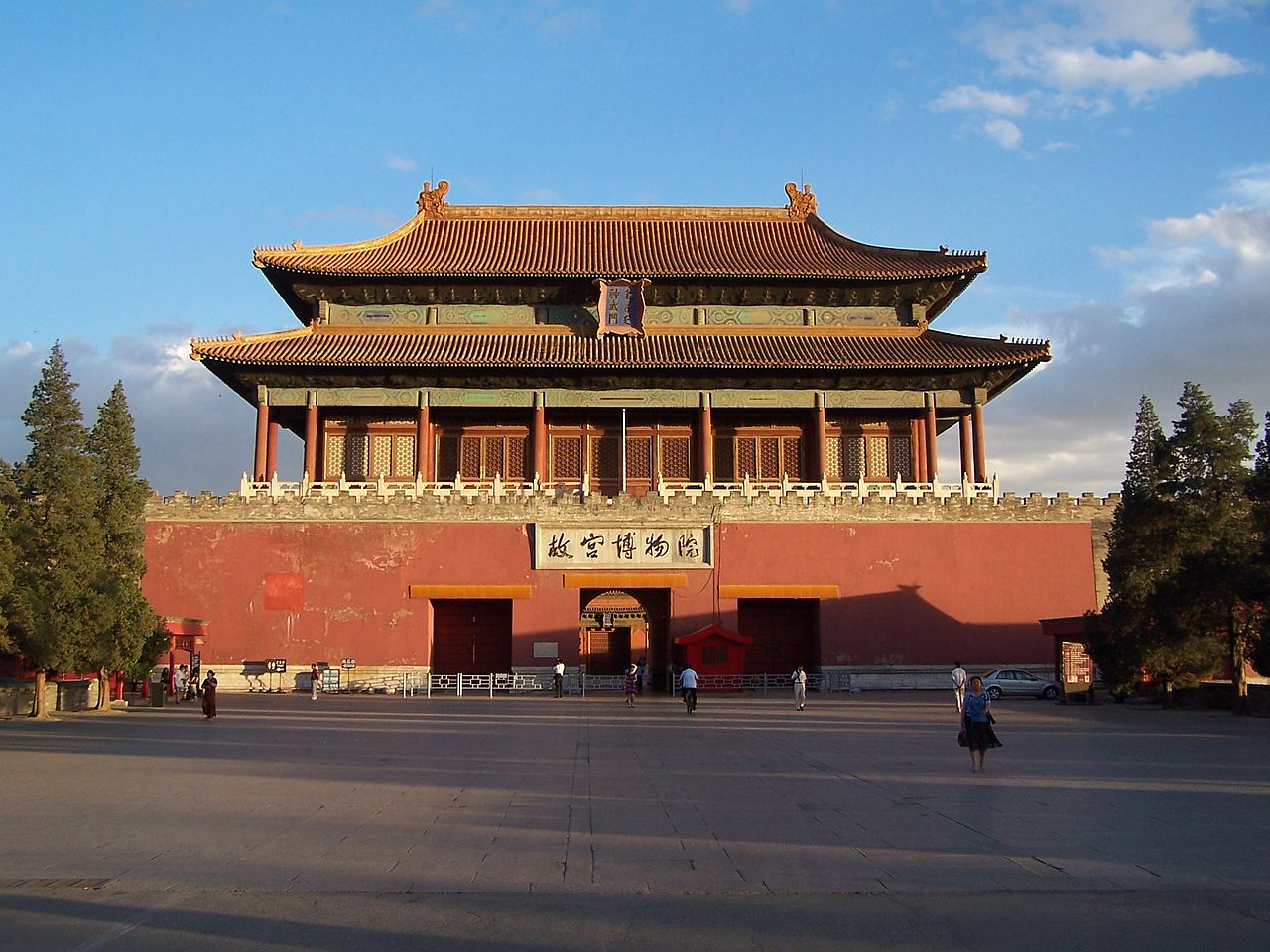


Layout and architectural features
The complex follows a strict north–south axis and traditional Chinese planning principles. It is generally divided into an Outer Court, where major ceremonies were held, and an Inner Court, the private living quarters of the imperial family. Principal structures include the Gate of Heavenly Peace (Tiananmen), the Meridian Gate, and the sequence of three great ceremonial halls: the Hall of Supreme Harmony, the Hall of Central Harmony, and the Hall of Preserving Harmony. The compound contains hundreds of surviving buildings and thousands of rooms arranged on a raised platform, with courtyards, gates, pavilions, and decorative rooflines that exemplify classical Chinese palace architecture.
History and development
Construction began during the reign of the Yongle Emperor in the early 1400s and was completed within a few decades. For nearly five centuries the Forbidden City functioned as the political and ritual heart of imperial China, witnessing dynastic change, court life, and major historical events. After the 1911 revolution ended imperial rule, the palace ceased to be a sovereign residence; its collections and buildings were gradually transformed into a public institution. The Palace Museum was established to manage and display the imperial collections and to conserve the historic fabric.
Collection, uses, and cultural significance
Today the Palace Museum holds extensive holdings of imperial art, ceramics, paintings, bronzes, textiles, and objects used in court rites. These collections illustrate the tastes, technologies, and ceremonial life of the Ming and Qing courts, and contribute to scholarship in Chinese art history. The site also functions as a major tourist attraction, an educational resource, and a focus for cultural preservation efforts; online and institutional resources can be consulted via the museum and related pages such as the Palace Museum site and its galleries listed at art and museum portals.
Notable facts and distinctions
- The name "Forbidden City" reflects the restricted access that characterized the imperial residence: ordinary people were generally barred from entry without permission.
- Its plan and ornamentation exemplify hierarchical symbolism in imperial architecture, with color, roof type, and placement conveying rank and function.
- Conservation and restoration are ongoing efforts, balancing visitor access with preservation of fragile structures and artifacts; scholarly and conservation publications often reference the site as a primary case study.
Visitors and researchers approach the Forbidden City both as a physical place and as a cultural archive. Its scale, continuity of use, and surviving collections make it a central reference for understanding imperial China, ceremonial architecture, and the historical development of the Chinese state. For practical visitor information and official descriptions, refer to museum and regional resources such as the Palace Museum entry and regional guides at China-related resources.
Related articles
Author
AlegsaOnline.com Forbidden City (Palace Museum) Leandro Alegsa
URL: https://en.alegsaonline.com/art/35535
Sources
- chinanews.com : 故宫2017年接待观众逾1699万人次 创历史新纪录
- chinahighlights.com : "The Layout of the Imperial Palace"
- doi.org : 10.1007/bf00174975