
Flag of the People's Republic of China
The Five-star Red Flag is the national flag of the PRC: a red field with one large and four smaller yellow stars symbolizing the party and united social groups; adopted in 1949 and regulated by national law.
Overview
The national flag of the People's Republic of China, commonly called the Five-star Red Flag, consists of a red background bearing one large gold (yellow) star and four smaller gold stars arranged to its right in an arc. The design is widely used as the principal emblem of the state and appears on government buildings, official documents and at national ceremonies.
Image gallery
10 Images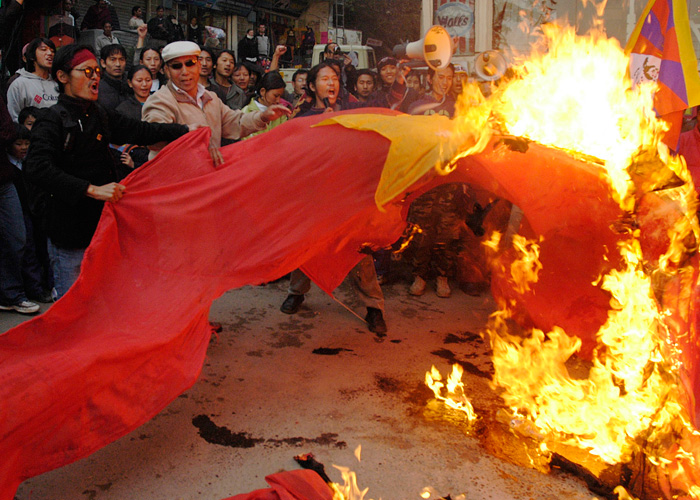


Symbolism and design elements
The elements of the flag carry defined symbolic meanings. The red field traditionally represents revolution and the blood shed in the struggle to found the republic. The single larger star symbolizes the leadership of the Communist Party, while the four smaller stars represent major social groups that the party sought to unite: the workers, the peasants, and other social strata such as the middle classes and soldiers in some descriptions. The stars are set in gold to stand out against the red and to suggest brightness and unity.
History and adoption
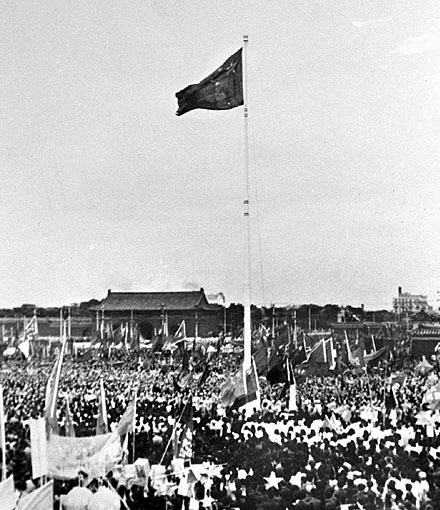
The flag design was chosen after a national public competition in 1949. The final proposal came from a designer who combined political symbolism with a simple, reproducible form; it was adopted by the new government shortly before the proclamation of the PRC. The flag made its first official appearance at state events marking the founding of the People's Republic on October 1, 1949. Its visual language draws on long-standing revolutionary and national themes in modern Chinaan history and continues to be an important national emblem in the present.
Uses, protocol and regulation
Use of the national flag is governed by law and official rules that set out where and when the flag must be flown, how it is raised and lowered, and standards for manufacture and display. The flag is displayed at national holidays and official ceremonies; ceremonial flag-raising at major public squares has become a daily or special event in some cities. The national legal framework also addresses respectful treatment of the flag and penalties for deliberate desecration, reflecting its role as a symbol of state authority and collective memory.
Variants, related flags and notable facts
- The state flag coexists with other official banners and emblems used by regional administrations, the military and diplomatic missions.
- Detailed technical specifications for proportions, star sizes and placement are available in national standards to ensure consistent reproduction.
- The flag's story is often presented alongside the broader narrative of the country's revolutionary history and post‑1949 development.
Because of its clear iconography and regulated use, the Five-star Red Flag remains an immediately recognizable national symbol both inside and outside the country, evoking history, political authority and popular identity in multiple contexts.
Related articles
Author
AlegsaOnline.com Flag of the People's Republic of China Leandro Alegsa
URL: https://en.alegsaonline.com/art/34934