
Flag of India (National Flag of the Republic of India)
Tricolor national flag of India featuring horizontal bands of saffron, white and green with a navy blue 24-spoke Ashoka Chakra; its design, symbolism, history and official protocols.
Overview
The national flag of the Republic of India, commonly called the Tiranga (meaning "tricolour"), consists of three horizontal bands of different colours with a wheel at its centre. The bands are arranged saffron at the top, white in the middle and green at the bottom. A navy blue wheel with 24 spokes, known as the Ashoka Chakra, appears in the centre of the white band. The flag is a widely recognised emblem of the Indian nation and is used for civil, state and military purposes during official ceremonies and national observances.
Image gallery
10 Images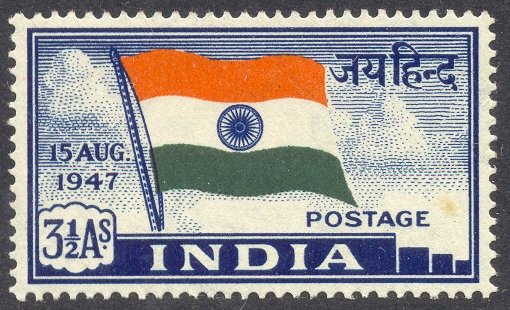





Design and symbolism
The three colours convey distinct ideals. Saffron is traditionally associated with courage, sacrifice and the spirit of renunciation. The middle white band signifies truth, honesty and a commitment to peaceful relations; readers can find further notes on the white band in many descriptions here. Green represents faith, fertility and the land's prosperity; summaries of its meaning can be referenced here. At the centre sits the Ashoka Chakra, a depiction derived from the ancient wheel found on the Lion Capital of Ashoka at Sarnath. The Chakra's 24 spokes are commonly interpreted as representing continuous progress, the cycle of time and the principle of Dharma (righteousness).
Proportions, colours and common names
The flag follows an established rectangular proportion and a precise arrangement of its elements, and it is widely reproduced in official and civic contexts. In Indian languages the colours and the flag itself have familiar names — saffron is often called kesari, and the tricolour as Tiranga. The blue of the Ashoka Chakra is specified as navy blue in official descriptions. Authorities and manufacturers follow prescribed specifications when producing flags for governmental use.
Historical development
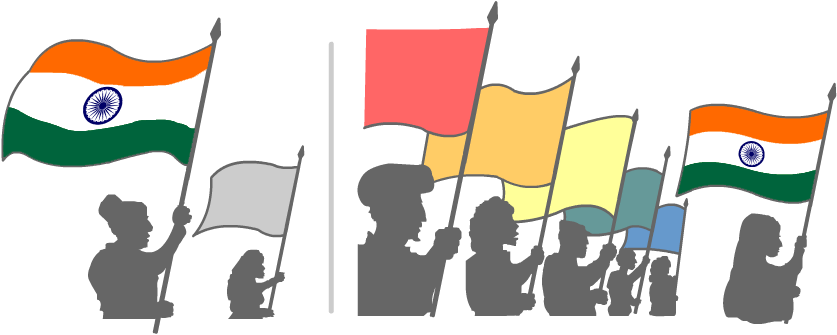
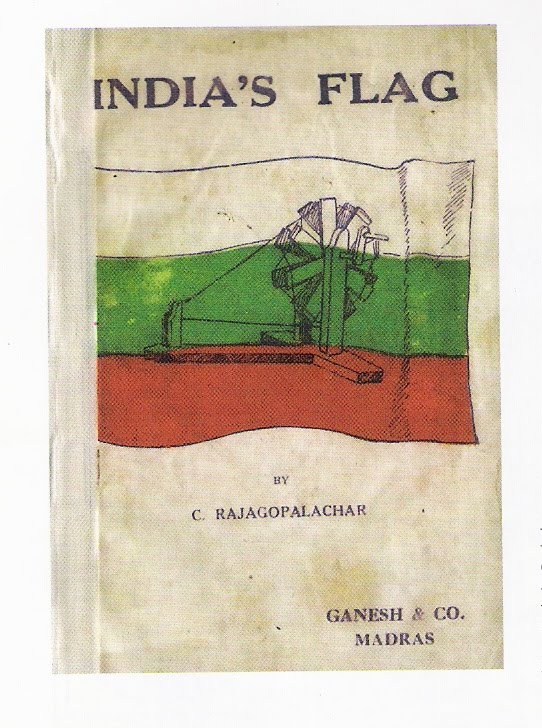
The modern tricolour evolved through a series of designs during the late 19th and early 20th centuries as Indian political movements sought a national emblem. Early proposals included symbols such as the spinning wheel (charkha), which Mahatma Gandhi popularized as a symbol of self-reliance. The specific design now in use — three horizontal bands with the Ashoka Chakra at the center — was adopted shortly before independence and became the official national flag when the country became a sovereign republic. The designer most often credited for earlier versions is Pingali Venkayya; the flag was also hoisted by various Indian organisations and forces during the independence movement, including a prominent early hoisting in Moirang, where the Indian National Army displayed a version of the tricolour Moirang is noted as an early site where it was raised and in other parts of India.
Official protocols and usage
Use of the national flag is governed by national regulations and customary practice. The Flag Code lays out rules for hoisting, display, illumination at night, handling, and disposal, and it identifies circumstances when the flag should be flown at half-mast as a mark of official mourning. The code also addresses commercial use, respect for the flag's dignity and prohibitions against its desecration; national laws provide penalties for intentional insult or disrespect. Citizens, institutions and public bodies are encouraged to follow these norms during national holidays such as Independence Day and Republic Day, when the flag is prominently displayed in civic ceremonies.
Notable facts and distinctions
- The Ashoka Chakra is a historical motif associated with Emperor Ashoka and stands for law, justice and movement rather than stagnation.
- The tricolour nickname "Tiranga" reflects the flag's three-colour design and is used widely in popular and official speech.
- Different organizations and movements used other variants—most famously the charkha-centered flag associated with the Gandhian period—before the current wheel was agreed upon.
- Early symbolic hoistings by nationalist forces such as the Indian National Army and public displays in key locations helped popularize the tricolour across regions.
As a national symbol, the flag of India combines aesthetic elements with layered meanings rooted in history, political movements and cultural ideals. Its colours and central emblem are invoked in formal contexts and public memory to express unity, values and aspirations for the nation.
Author
AlegsaOnline.com Flag of India (National Flag of the Republic of India) Leandro Alegsa
URL: https://en.alegsaonline.com/art/34810
Sources
- doi.org : 10.1093/past/164.1.169
- jstor.org : 651278
- umass.edu : "A Symbol of Freedom: The Indian Flag and the Transformations of Nationalism, 1906–"
- worldcat.org : 0021-9118
- worldcat.org : 37893507
- worldcat.org : 0012-9976
- worldcat.org : 1567377
- bis.org.in : "Indian Standards"
- crwflags.com : "India"
- crwflags.com : "India: Historical Flags"
- rediff.com : "Flying the real tricolour"
- rediff.com : "My Flag, My Country"