
Flag of Curaçao
Description, design, symbolism and history of Curaçao's flag: a blue field with a yellow stripe and two white five-pointed stars used since 1984 and associated with the island's identity.
Overview
The flag of Curaçao features a blue field with a narrow horizontal yellow stripe set slightly below the midpoint and two white, five-pointed stars positioned in the canton (the upper hoist-side corner). It is the principal symbol of the island and is commonly displayed on public buildings, at cultural events, and by residents as an emblem of Curaçaoan identity.
Image gallery
1 Image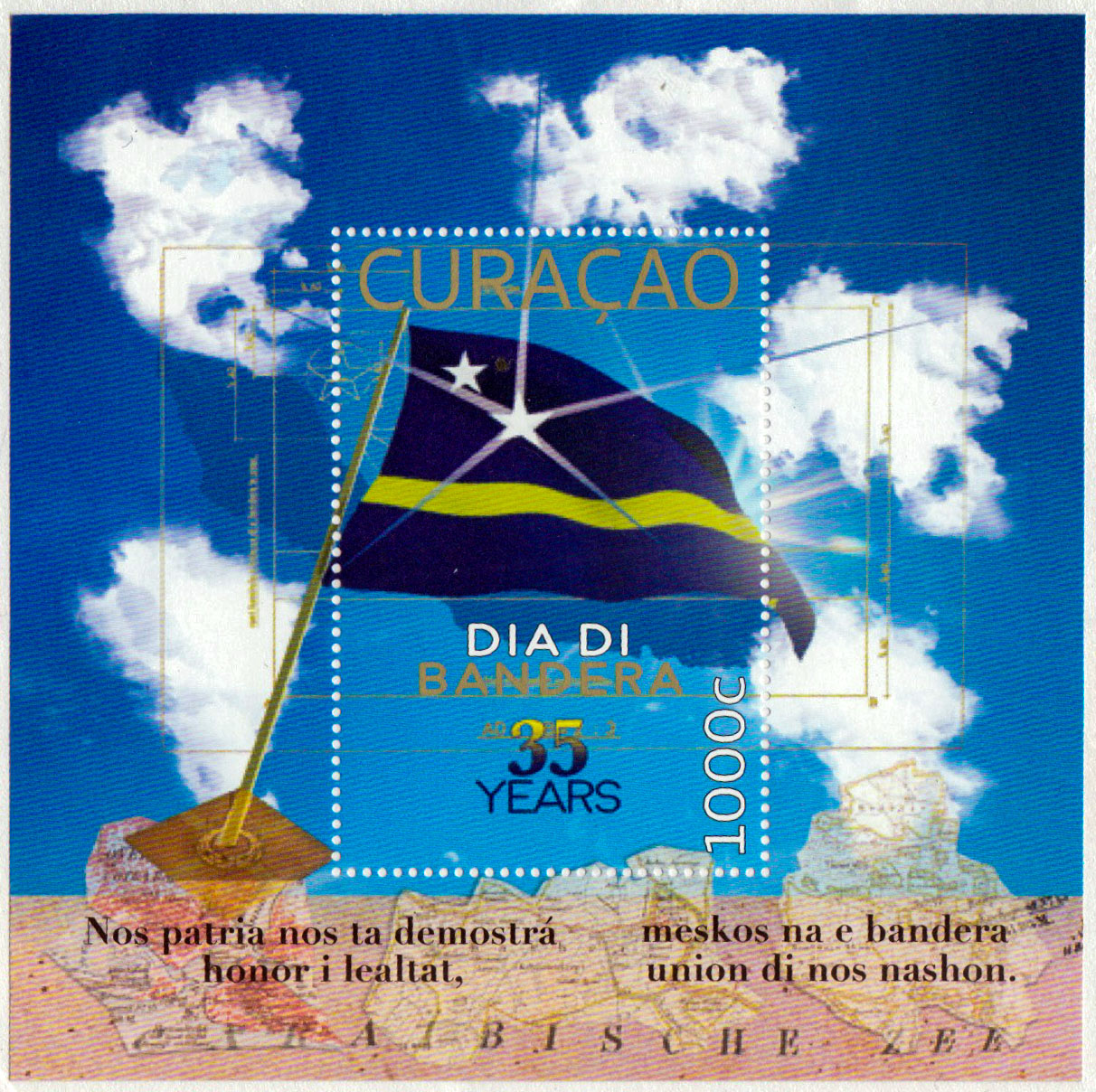
Design and elements
Key elements of the flag include:
- Blue field – a single background color that evokes the surrounding Caribbean Sea and the island's clear skies.
- Yellow stripe – a narrow band running horizontally below the centerline, often associated with sunlight, warmth, and economic activity.
- Two white stars – five-pointed and arranged in the canton; they are a distinctive visual element and represent the island and its nearby islet in popular interpretation.
History and adoption
The current design was officially adopted in 1984 to represent Curaçao as a distinct entity within the then Netherlands Antilles. When Curaçao changed its constitutional status within the Kingdom of the Netherlands in 2010, the flag continued to serve as the island's civil and cultural banner. The choice of colors and symbols reflects both geographic features and local aspirations.
Meaning and use
There is no single authoritative interpretation that explains every design detail; however, common explanations emphasize the blue for sea and sky, the yellow stripe for sunlight and vitality, and the stars for Curaçao and nearby islets. The flag is used in municipal and cultural contexts and is often flown alongside the flag of the Netherlands on official occasions, with the national flag taking precedence when protocol requires.
Variations and notable facts
Variants of the flag sometimes appear in promotional materials and stylized artwork, but the official colors and placement of the stripe and stars remain consistent for formal use. The flag's clear geometry and contrasting colors make it readily recognizable and widely adopted by citizens, businesses, and cultural groups.
References and further reading
Related articles
Author
AlegsaOnline.com Flag of Curaçao Leandro Alegsa
URL: https://en.alegsaonline.com/art/34770