
Flag of Colombia
The flag of Colombia is a horizontal tricolour of yellow, blue and red with the yellow stripe twice the height of the other two. It traces roots to Gran Colombia and was officially adopted in 1861.
The national flag of Colombia is a horizontal tricolour composed of three stripes: yellow (top), blue (middle) and red (bottom). The yellow stripe is distinctive because it occupies half the flag's height while the blue and red stripes each occupy one quarter, giving the flag a visually prominent golden band.
Image gallery
8 Images
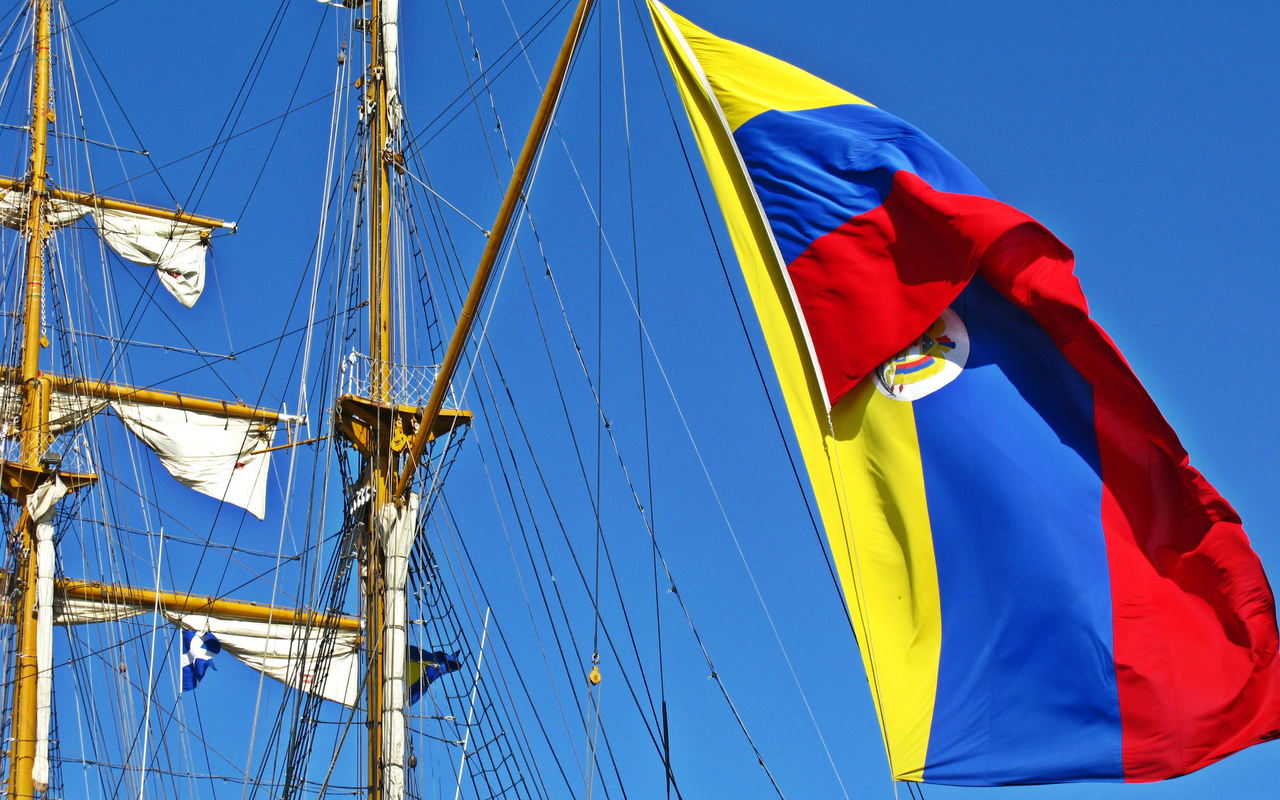


Design and symbolism
Colors are traditionally interpreted in symbolic terms. Yellow commonly represents the nation’s wealth, natural resources and sovereignty; blue stands for the seas, rivers and sky; and red recalls the blood shed by those who fought for independence. The arrangement—especially the broad yellow stripe—is a defining characteristic that separates the Colombian flag from similar tricolours used by neighbouring states.
History and origins
The flag’s color scheme originates in the early independence era and is associated with the banner used by Francisco de Miranda and the short-lived republic of Gran Colombia, which included present-day Colombia, Ecuador and Venezuela. The modern form of the Colombian flag was officially adopted in 1861 (official adoption), consolidating earlier Revolutionary-era designs into the proportion and stripe widths used today.
Variants and official use
There are a few authorized variants: the plain tricolour serves as the civil flag, while a version bearing the national coat of arms is used by government institutions and on official occasions. Naval and military flags follow related conventions. Public buildings, schools and ships commonly display the flag on national holidays such as Independence Day.
Relations and notable facts
The Colombian tricolour is visually and historically related to the flags of Ecuador and Venezuela, which share the same three colours and common origin in Gran Colombia. The principal visual distinction is Colombia’s double-width yellow stripe. The flag remains an important national symbol, used in ceremonies, international events and everyday public life.
Related articles
Author
AlegsaOnline.com Flag of Colombia Leandro Alegsa
URL: https://en.alegsaonline.com/art/34762