
Fitzroy River (Queensland)
Major river in central Queensland, Australia. Formed by the Mackenzie and Dawson rivers, it flows east to the Coral Sea, shaping a large basin important for towns, agriculture, ecology and flood management.
Overview
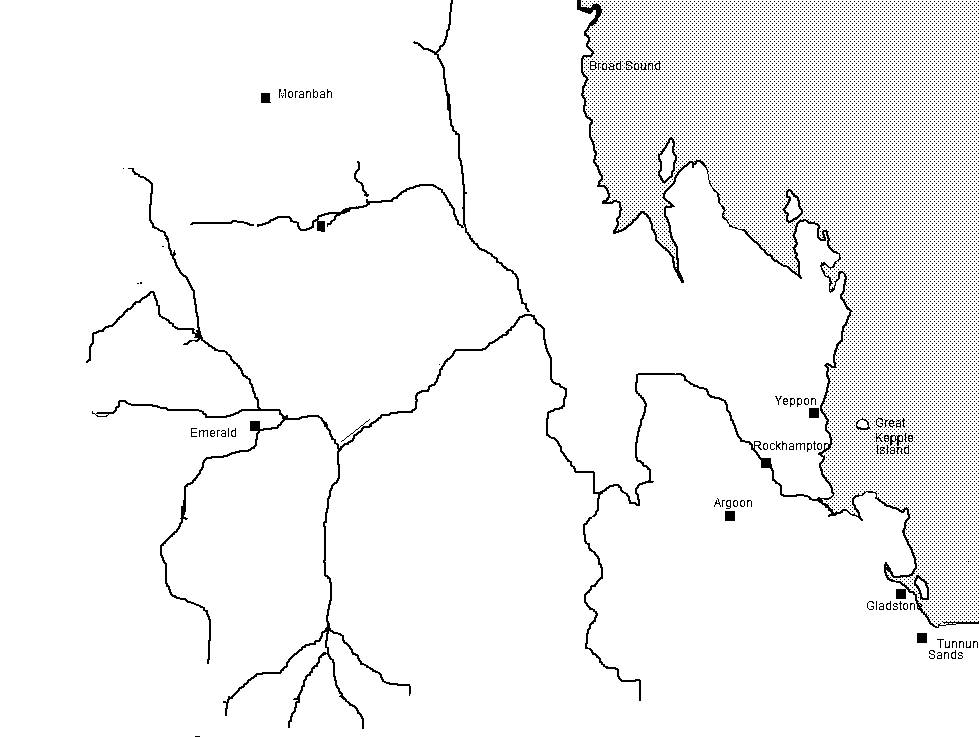
The Fitzroy River is a major river system in central Queensland, Australia. Its headwaters are often given by the confluence of the Mackenzie and Dawson rivers near Duaringa. The river and its wider basin drain a large portion of central Queensland and discharge to the Coral Sea. Coordinates commonly cited for a central point on the Fitzroy are 23°31′15″S 150°51′58″E.
Image gallery
10 Images




Physical characteristics
The Fitzroy drains a broad catchment that supports mixed landscapes of floodplain, wetlands, grazing country and remnant woodlands. From the confluence at Duaringa the river flows generally eastward, passing Rockhampton before reaching the coast. The basin collects water from several tributaries and seasonal streams, producing highly variable flows driven by tropical and subtropical rainfall patterns.
History and naming
European explorers Charles and William Archer named the river in May 1853 in honour of Sir Charles FitzRoy, the Governor of the Colony at that time. (Queensland was not separated from New South Wales and established as a distinct colony until 1859.) The river corridor is also the traditional country of several Aboriginal groups, including the Darumbal people around the Rockhampton area, who have long-standing cultural and economic connections to its waters.
Uses, economy and ecology
The Fitzroy basin underpins regional agriculture, supplying water for irrigation, stock and town supplies. Infrastructure such as weirs, barrages and small reservoirs near population centres helps regulate flows and provide potable water. The estuary and floodplain support wetlands and productive fisheries, and the river corridor is important for native plants, birds and aquatic species, as well as for recreational fishing and boating.
Flooding and management
The river is notable for large, sometimes destructive floods. Periodic flood events have shaped settlement patterns and prompted investment in flood warning systems, levees and water management measures. Major flood events in the 21st century highlighted the need for coordinated regional planning to balance water security, environmental values and community safety.
Places and significance
- Key localities on or near the river include Duaringa and the regional city of Rockhampton.
- The Fitzroy catchment supports diverse land uses from grazing to horticulture and urban supply.
- Its estuary and wetlands are important for coastal ecology and connect inland hydrology to marine environments.
The Fitzroy River remains central to central Queensland's landscape, economy and cultural history. Researchers, local authorities and traditional owners continue to work on river health, sustainable water use and flood resilience to maintain the values the river provides. For maps, data and official resources consult regional authorities and hydrological services via the links above.
Coordinates • Queensland • Australia • river • colony
Related articles
Author
AlegsaOnline.com Fitzroy River (Queensland) Leandro Alegsa
URL: https://en.alegsaonline.com/art/34672