
Fitzroy River (Western Australia)
Major tropical river of the West Kimberley, flowing from the ranges to King Sound. Important for Indigenous culture, wildlife, seasonal floods, pastoralism and local towns such as Fitzroy Crossing.
Overview
The Fitzroy River is a prominent tropical river in the West Kimberley region of northern Western Australia. Rising in the ranges inland, it flows generally westward and empties into the sea via King Sound and the Indian Ocean. The watercourse is a defining physical feature of the Kimberley landscape and supports a mix of freshwater and estuarine habitats along its length.
Image gallery
5 Images

Geography and hydrology
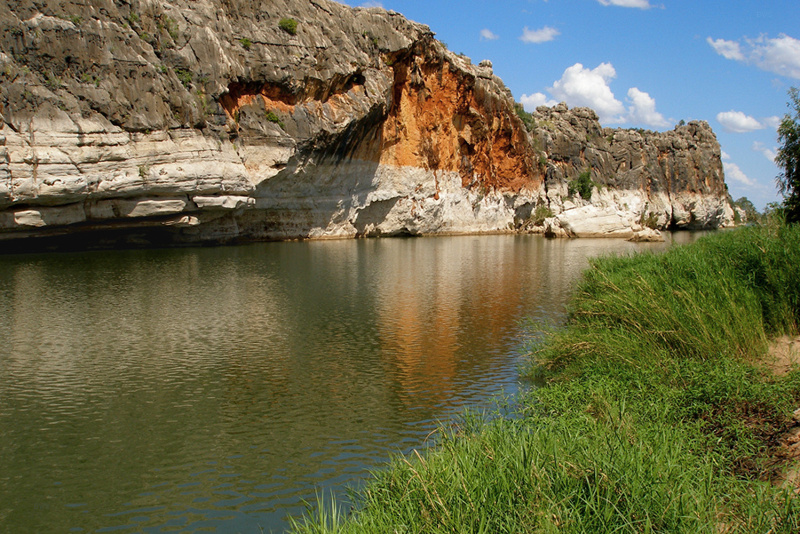
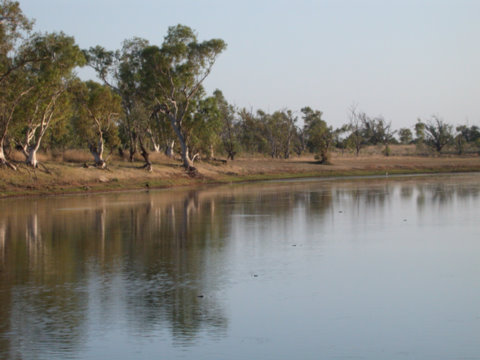
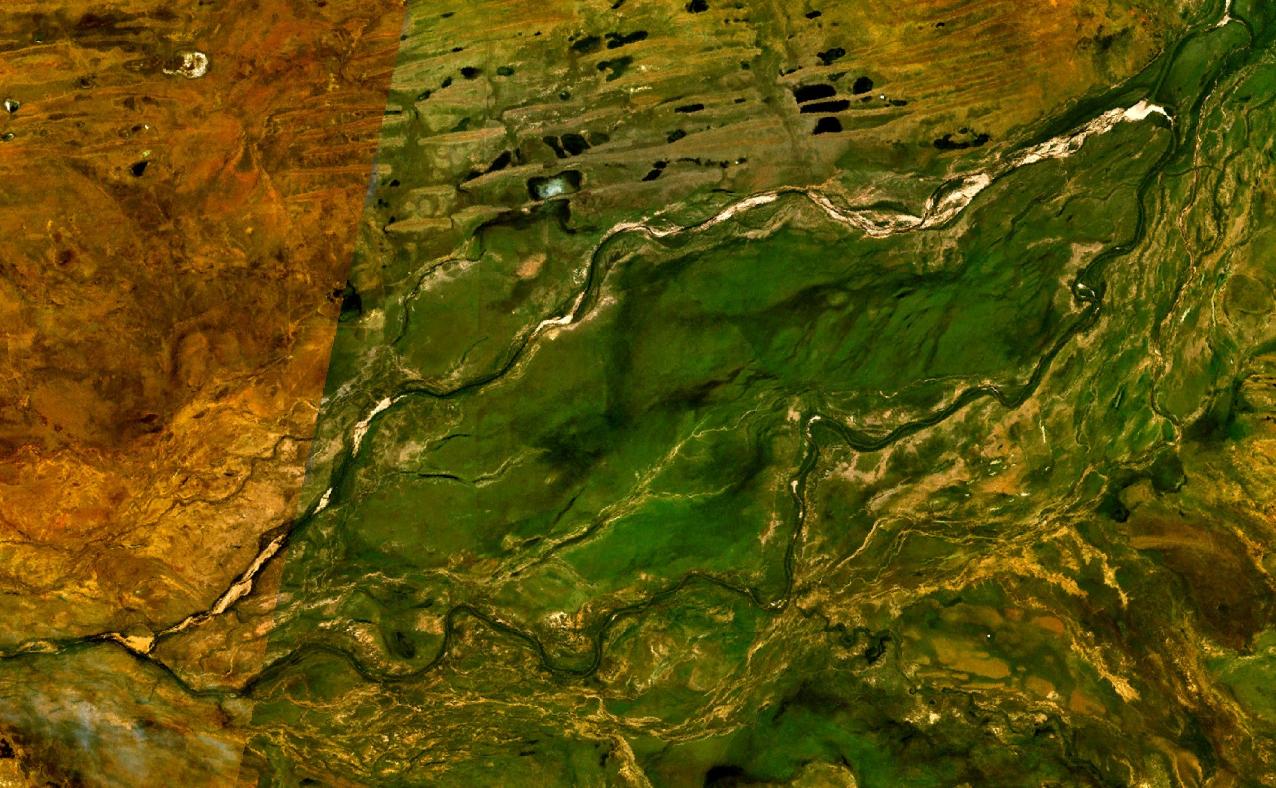
The river traverses rugged country, passing through gorges and broad floodplains before reaching tidal country near its mouth. It is strongly seasonal: high flows occur in the tropical wet season and low or isolated pools persist through the dry months. The settlement of Fitzroy Crossing sits on the river and provides a key human access point to the surrounding region. The estuary contains tidal flats, mangroves and rich intertidal productivity that link the river to coastal systems.
History and naming
European exploration of the Fitzroy began in the 19th century. George Grey visited the river aboard H.M.S. Beagle in 1837, and the name in common use today was applied soon after. Lieutenant J.L. Stokes gave the river its European name in February 1838 in honour of Captain Robert FitzRoy. Long before European contact, the river was and remains central to the culture and lifeways of several Indigenous Australian peoples who have traditional ties to its waters and floodplains.
Ecology and natural values
The Fitzroy supports diverse aquatic and riparian communities. Seasonal floods redistribute nutrients and sustain wetlands that are important for fish, waterbirds and other wildlife. Species valued by local fisheries include migratory and resident fish such as barramundi, and the river also provides habitat for crocodiles and a variety of freshwater and estuarine organisms. The connectivity between inland flows and tidal zones gives the river ecological significance beyond its immediate banks.
Human use, economy and management
The river corridor has long supported Indigenous food-gathering and cultural practices and today also underpins pastoralism, local towns, recreational fishing and tourism. Water management has been a subject of public interest: proposals to increase water storage or develop infrastructure on the Fitzroy have at times generated debate because of potential impacts on ecology, cultural values and the livelihoods of pastoral and Indigenous communities. Ongoing management seeks to balance those interests while adapting to variable wet-season flows and longer-term climate variation.
Notable facts and distinctions
- The Fitzroy is one of the better-known Kimberley rivers because of its length, seasonal floods and prominent estuary.
- Its tidal reaches and mangrove-lined lower reaches link freshwater and marine systems in ways that support both local fisheries and coastal productivity.
- Conservation and development pressures have led to continuing attention from scientists, traditional owners and regional planners aiming to protect ecological values and cultural heritage.
For maps, scientific summaries and regional planning materials related to the river and its catchment, consult regional information sources and local custodians who maintain detailed knowledge of the Fitzroy's seasonal rhythms and cultural landscapes.
Questions and answers
Q: Where is the Fitzroy River located?
A: The Fitzroy River is located in the West Kimberley part of Western Australia.
Q: Where does the Fitzroy River flow into?
A: The Fitzroy River flows into the Indian Ocean.
Q: Who was the first European to visit the Fitzroy River and when did he visit?
A: The first European to visit the Fitzroy River was George Grey in 1837.
Q: What was the name of the ship that George Grey traveled on during his visit to the Fitzroy River?
A: George Grey traveled on the H.M.S. Beagle during his visit to the Fitzroy River.
Q: When did Lieutenant J.L. Stokes give the Fitzroy River its European name?
A: Lieutenant J.L. Stokes gave the Fitzroy River its European name in February 1838.
Q: Who was the Fitzroy River named after?
A: The Fitzroy River was named after Captain Robert FitzRoy.
Q: What is the significance of the Fitzroy River?
A: The Fitzroy River is significant for being one of the major rivers in Western Australia and for its historical importance as the site of first European visits and naming.
Related articles
Author
AlegsaOnline.com Fitzroy River (Western Australia) Leandro Alegsa
URL: https://en.alegsaonline.com/art/34673
Sources
- maps.bonzle.com : "Bonzle Digital Atlas – Map of Fitzroy River, WA"
- anra.gov.au : "Australian Natural Resources Atlas – Landscape – carbon, nutrients, water and productivity – Fitzroy River (WA)"
- freshwaterfishgroup.com : freshwaterfishgroup.com