
Fight Club (1999 film)
David Fincher's 1999 film adaptation of Chuck Palahniuk's novel: a dark, satirical drama about identity, consumer culture and violent counterculture that became a divisive cult classic.
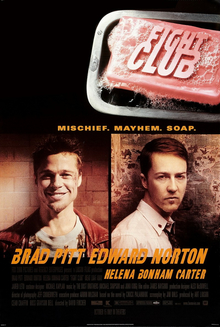
Fight Club is a 1999 American drama film that adapts Chuck Palahniuk's novel into a stylistically bold study of identity, alienation and consumer society. The movie features lead performances by Edward Norton, Brad Pitt and Helena Bonham Carter. It was brought to screen under the direction credited as directed by David Fincher and draws its plot and tone from the source novel by Chuck Palahniuk. From its opening scenes the film establishes a spare, sometimes brutal atmosphere and deliberate visual style.
Image gallery
5 Images


Synopsis and structure
The story follows an unnamed narrator and his encounter with the charismatic Tyler Durden, a man whose lifestyle and ideas offer an extreme alternative to suburban consumerism. The two form an underground group where men gather to fight as a means of feeling alive and rebelling against modern comforts. The narrative unfolds through an often unreliable point of view and culminates in a major revelation about the narrator's own identity, which recontextualizes earlier events.
Characters and performances
The central roles center on the dynamic between the narrator and Tyler; the character commonly described as the central character is portrayed with a mix of anxious detachment and grim clarity, while Tyler is rendered as an alluring, dangerous foil. Marla Singer, played by Helena Bonham Carter, is another persistent presence who complicates relationships and motivations. Critics and audiences often singled out the cast's chemistry and the film's commitment to abrasive, physical performances.
Themes and interpretations
Fight Club engages with themes of masculinity, anti-consumerism, alienation and the search for meaning. It uses stark imagery and metaphorical sequences to explore how modern life can feel hollow and how radical responses may appear attractive. The film contains many layered metaphors that have invited scholarly and popular analysis. Some viewers have compared elements of the film's critique of attachment to material goods to simplified readings of Buddhism, while others emphasize the film's darker leanings toward nihilism and anarchism. An important plot element is the narrator's fractured sense of self; the film explicitly portrays his struggle with what is often described as dissociative identity disorder, a condition that shapes the narrative's twist and moral questions.
Production, reception and controversy
Fincher's adaptation is noted for its kinetic editing, moody cinematography and a soundtrack that complements the film's tense tone. Upon release, Fight Club provoked mixed reviews and debate: some praised its boldness and thematic depth, others criticized its violence and perceived endorsement of destructive behavior. Over time, the movie developed a devoted audience and has been widely discussed in academic and cultural criticism as an influential, if polarizing, work.
Legacy and notable facts
Today Fight Club is often referenced in discussions about late 20th-century culture and filmic portrayals of identity crises. It has inspired essays, analyses and adaptations in other media, and continues to prompt conversation about how fiction represents mental health, masculinity and social disaffection. For further reading on cast, crew and interpretation, see profiles and critical essays linked to principal contributors such as Edward Norton, Brad Pitt, David Fincher and the original author Chuck Palahniuk.
- Based on the 1996 novel by Chuck Palahniuk (novel).
- Stars Edward Norton, Brad Pitt and Helena Bonham Carter.
- Frequently analyzed for its use of metaphors and themes related to modern life.
- Features an unreliable narrator whose condition is often discussed in terms of dissociative identity disorder.
Related articles
Author
AlegsaOnline.com Fight Club (1999 film) Leandro Alegsa
URL: https://en.alegsaonline.com/art/34259