
Fast Times at Ridgemont High
1982 coming-of-age comedy film by Cameron Crowe and Amy Heckerling, set in a Southern California high school. Noted for its ensemble cast, candid themes and influence on teen cinema.
Fast Times at Ridgemont High is a 1982 American coming-of-age teen comedy film written by Cameron Crowe, directed by Amy Heckerling and produced by Irving Azoff and Art Linson. The movie presents an episodic portrait of adolescents navigating school, work and relationships. Its tone mixes humor and candid observations about teenage life, which helped it stand out from more sentimental teen dramas of the time.
Image gallery
1 Image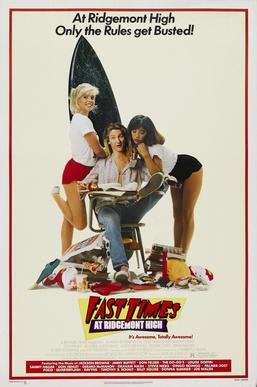
Plot and setting
The story is set in and around a suburban high school in Southern California. It follows several students and recent graduates over the course of a year, showing a range of experiences: first jobs, romantic exploration, awkward encounters and the push toward adulthood. Rather than a single protagonist, the film uses an ensemble approach to depict different perspectives and social circles.
Principal cast and characters
- Sean Penn — breakthrough supporting role that drew attention to his acting range.
- Jennifer Jason Leigh — an early notable performance among the ensemble.
- Judge Reinhold — one of the central teen characters navigating school life.
- Phoebe Cates — played a popular student whose scenes remain widely remembered.
- Brian Backer — part of the film's interwoven youth stories.
- Robert Romanus — contributed to the movie's grounded depiction of teens.
- Ray Walston — portrayed an adult figure in the community.
- Forest Whitaker — appeared in an early screen role.
- Nicolas Cage — one of several actors who later became well known.
- Anthony Edwards — another member of the large young cast.
Origins and production
The screenplay was developed from Cameron Crowe’s immersive reporting on American teenagers; he spent time in real high schools to capture authentic dialogue and details. Amy Heckerling’s direction emphasized naturalistic performances and a brisk pace. The production blended location work with studio shooting to evoke the Southern California suburban landscape and its youth culture.
Reception and legacy
Upon release the film received a mix of critical responses but quickly became influential. It is often cited for its frank treatment of adolescent concerns and for launching or boosting the careers of several cast members. Over time, Fast Times at Ridgemont High has become a reference point in discussions about teen movies, soundtrack-driven storytelling and the portrayal of late-20th-century American youth.
Notable facts
- The film is known for its ensemble structure rather than a single lead.
- Its dialogue and scenes were informed by on-the-ground reporting and script revisions intended to reflect real teenage speech.
- It remains a touchstone for filmmakers and critics examining the evolution of the teen comedy and coming-of-age genres.
Related articles
Author
AlegsaOnline.com Fast Times at Ridgemont High Leandro Alegsa
URL: https://en.alegsaonline.com/art/33606