
Faust (1926 film)
F. W. Murnau's 1926 silent film adaptation of the Faust legend, noted for its expressionist visuals, complex effects and the striking 'Bald Mountain' sequence that influenced later cinema.
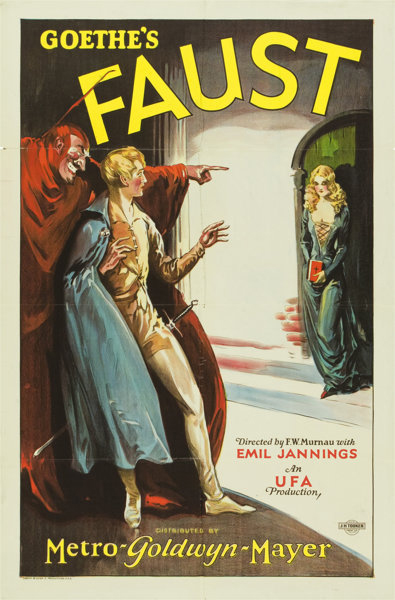
Faust is a 1926 German silent film directed by F. W. Murnau. It retells the classic Faust legend, drawing on traditional folklore and elements of Goethe's play to follow an aging scholar who makes a pact with a demonic figure in exchange for youth, desire and power. The picture is remembered for its ambitious production values, theatrical set designs and imaginative special effects.
Image gallery
2 Images
Plot
The narrative centers on Professor Faust, who, weary and resigned to mortality, is tempted by Mephisto. Transformed into a younger man, Faust pursues love and worldly pleasures, especially the innocent Gretchen, but his bargain brings moral crisis and tragic consequences. The film blends supernatural spectacle with intimate human drama, moving between elegiac scenes and grand, expressionist tableaux.
Cast and characters
- Gösta Ekman as Faust
- Emil Jannings as Mephisto, the devilish tempter
- Camilla Horn as Gretchen
These performances emphasize physicality and silent-era acting techniques: gestures, facial expression and carefully staged movement carry emotional weight without spoken dialogue.
Production and style
Produced by Germany's major studio system, the film exemplifies aspects of silent filmmaking and German cinematic expressionism: stark contrasts of light and shadow, stylized sets, and camera work that underscores psychological states. Murnau employed in-camera effects, make-up, miniatures and optical tricks to realize supernatural scenes. The production was elaborate and costly for its time, and is often cited as Murnau's final German feature before he relocated to the United States to direct Sunrise.
Impact and legacy
Faust influenced later filmmakers through its visual inventiveness and its integration of mythic material into film language. One memorable episode, the "Bald Mountain" sequence, has been singled out as an inspiration for the nightmarish montage later echoed in Disney's treatment of Mussorgsky's tone poem: the depiction informed the staging of the "Night on Bald Mountain" segment in Fantasia, and is often linked to Walt Disney's approach to supernatural spectacle. The movie remains a landmark of silent-era artistry and a frequent subject of study for its direction, design and technical innovation.
Today Faust is appreciated both as a horror and a fantasy classic and as an example of the late silent period's capacity for grand, expressive storytelling. It continues to be screened, restored and discussed in scholarship about early cinema, German film history and adaptations of literary myths.
Related articles
Author
AlegsaOnline.com Faust (1926 film) Leandro Alegsa
URL: https://en.alegsaonline.com/art/33675