
Faisal of Saudi Arabia: Reign, Reforms, and Legacy (1906–1975)
Summary of King Faisal (1906–1975), who led Saudi Arabia 1964–1975, his modernization efforts, oil diplomacy, foreign policy, and assassination, and his lasting impact on the kingdom.
Faisal bin Abdulaziz Al Saud (Arabic: فيصل بن عبدالعزيز آل سعود) was King of Saudi Arabia from 1964 until his assassination in 1975. Born in 1906 as a son of the kingdom's founder, he emerged as a leading statesman in mid-20th-century Saudi Arabia and is remembered for steering rapid change while maintaining the conservative character of the state.
Image gallery
10 Images

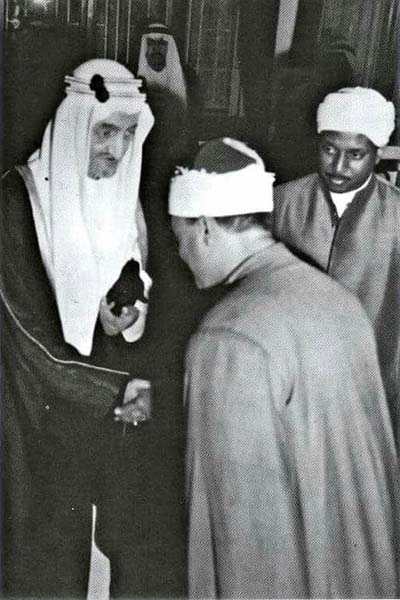


Early career and ascent
Faisal gained administrative and diplomatic experience in the formative decades of the Saudi state. In the years before his accession he assumed increasing responsibility for governance as the senior working member of the royal family, representing the kingdom abroad and managing internal affairs. When his brother, King Saud, faced mounting political and financial problems, Faisal secured broad support from senior princes and religious leaders and became king in 1964.
Domestic policies and modernization
As monarch, Faisal pursued a selective modernization agenda that sought to expand state capacity and public services while respecting Islamic and social norms. His government invested oil revenues in infrastructure, hospitals, roads and an expanding public education system. Faisal promoted administrative reforms to professionalize ministries and to centralize decision-making. He worked to balance reform with the influential religious establishment, often presenting policies in terms acceptable to conservative sensibilities.
Economic and oil diplomacy
Faisal presided over a period in which Saudi oil grew in global importance. He reinforced Saudi influence in the emerging oil diplomacy of the 1960s and early 1970s, culminating in the kingdom's prominent role during the 1973 oil crisis. Under his leadership Saudi Arabia used production policy and diplomatic coordination with other producers to increase its leverage in world energy markets and to advance political objectives.
Foreign policy and regional role
Regionally, Faisal championed Arab and Muslim causes, supporting Palestinians and other Arab states in diplomatic and material terms while fostering close security and economic ties with Western countries. He cultivated Saudi Arabia's position as a central actor in Arab politics and as a voice for conservative, monarchical states amid the era's political upheavals.
Assassination and legacy
On 25 March 1975 King Faisal was shot and killed by his nephew, Faisal bin Musaid. The assassination stunned the kingdom and the international community. Faisal's decade-long reign is widely regarded as transformative: he strengthened central institutions, channeled oil wealth into state development, and raised Saudi Arabia's profile on the world stage. His combination of cautious reform and religious legitimacy left a lasting imprint on the kingdom's political and social trajectory.
For the Arabic form of his name see Faisal bin Abdulaziz; for broader information on the Saudi monarchy see King of Saudi Arabia.
Related articles
Author
AlegsaOnline.com Faisal of Saudi Arabia: Reign, Reforms, and Legacy (1906–1975) Leandro Alegsa
URL: https://en.alegsaonline.com/art/33303
Sources
- the-saudi.net : "King Faisal Ibn Abdul Aziz Al Saud, Saudi Arabia"