
Eye, Suffolk: a small market town in eastern England
Eye is a small historic market town in Suffolk, eastern England, known for medieval earthworks, a compact high street and its location near the A140. Population was about 2,000 in 2001.
Overview
Eye is a small market town in the county of Suffolk, in eastern England. It lies in a largely rural area and had a population of roughly 2,000 people at the 2001 census (population source). The town sits close to the A140 trunk road (A140), which provides direct connections toward larger towns and cities in the region.
Image gallery
3 Images

Characteristics
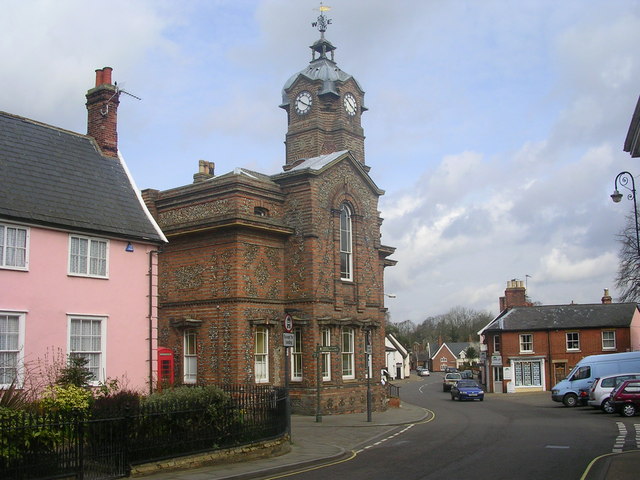
Eye is compact, with a traditional market-place pattern and a high street that contains local shops, pubs and services typical of small English towns. The built environment mixes modest commercial and residential buildings with a number of older, historic structures set around the centre. The scale of the town supports primary services for the surrounding rural catchment.
History and name
The town has medieval origins and is commonly described as a market town since at least the Middle Ages. Remains of a medieval fortification—earthworks associated with a former castle—are among its most visible historic features. The place-name "Eye" is likely derived from an Old English word meaning an island or land by water, a common element in English toponymy denoting slightly raised or marsh-fringed ground.
Transport, economy and role
Proximity to the A140 gives Eye road links to larger centres, helping commuting and the movement of goods. The local economy combines small-scale retail, public services and enterprises that serve agriculture and nearby villages. As with many small towns, its economic and social role is as a local centre for shopping, education and community activities.
Notable features and distinctions
- Historic earthworks and castle remains near the town centre.
- A compact market-place and traditional high street offering local shops and amenities.
- Functions as a service hub for surrounding rural areas in Suffolk.
Eye should not be confused with the anatomical organ of the same name; discussions of the town commonly use the county name "Eye, Suffolk" to avoid ambiguity. Visitors interested in local history will typically explore the historic core, visible earthworks and parish church buildings that reflect the town's long-standing place in the Suffolk landscape.
Related articles
Author
AlegsaOnline.com Eye, Suffolk: a small market town in eastern England Leandro Alegsa
URL: https://en.alegsaonline.com/art/33072
Sources
- ons.gov.uk : "Local statistics - Office for National Statistics"