
Exeter Hall — 19th-century London meeting hall for religion and reform
Exeter Hall was a large assembly hall on the north side of The Strand in London (built 1829–1831). It hosted religious, missionary, philanthropic and public meetings and played a key role in 19th‑century civic life.
Overview
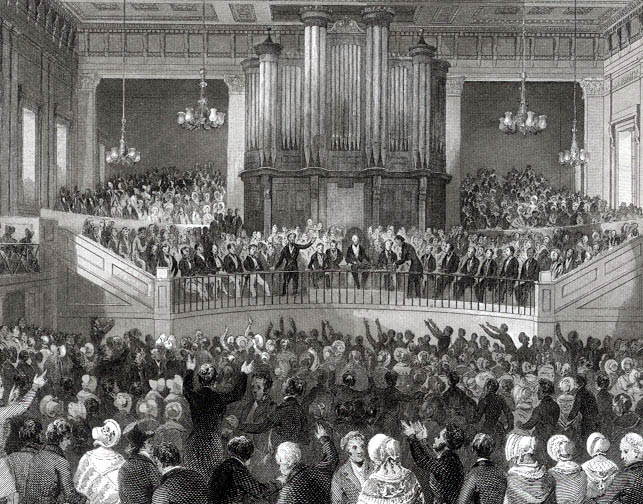
Exeter Hall stood on the north side of The Strand in central London, England. Erected between 1829 and 1831, it was designed as a large purpose-built meeting place for nonconformist, missionary and philanthropic organisations. The single auditorium could accommodate roughly 3,000 people, making it one of the principal public halls of its day.
Image gallery
3 Images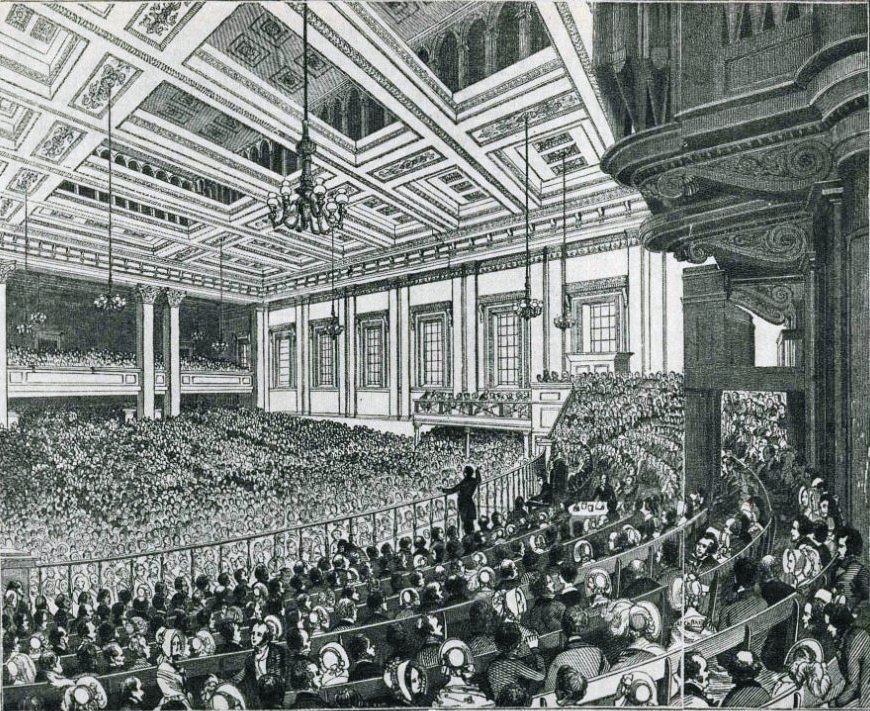

Design and capacity
The building was arranged around a large, high-ceilinged hall with galleries, a raised platform and ancillary rooms for committees and rehearsals. Although not a theatre in the commercial sense, its size and acoustics made it suitable for sermons, public addresses, large committee gatherings and musical performances organized by the societies that used it.
History and social role
From its opening the hall became closely associated with Protestant missionary societies, Bible distribution organisations and other charitable causes. It hosted regular meetings of religious bodies, fund-raising events, and public assemblies promoting social reform. Campaigns such as mission activity abroad, temperance, and abolitionist and philanthropic initiatives frequently used Exeter Hall as their principal London venue.
Events and cultural importance
Exeter Hall served as a platform for public debate, mass prayer meetings, and large choral or oratorio performances connected with church fundraising. Its gatherings attracted clergy, lay activists and members of the public who wished to witness debates and hear prominent speakers involved in moral and humanitarian causes. As such it played a visible role in shaping Victorian public opinion on religion and reform.
By the early 20th century the building had lost some of its original prominence as newer venues and changing patterns of public life emerged. The hall was eventually cleared and replaced by later commercial development, but its name and the records of meetings held there remain important to historians studying voluntary action and religious life in 19th‑century Britain.
Notable facts
- Capacity of about 3,000 made it one of the largest non-theatrical auditoria in London at the time.
- Regularly used by missionary, Bible and philanthropic societies and for public campaigns.
- Its prominence illustrates the close link between religious organisations and public opinion in Victorian Britain.
For further contextual reading about the building’s location and its role in London civic life, see materials relating to The Strand and central London history, and surveys of 19th‑century public meeting places in England.
Related articles
Author
AlegsaOnline.com Exeter Hall — 19th-century London meeting hall for religion and reform Leandro Alegsa
URL: https://en.alegsaonline.com/art/32920