
Everest Base Camp (South and North)
The two primary staging camps for climbs of Mount Everest: South Base Camp in Nepal and North Base Camp in Tibet. Overview, locations, history, uses, access, and notable differences.
Everest Base Camp refers to two distinct camps used as staging areas for ascents of Mount Everest. Climbers rely on these camps to rest, acclimatise, assemble teams, and organise equipment before moving into higher alpine zones. Both camps sit at high elevation on opposite faces of the mountain and are integral to the logistics of high-altitude mountaineering as well as to trekking tourism.
Image gallery
10 Images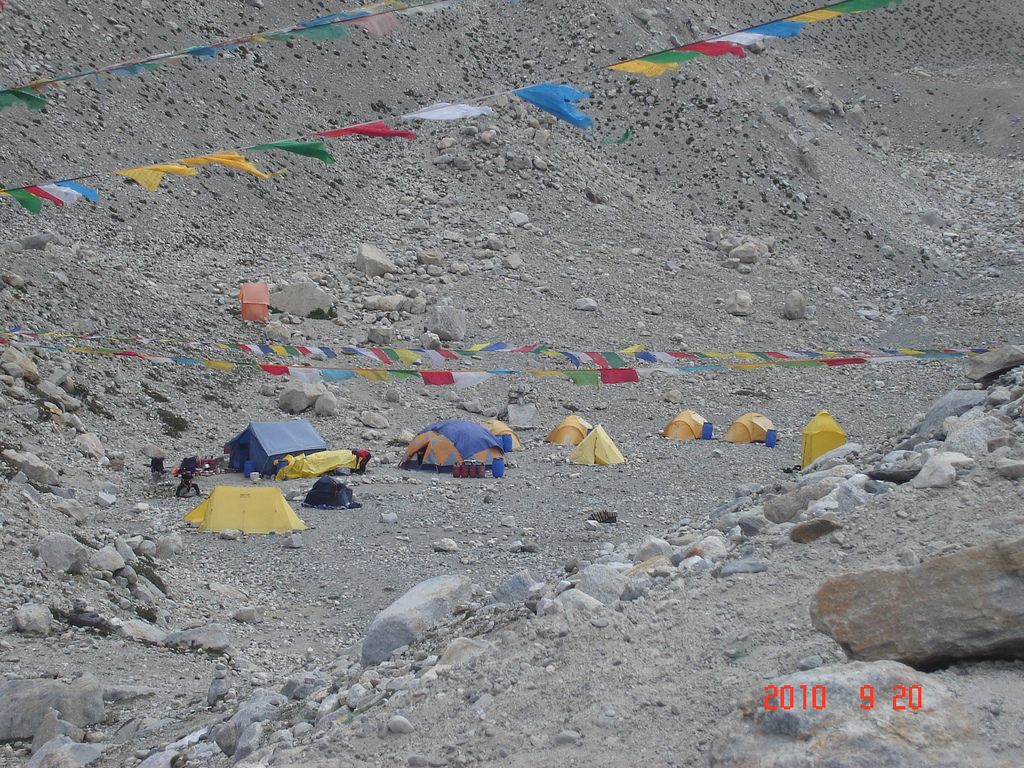




Locations and key characteristics
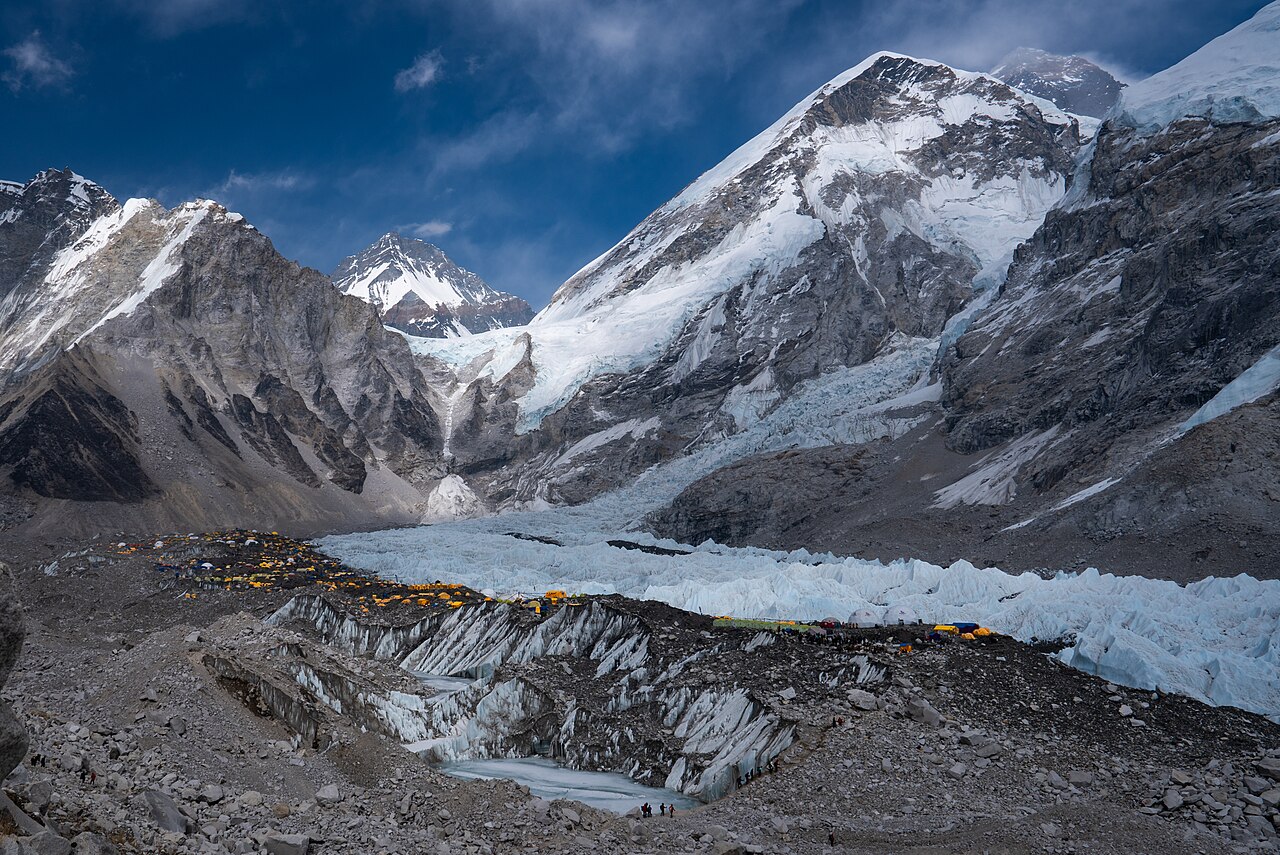
The South Base Camp, on the Nepali side, lies at roughly 5,364 metres above sea level and serves expeditions attempting the southeast ridge route. It is reached by a multi-day trek that traditionally begins near Lukla and passes through Sherpa villages and managed teahouses. The South camp has developed a seasonal infrastructure to support climbers and trekkers, including temporary tents, cooks, and local porters.
The North Base Camp, on the Tibetan side, is lower in elevation at about 5,150 metres and is the starting point for attempts on the northeast ridge. Unlike the south side, the north approach has a vehicle-accessible track for part of the year and more direct road support, but it is also subject to different administrative controls and permit requirements. Supplies may be driven closer to the base on the north side where conditions and regulations permit.
History and development
Base camps emerged as fixed logistic hubs with the earliest exploratory and reconnaissance expeditions of the early 20th century. The north approach was favoured by early British expeditions in the 1920s and 1930s because of political access, while the successful first summit in 1953 was achieved from the south. Over decades, both camps evolved from simple tent sites into seasonal complexes that support commercial expeditions, scientific teams, and increasing numbers of trekkers.
Uses, procedures and daily life
- Acclimatisation: Parties spend days or weeks rotating between higher camps and the base to reduce the risk of altitude illness.
- Logistics: Equipment, food, and fuel are staged at base camp; on the south side, Sherpas and yaks commonly transport loads.
- Support: Base camp functions as a coordination point for weather forecasts, route fixing, medical treatment and rescues.
- Tourism: The South Base Camp is a popular trekking goal for non-climbers, while the north side sees fewer civilian trekkers and more vehicle-supported access in summer.
Distinctions and notable considerations
The south and north camps differ in altitude, access and on-the-ground facilities. The south route is better known for its trekking infrastructure and local hospitality; the north route is notable for its seasonal road that permits vehicles to approach under certain conditions. Administrative and permit regimes also differ: access to the south involves Nepal’s trekking system and local agency support, while the north falls under Tibetan/Chinese regulations.
Environmental and safety issues are important at both camps. The concentration of climbers and the remoteness of services create challenges for waste management, rescue operations, and the preservation of fragile high-altitude ecosystems. Climbers and support teams continue to adapt procedures to improve safety, reduce impact, and manage increasing numbers of visitors.
Whether approached as a logistical base for a summit bid or as the destination of a long trek, Everest Base Camp remains a symbol of high-altitude exploration and a focal point where human endeavour, local culture and the mountain environment intersect.
Related articles
Author
AlegsaOnline.com Everest Base Camp (South and North) Leandro Alegsa
URL: https://en.alegsaonline.com/art/32761
Sources
- en.wikivoyage.org : Everest Base Camp Trek
- books.google.com : Frommer's China
- books.google.com : Everest - A trekker's guide
- books.google.com : Shangri-La: A Travel Guide to the Himalayan Dream