
Ermanaric: Ostrogothic King and Legendary Germanic Ruler
Ermanaric, a 4th-century Greuthungian (Ostrogothic) king, appears in Roman histories and later Germanic legend as a powerful monarch whose realm in the Pontic steppe collapsed with the arrival of the Huns.
Overview
Ermanaric was a 4th-century ruler traditionally associated with the Greuthungi branch of the Ostrogoths. Surviving historical notice is sparse; the principal late antique account comes from the 6th-century Roman historian Jordanes. Later medieval and Scandinavian traditions transformed his figure into a larger-than-life king whose reign and fall became part of Germanic heroic lore.
Image gallery
2 Images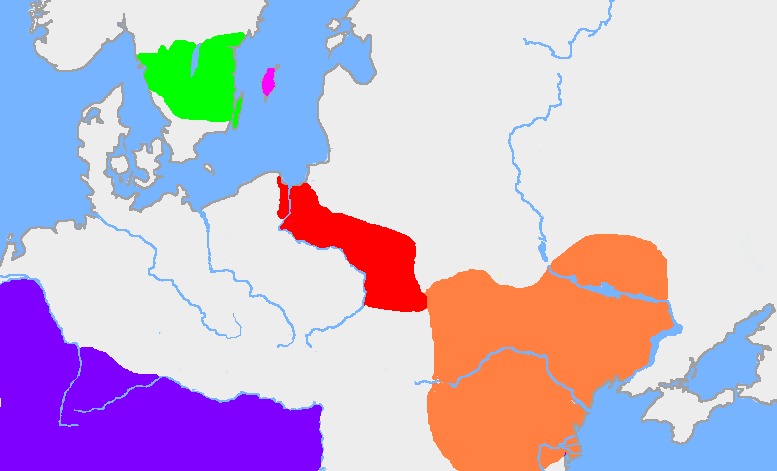

Names and identity
- Gothic form: Aírmanareiks
- Old English form: Eormanrīc
- Old Norse form: Jǫrmunrekr
- Latinized: Ermanaricus
These variants reflect transmission across languages and centuries: a historical figure recorded in late Roman historiography became the subject of saga and epic in medieval Germanic cultures.
Historical record
According to Jordanes, Ermanaric ruled a substantial realm in the lands north of the Black Sea—territory that lies within parts of modern Ukraine—and exercised control over numerous peoples. Jordanes attributes to him qualities of a powerful and ruthless monarch and places the end of his reign around the time the Huns pressed into Gothic domains in the late 4th century. Details such as his purported age at death are treated cautiously by scholars because the surviving narrative mixes fact, oral tradition, and rhetorical embellishment.
Legendary tradition and cultural legacy
In medieval Germanic sources Ermanaric is transformed into a tragic or tyrannical figure whose actions provoke vengeance and epic blood-feuds. Old Norse poems and later continental tales recount episodes—such as the brutal punishment of a princess and the retaliation of her kin—that are associated with the name Jǫrmunrekr/Eormanric. These stories circulated in poems, sagas and heroic compilations, where chronological and geographical accuracy was subordinate to moral and dramatic impact.
Assessment and significance
Ermanaric occupies a place on the threshold between late antiquity and medieval legend. For historians, his reign signals the existence of powerful Gothic polities in the Pontic steppe before the Hunnic expansions; for literary historians, his figure illustrates how historical rulers could be reshaped into archetypal kings in oral and written tradition. Modern study attempts to disentangle the limited historical core from the later layers of mythmaking using comparative linguistics, archaeology and careful reading of sources such as Jordanes.
Questions and answers
Q: Who was Ermanaric?
A: Ermanaric was an Ostrogothic king of the Greuthungian tribe, who lived and ruled in modern-day Ukraine until the Huns invaded in 370 AD.
Q: What is known about Ermanaric's life?
A: Information about Ermanaric's life comes mainly from the writings of the 6th-century Roman historian Jordanes. He was said to have died at the age of 110.
Q: How is Ermanaric portrayed in legend?
A: Ermanaric is portrayed as a vicious and warlike ruler in Germanic legend.
Q: What was the extent of Ermanaric's rule?
A: Ermanaric ruled over much of modern Ukraine before the Huns invaded in 370 AD.
Q: What was Ermanaric's tribe?
A: Ermanaric was king of the Greuthungian tribe.
Q: What was Ermanaric's Gothic name?
A: Ermanaric's Gothic name was *Aírmanareiks.
Q: In what other languages is Ermanaric known by different names?
A: Ermanaric is also known as Eormanrīc in Old English and Jǫrmunrekr in Old Norse.
Related articles
Author
AlegsaOnline.com Ermanaric: Ostrogothic King and Legendary Germanic Ruler Leandro Alegsa
URL: https://en.alegsaonline.com/art/31978