
Epiglottis
The epiglottis is a leaf-shaped flap of elastic cartilage at the entrance to the larynx that safeguards the airway during swallowing. This article explains its structure, function, development and clinical relevance.
Overview
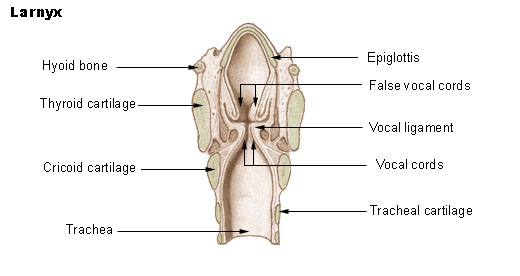
The epiglottis is a flexible, leaf-shaped flap of elastic cartilage located at the top of the larynx. It forms part of the airway’s entrance and lies just behind the root of the tongue. During swallowing it moves to shield the opening of the larynx so that food and liquid are diverted toward the pharynx and the esophagus. When a person breathes, the epiglottis returns to a more upright position and the airway to the trachea remains open.
Image gallery
6 Images



Structure and location
Anatomically, the epiglottis is made of elastic cartilage covered by a mucous membrane. It is attached to the inner surface of the thyroid cartilage and connected to the tongue and hyoid bone by ligaments and soft tissue. Because it sits above the entrance to the larynx, sometimes called the larynx or voice box, its movements are coordinated with muscles of the tongue and pharynx.
Function
The primary role of the epiglottis is protective: it helps prevent aspiration by closing over the glottic opening during swallowing. This reflex action, combined with laryngeal elevation and vocal fold closure, directs swallowed material into the digestive tract rather than the airway. When not swallowing, the epiglottis permits normal breathing and contributes to some aspects of voice resonance.
Clinical significance
Inflammation or swelling of the epiglottis (epiglottitis) can narrow the airway and is a medical emergency. Causes include infection, trauma, or allergic reaction. Common clinical concerns and management points include:
- Symptoms: sore throat, difficulty swallowing, drooling, muffled voice, breathing difficulty.
- Diagnosis: clinical examination and visualization of the larynx; imaging or endoscopy may be used cautiously.
- Treatment: securing the airway and treating the underlying cause (for example antibiotics for bacterial infection).
Development and notable facts
The epiglottis develops as part of the upper respiratory and digestive tract in the embryo and varies slightly between individuals in size and shape. Vaccination against certain bacteria has reduced some causes of severe epiglottitis. In comparative anatomy, structures that protect the airway during feeding are present in many vertebrates but differ in form and position.
Author
AlegsaOnline.com Epiglottis Leandro Alegsa
URL: https://en.alegsaonline.com/art/31716