
Éperlecques (Pas-de-Calais)
Éperlecques is a commune in Pas-de-Calais, northern France, noted for the Blockhaus d'Éperlecques, a large World War II bunker preserved today as a museum and memorial.
Éperlecques is a small French commune located in the historic region of Nord-Pas-de-Calais (Nord-Pas-de-Calais is now part of the administrative region Hauts-de-France). It lies in the Pas-de-Calais department and forms part of the rural landscape of northern France, combining village life with sites of wider historical interest.
Image gallery
2 Images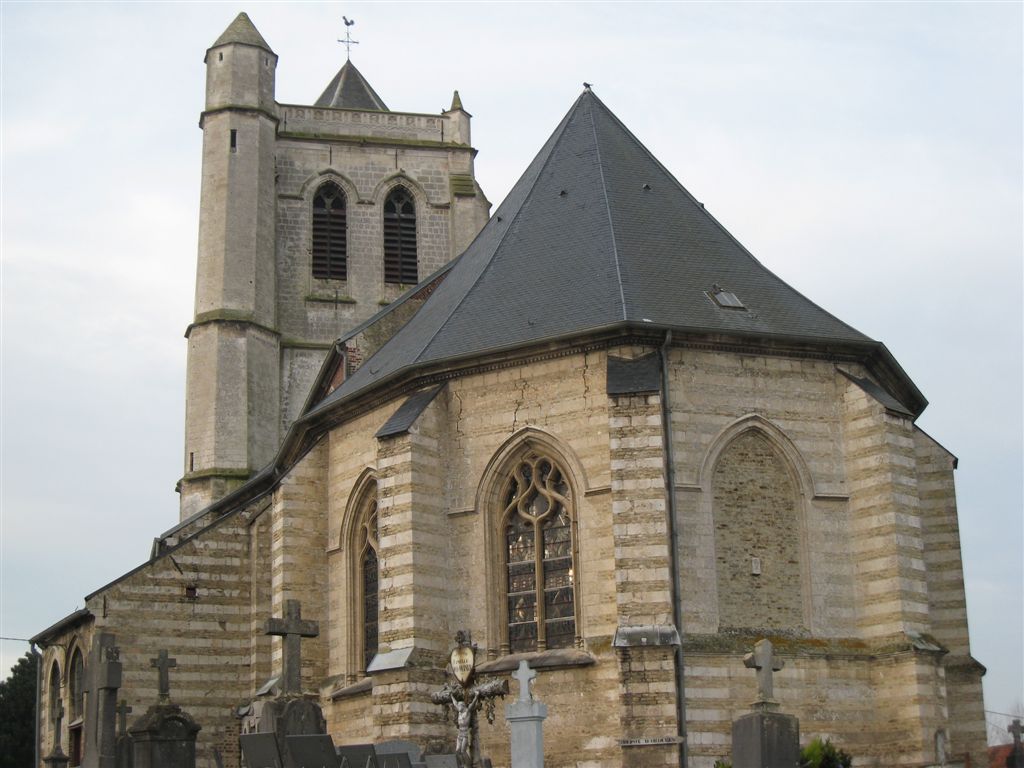

Characteristics
The commune sits within the agricultural and wetland areas of Pas-de-Calais, near larger towns that provide services and transport connections. Local land use mixes arable farming, small woodlands and hedged lanes typical of the region. The village contains community facilities, a parish church and lanes used by walkers exploring the surrounding countryside.
History and the World War II site
Although Éperlecques has a long local history typical of northern French villages, it is best known for a major Second World War construction, the Blockhaus d'Éperlecques. Built by Nazi Germany as part of the V-weapons programme, the concrete complex was intended for rocket operations and associated logistics. Damaged by Allied bombing and never used as originally intended, the structure survived and has been interpreted as a reminder of wartime occupation.
Visiting and attractions
- The former bunker, now preserved and presented as a museum and memorial, offers exhibits about wartime history and the local experience; visitors can learn on-site about the building's construction and the Allied response (museum).
- Outdoor activities include walking routes, local heritage trails and nearby natural areas associated with the Audomarois marshes and the wider landscape of the north of France.
- Community events and small-scale cultural initiatives reflect the village's ongoing life beyond its wartime legacy.
Notable facts
The Blockhaus d'Éperlecques is regarded as one of the large surviving concrete wartime structures in the region and functions as an educational site and memorial. Éperlecques illustrates how ordinary rural communes in northern France combine living communities, agricultural economy and layers of historic significance accessible to visitors and scholars.
For travelers and students of 20th-century history, Éperlecques offers a compact example of rural heritage shaped by both local tradition and global events.
Related articles
Author
AlegsaOnline.com Éperlecques (Pas-de-Calais) Leandro Alegsa
URL: https://en.alegsaonline.com/art/31685