
Emmett Hulcy Tidd
United States Navy vice admiral (1923–2018) who served from World War II through the Vietnam era, including senior staff to Admiral Elmo Zumwalt and command at sea.
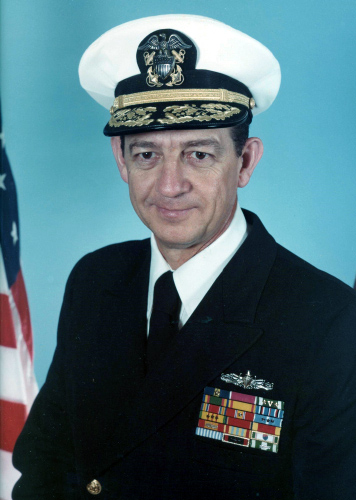
Overview
Emmett Hulcy Tidd (October 6, 1923 – March 20, 2018) was a career officer in the United States Navy who rose to the rank of vice admiral before retiring in 1976. His service spanned the Second World War period through the Vietnam era. Tidd held sea commands and important staff appointments, including service as Chief of Staff and aide to Vice Admiral Elmo Zumwalt while Zumwalt was commander of U.S. Naval Forces in Vietnam. A native of Shreveport, Louisiana, Tidd's naval career reflected the mid‑20th century evolution of the Navy from a wartime force to a global Cold War service.
Image gallery
1 Image
Early life and education
Tidd was born in Shreveport, Louisiana, and entered naval service during World War II, enlisting in the Naval Reserve as a seaman apprentice in 1942. While a young reservist he participated in the Naval Reserve Officers Training Corps (NROTC) while attending the University of Oklahoma. His early training and commissioning set the foundation for a long professional career at sea and in staff billets. For more on his background and commissioning, see the official Navy biography and regional records from Shreveport.
Naval career and commands
Tidd's career combined shipboard command with high‑level staff responsibilities. At sea he assumed command of vessels including the USS Everglades and later took charge of other major commands such as the USS Columbus. Between sea tours, he served in progressively senior staff positions that required coordination across fleet and shore organizations.
- Early enlistment and commissioning through NROTC
- Ship command assignments, including USS Everglades and USS Columbus
- Senior staff: Chief of Staff and aide to Vice Admiral Elmo Zumwalt during the Vietnam conflict
- Promotion to flag rank and culminating service as a vice admiral before 1976 retirement
Role in the Vietnam era
While serving as Chief of Staff and aide to Vice Admiral Elmo Zumwalt, who was Commander, Naval Forces Vietnam, Tidd was part of the senior team responsible for naval operations, logistics and coordination during a complex phase of the conflict. The chief of staff role typically involves overseeing staff work, advising the commander, and ensuring operational plans are executed—functions that were especially challenging in the dynamic and politically sensitive Vietnam theater. Zumwalt's tenure and staff became notable as the Navy adapted tactics and support functions for riverine and coastal operations.
Later life and legacy
After a multi‑decade career, Tidd retired in 1976. Veterans, naval historians and communities where he served remember him for a steady progression from enlisted sailor to flag officer, illustrating opportunities for long‑term advancement within the U.S. Navy. His career is often cited in discussions about leadership development, the role of staff officers in wartime, and the practical demands of commanding both ships and shore organizations.
Personal details and death
Emmett H. Tidd lived into his mid‑90s. He died on March 20, 2018, in Annapolis, Maryland, of complications related to dementia. Local obituaries and official notices provide additional information about memorials and survivors; see the notice linked through Annapolis records and health‑related coverage at relevant sources.
For further reading about mid‑20th century U.S. Navy leadership and officers who combined sea command with senior staff duties, consult naval histories and biographies available through library and archival collections.
Related articles
Author
AlegsaOnline.com Emmett Hulcy Tidd Leandro Alegsa
URL: https://en.alegsaonline.com/art/31233
Sources
- public.navy.mil : "Vice Admiral Emmett Tidd"
- legacy.com : "VADM USN Emmett H. (Ret.) Tidd's Obituary on The Capital Gazette"