
Emperor Gaozong of Tang (Li Zhi): reign, expansion, and the rise of Empress Wu
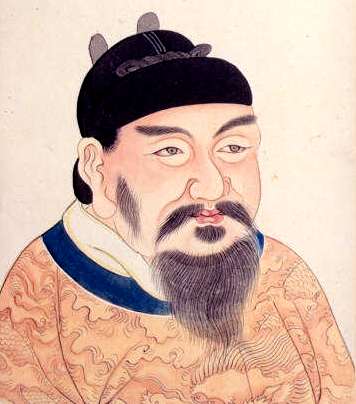
Li Zhi (Emperor Gaozong, 628–683), third Tang emperor; oversaw major territorial expansion and a transfer of power to his consort Wu Zetian, who later ruled in her own name.
Overview
Emperor Gaozong of Tang (personal name Li Zhi; 628–683) succeeded his father, Emperor Taizong, in 649 and ruled until his death in 683. His reign is marked by significant military achievements that extended Tang influence, and by the unusual concentration of political authority in his consort, Wu Zetian, who later became the first and only female emperor in Chinese history. Historians debate Gaozong's personal effectiveness: some describe him as a careful administrator who delegated widely, while others regard him as increasingly dominated by court factions and by his empress.
Image gallery
3 Images

Characteristics and government
Gaozong inherited the centralized institutions of early Tang government. He continued civil service examinations and retained many of the administrative structures developed under his predecessors, but the balance of power shifted during his later years. After suffering serious illness, he relied more heavily on a small circle of advisers and on Wu Zetian, who acted as de facto decision-maker in many matters. Court politics during his reign grew intense, with rival clans and officials competing for influence.
Military expansion and foreign policy
Under Gaozong the Tang state consolidated and enlarged its territory. Tang armies, often in alliance with Korean polities, completed campaigns that led to the fall of Baekje (660) and the eventual collapse of Goguryeo (668). The dynasty also projected power into Central Asia and the western frontiers, strengthening control over parts of the Silk Road and the so-called Western Regions. These gains made Tang one of the most powerful states in East Asia at the time.
Role of Wu Zetian and court dynamics
Wu Zetian rose from concubinage to become empress in 655 and increasingly managed state affairs, especially after Gaozong's health declined. She promoted capable officials, reshaped court personnel, and later eliminated rivals. While her influence secured administrative continuity and some reforms, contemporaries and later historians often criticized the methods used to concentrate power. The collaboration between Gaozong and Wu Zetian remains central to assessments of his reign.
Later life and legacy
Gaozong died in 683 and was buried at the Qianling Mausoleum, a joint tomb where he and Wu Zetian were interred. His reign left mixed legacies: on one hand, territorial expansion and sustained bureaucratic governance; on the other, intensified palace politics and a transfer of real authority to his empress. The events of his reign set the stage for Wu Zetian's eventual establishment of her own Zhou dynasty and for continuing debates about gender, power, and legitimacy in imperial China.
Notable facts
- Personal name: Li Zhi; temple name: Gaozong.
- Reign: 649–683; succeeded Emperor Taizong.
- Major events: conquest of Baekje and Goguryeo 7th century; expansion into Central Asia.
- Burial: Qianling Mausoleum, a significant Tang imperial tomb complex.
Questions and answers
Q: Who was Emperor Gaozong of Tang?
A: Emperor Gaozong of Tang was the third emperor of the Tang Dynasty and the ninth son of Emperor Taizong of Tang.
Q: What is Emperor Gaozong of Tang famous for?
A: Emperor Gaozong of Tang is famous for marrying Wu Zetian, who later became the first and only female emperor in China.
Q: How was Emperor Gaozong of Tang viewed by many historians?
A: Many historians viewed Emperor Gaozong of Tang as a weak ruler because he was always controlled by his wife Wu Zetian.
Q: What did the Tang Dynasty achieve during the rule of Emperor Gaozong of Tang?
A: During the rule of Emperor Gaozong of Tang, the Tang Dynasty gained lots of land and had the largest territory.
Q: Who was Wu Zetian?
A: Wu Zetian was the wife of Emperor Gaozong of Tang and later became the first and only female emperor in China.
Q: Did Emperor Gaozong of Tang have any siblings?
A: Yes, Emperor Gaozong of Tang had eight brothers and one sister.
Q: When did Emperor Gaozong of Tang reign?
A: Emperor Gaozong of Tang reigned from 649 to 683.
Related articles
Author
AlegsaOnline.com Emperor Gaozong of Tang (Li Zhi): reign, expansion, and the rise of Empress Wu Leandro Alegsa
URL: https://en.alegsaonline.com/art/31255