
Eisaku Satō (1901–1975)
Japanese statesman who served as Prime Minister (1964–1972), negotiated Okinawa's reversion, signed the Non‑Proliferation Treaty, and shared the 1974 Nobel Peace Prize.
Overview
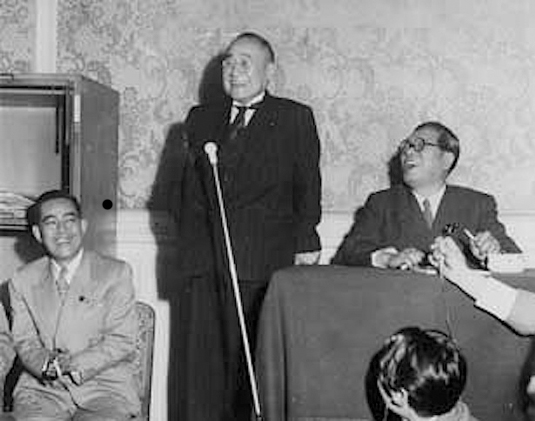
Eisaku Satō was a Japanese statesman and long‑serving leader best known for his tenure as the 39th Prime Minister of Japan. A member of the national ruling party, he led governments that oversaw sustained economic growth, managed relations with the United States, and settled key postwar issues. He first took office after being elected in December 1964 and remained a dominant figure in Japanese politics through the early 1970s. Satō was notable as the first Japanese prime minister born in the 20th century (born 1901).
Image gallery
7 Images


Political career and policies
Satō belonged to a conservative party and held the premiership for an extended period, during which his government emphasized stability, alliance with the United States, and economic modernization. As a senior leader he worked within party structures to maintain continuity of policy and institutional reform. Domestic priorities included supporting industrial expansion and social programs to match Japan's rapid economic growth.
Major achievements
Among Satō's most visible accomplishments were diplomatic and security arrangements that clarified Japan's postwar status. Notable items included:
- Negotiating and implementing the return of Okinawa to Japanese administration in 1972, ending a long postwar occupation.
- Strengthening the U.S.–Japan security relationship while asserting Japan's pacific commitments.
- Signing the Treaty on the Non‑Proliferation of Nuclear Weapons (NPT) in 1970, a step he framed as reflecting the Japanese people's will for peace and international responsibility (NPT).
Nobel Peace Prize and international recognition
In 1974 Satō received the Nobel Peace Prize, an honor he shared with Seán MacBride. The award recognized his role in arms control and for taking Japan into formal non‑proliferation commitments; contemporary accounts and the prize citation linked his leadership to progress on disarmament and diplomatic restraint (Nobel Prize).
Early life, health and death
Satō was born in Tabuse, Yamaguchi Prefecture (Tabuse, Yamaguchi) in 1901. In late May 1975 he suffered a serious stroke that left him in a deep coma. He died on 3 June 1975 in a hospital in Tokyo, closing a public career that had shaped Japan's post‑war transition.
Legacy and distinctions
Satō's legacy is mixed: he is credited with stabilizing Japan's international role and advancing non‑proliferation, but some critics point to the limits of postwar militarism and domestic policy choices. He remains a key figure in mid‑20th‑century Japanese history, often studied for his foreign policy, his long premiership, and his role in Japan's reintegration into global institutions. For more detailed biographies and primary documents, see additional sources and archival material (biographical outline, party history, medical reports, Tokyo records, birth records, election details, treaty texts, prime ministerial records, Nobel citation, local history, peace statements, health summaries, death notice).
Related articles
Author
AlegsaOnline.com Eisaku Satō (1901–1975) Leandro Alegsa
URL: https://en.alegsaonline.com/art/30499
Sources
- nobelprize.org : "Eisaku Sato – Biographical"
- nobelprize.org : "Eisaku Sato"
- archives.chicagotribune.com : "Sato taken to Hospital after a Stroke"
- query.nytimes.com : "Eisaku Sato, Ex-Premier of Japan, Dies at 74; Shared Nobel Peace Prize in 1974 for Efforts in Asia"