
Eduardo Galeano — life, works and influence
Overview of Eduardo Galeano (1940–2015), his major books, literary style, political engagement, journalistic career, exile and continuing influence in Latin American letters.
Eduardo Hughes Galeano (3 September 1940 – 13 April 2015) was a Uruguayan journalist, essayist and novelist whose writing blended history, reportage and lyrical vignette. Born in Montevideo, he became known for short, tightly composed chapters that treat politics, culture and memory with moral urgency. His prose reached large popular and academic audiences across languages and generations.
Image gallery
2 Images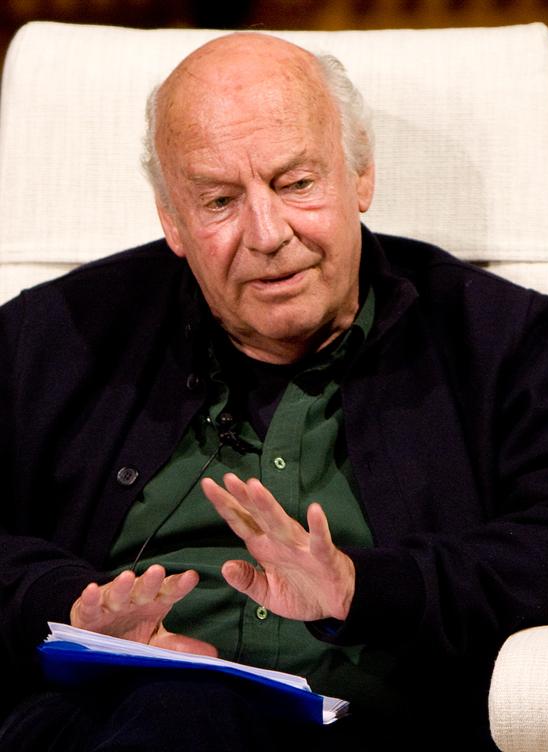
Major works
- Open Veins of Latin America (Las venas abiertas de América Latina, 1971) — a polemical history tracing colonial and economic exploitation of Latin America.
- Memory of Fire (Memoria del fuego, 1982–86) — a three-volume mosaic retelling the peoples and events of the continent in short, interlinked scenes.
- The Book of Embraces (El libro de los abrazos, 1989) — a series of intimate sketches and reflections mixing autobiography, anecdote and political observation.
Style, themes and approach
Galeano favored fragmentary structure over linear narrative, using compact episodes, aphorisms and poetic imagery to expose injustice and celebrate popular life. Recurring subjects include colonialism, economic dependence, social inequality, memory and resistance. He often wrote for a general readership, combining scholarly reading with accessible language and rhetorical force.
Career, exile and public role
Galeano began in journalism, working with newspapers and cultural magazines in Uruguay and later abroad. Political repression in the 1970s forced him into exile for several years; he lived and worked in neighboring countries and returned after the restoration of democracy. He remained an outspoken public intellectual, participating in debates about history, human rights and Latin American identity.
Legacy and reception
His books have been widely translated and have influenced activists, scholars and readers across Latin America and beyond. Some works, especially Open Veins, have been both celebrated as important critiques of imperialism and criticized for polemical tone and interpretive choices. Regardless of controversy, Galeano is widely regarded as a key voice in 20th-century Latin American letters.
Galeano died in Montevideo of lung cancer in 2015. He left a body of work that continues to be read for its moral clarity, imaginative form and commitment to recording marginalized histories.
Related articles
Author
AlegsaOnline.com Eduardo Galeano — life, works and influence Leandro Alegsa
URL: https://en.alegsaonline.com/art/30230
Sources
- buenosairesherald.com : "Writer Eduardo Galeano dies"
- nytimes.com : "Eduardo Galeano, Uruguayan Voice of Anti-Capitalism, Is Dead at 74"