
Altai languages
Turkic language group of southern Siberia spoken by Altai peoples, including Southern (official in the Altai Republic) and Northern varieties; agglutinative with vowel harmony and SOV order.
Overview
The term "Altai languages" can refer both to the single language often called Altai or Altay (especially Southern Altai) and to a small cluster of closely related Turkic varieties spoken by the Altai people in the highlands of southern Siberia. These languages are part of the larger Turkic family and are used for everyday communication, oral traditions and local culture across a region that includes the modern Altai Republic in Russia.
Image gallery
1 Image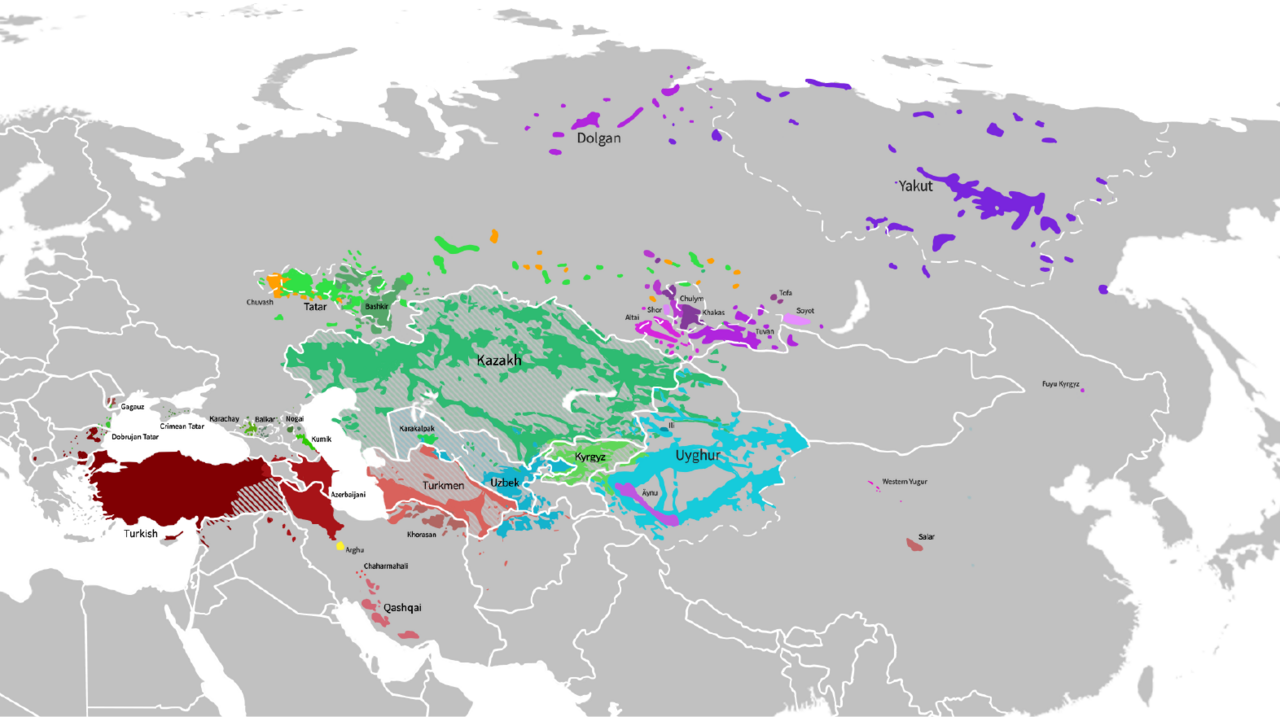
Classification and dialects
Scholars commonly divide the group into Southern (sometimes called Altai proper) and Northern Altai varieties. The Northern group contains several speech forms that are sometimes treated as dialects or as distinct languages depending on linguistic and sociopolitical criteria. All belong to the Turkic branch and share many features typical of that family; for a broader context see the Turkic languages overview here.
Linguistic characteristics
Altai varieties exhibit traits typical of Siberian Turkic tongues: they are agglutinative (building words with a sequence of suffixes), usually follow subject–object–verb (SOV) order in neutral clauses, and show vowel harmony that conditions which vowels appear in affixes. Grammars include a system of cases, evidentiality markers in the verb, and extensive nominal and verbal morphology.
History and writing
Historically transmitted through oral poetry, epic song and everyday speech, Altai languages acquired written norms in the 20th century. In the Russian Federation the Southern Altai variety has an official status within the Altai Republic, and Cyrillic orthographies have been adapted for local use. Earlier scripts and transcriptions were used by researchers and missionaries; modern literary standards reflect both local choices and state language policy.
Uses, vitality and notable facts
These languages remain important for cultural identity, folklore, and local administration, though pressure from dominant languages affects intergenerational transmission in some areas. Revitalization efforts include education in schools, publication of literature and media in Altai varieties, and documentation by linguists. Key points to remember:
- Official recognition: Southern Altai is recognized regionally and taught in schools.
- Linguistic profile: Turkic, agglutinative, vowel harmony and SOV structure.
- Variety: Northern and Southern groups may be treated differently by speakers and researchers.
For readers seeking further general information, the Altai languages sit within the wider family of Turkic languages and are a significant cultural resource for the mountain peoples of Siberia.
Related articles
Author
AlegsaOnline.com Altai languages Leandro Alegsa
URL: https://en.alegsaonline.com/art/3022