
Edmonton tornado (July 31, 1987)
A violent tornado that struck eastern Edmonton, Alberta on July 31, 1987, causing massive destruction, 27 deaths, more than 300 injuries and major changes to severe-weather preparedness in Canada.
The Edmonton tornado was a violent, destructive twister that struck the eastern districts of Edmonton, Alberta on the afternoon of July 31, 1987. It formed within a powerful thunderstorm and cut a path through residential and industrial areas, destroying hundreds of homes and causing widespread structural and economic damage. The event is widely cited as one of the most serious tornado disasters in Canadian history.
Image gallery
3 Images

Key facts and statistics
- Date: July 31, 1987.
- Intensity: commonly described as a very strong tornado (F4 on the Fujita scale) with some assessments noting it approached F5 strength; see the Fujita scale for context.
- Casualties: 27 people killed and more than 300 injured.
- Damage: estimated at about $332 million in total losses and more than 300 homes destroyed.
Meteorological context and characteristics
The tornado developed from a severe convective storm in conditions favourable for intense rotation: strong heating at the surface, wind shear aloft and an organized storm structure. Like other strong tornadoes, it displayed intense winds and a narrow but destructive track; eyewitnesses reported rapid structural collapse and complete destruction in some neighbourhoods. For general background on tornado formation and behaviour, see resources about tornadoes.
Path, damage and affected areas
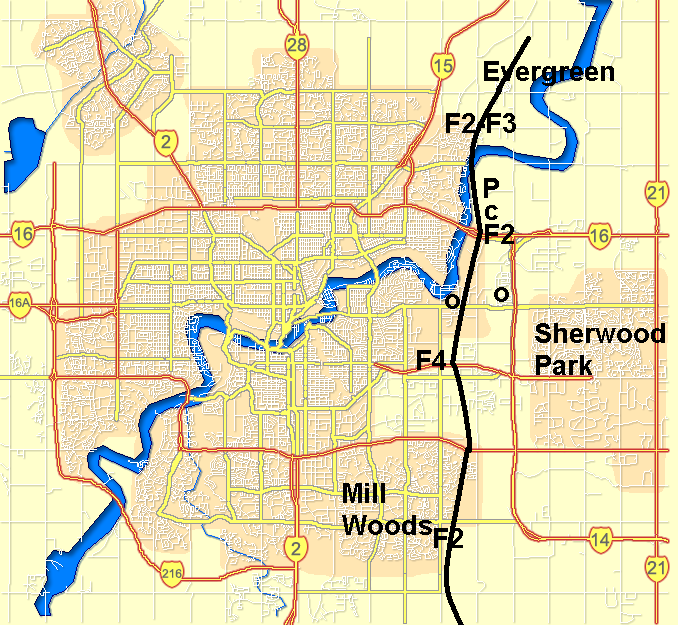
The tornado moved through eastern portions of the city, striking both residential neighbourhoods and peripheral industrial zones. More than 300 dwellings were destroyed or rendered uninhabitable, and critical infrastructure — power, communications and transportation routes — suffered serious disruption. Emergency services and volunteers carried out search, rescue and recovery operations in the immediate aftermath.
Human impact, response and recovery
Beyond the immediate human toll of fatalities and injuries, the disaster produced long-term social and economic effects: displaced families, reconstruction costs, and community trauma. Municipal, provincial and federal agencies coordinated relief, and insurance and rebuilding programmes were activated. The disaster prompted reviews of emergency planning, public-warning systems and building practices in Alberta and across Canada.
Legacy and notable distinctions
The Edmonton tornado remains one of Canada’s most severe tornado events and is often referenced in studies of severe weather preparedness and urban vulnerability. It highlighted the need for improved forecasting, more effective public warnings and resilient construction. The event is associated with Edmonton and Alberta in historical summaries of Canadian weather disasters; see general references about the city of Edmonton and the province of Alberta for broader context.
Further reading: contemporary meteorological analyses and emergency-management reviews examine the storm's evolution and the lessons learned about warning dissemination and community resilience. For technical scales and damage assessments consult the authoritative sources on the Fujita scale.
Related articles
Author
AlegsaOnline.com Edmonton tornado (July 31, 1987) Leandro Alegsa
URL: https://en.alegsaonline.com/art/30173
Sources
- meteo.mcgill.ca : Edmonton Tornado