
Edinburgh Trams: modern light rail connecting city centre and airport
Edinburgh Trams is a modern tramway serving the Scottish capital, providing a 14 km route between York Place and Edinburgh Airport with integrated stops, low-floor vehicles and links to other transport modes.
Edinburgh Trams is a contemporary light rail system serving Edinburgh, Scotland. Operated by Edinburgh Trams Ltd, the line opened for passenger service in May 2014 and by 2017 ran for about 14 kilometres between York Place in the New Town and Edinburgh Airport, with 16 publicly accessible stops. The project restored tram travel to the city after a gap of nearly six decades following the closure of the earlier municipal network in 1956. For official project information see project resources and for wider context about the city see Edinburgh.
Image gallery
10 Images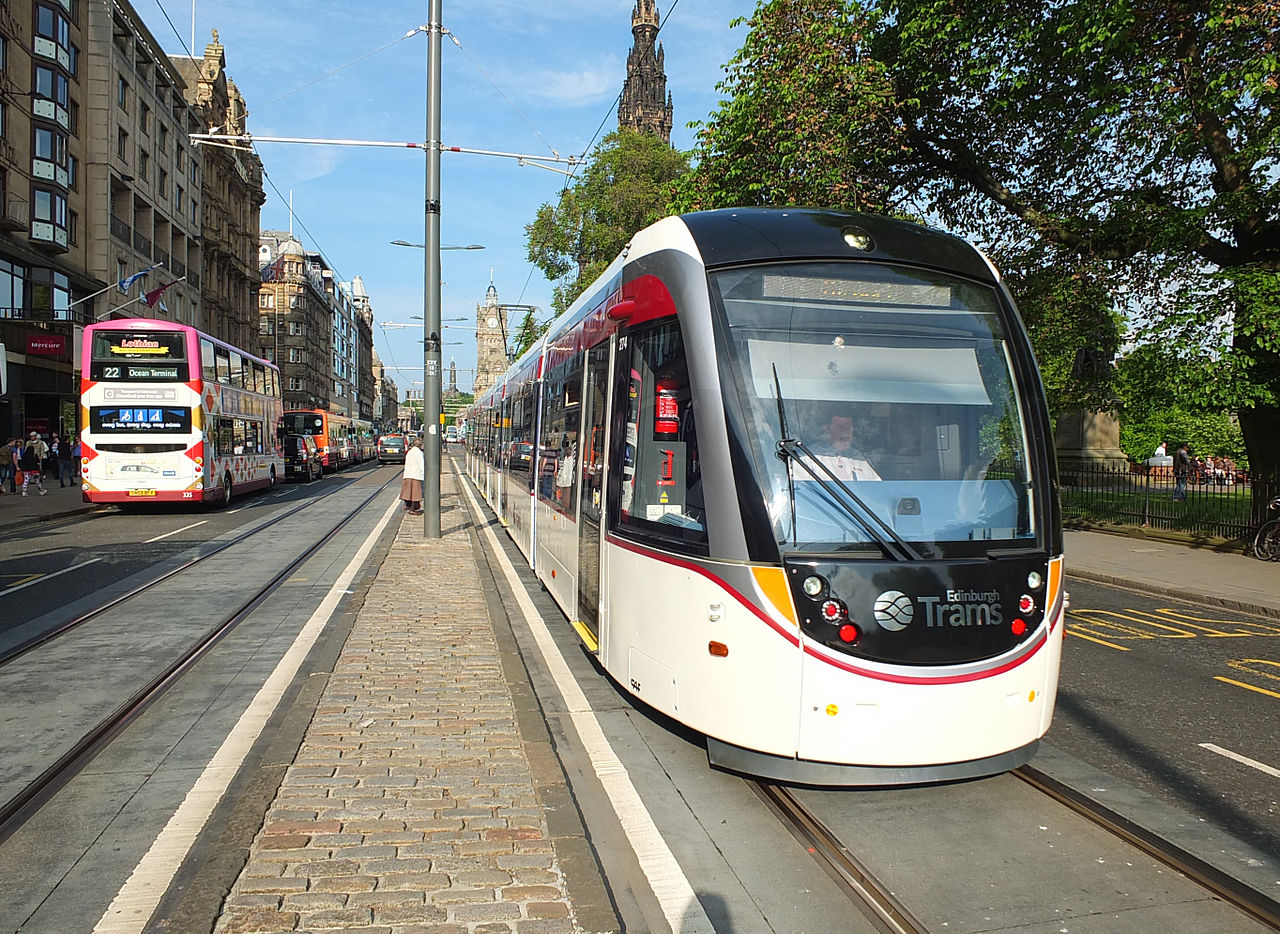


Characteristics and infrastructure
The system uses modern, low-floor articulated trams designed for level boarding and accessibility. Vehicles draw power from overhead lines and run on standard gauge track through a mix of reserved track, street-running sections and segregated alignments. Key infrastructure includes a purpose-built depot and stabling area, a control centre, and platform stops equipped for ticketing and passenger information. The timetable and vehicle size are intended to provide frequent services on the main corridor, with connections to bus and rail services to form an integrated urban transport network.
History and development
Plans to reintroduce trams to Edinburgh emerged after decades of study and debate about the city’s transport needs. Formal construction began in 2008 and the line opened to passengers on 31 May 2014 after a protracted construction period that included redesigns, delays and public controversy. The scheme was delivered in phases: initial sections in the city centre were followed by the airport extension. Its delivery involved close coordination between city authorities, contractors and transport agencies and attracted sustained public attention.
Uses, benefits and criticisms
The tram provides a direct public-transport link between central Edinburgh and the airport, serving commuters, residents and visitors alike. Benefits include a predictable journey time along the corridor, improved accessibility, and opportunities to reduce car trips on busy routes. Critics and independent reviews have highlighted the high cost of construction, the impact of long-term building works on businesses and streetscapes, and debate about the best pattern of future extensions. Nevertheless, the line is a visible part of the city’s transport offer and is used for routine travel and tourist access.
Notable facts and outlook
- Edinburgh Trams represents the return of tram services to the city after the closure of the mid-20th-century network.
- It is managed as part of the city’s wider transport arrangements and complements buses and rail services.
- Proposals and planning for route extensions and service improvements have continued since opening; future changes depend on funding, planning and local priorities.
As a modern urban light-rail system, Edinburgh Trams illustrates contemporary approaches to sustainable city transport: fixed-route public transit with accessible vehicles, integration with other modes, and a capacity to shape travel behaviour and urban development over time.
Related articles
Author
AlegsaOnline.com Edinburgh Trams: modern light rail connecting city centre and airport Leandro Alegsa
URL: https://en.alegsaonline.com/art/30142