
Electric vehicle: overview, components, history and uses
An electric vehicle (EV) uses electric motors and stored electrical energy for propulsion. This article covers types, components, historical development, uses, environmental effects and charging infrastructure.
Overview
An electric vehicle (EV) is a road or rail vehicle that is propelled primarily by one or more electric motors, drawing its driving energy from an onboard battery pack, a fuel cell, or an external source of electricity. EVs convert electrical energy into mechanical torque at the wheels and differ from conventional internal-combustion vehicles by having fewer moving parts in the drivetrain and no tailpipe emissions when running on stored electricity.
Image gallery
10 Images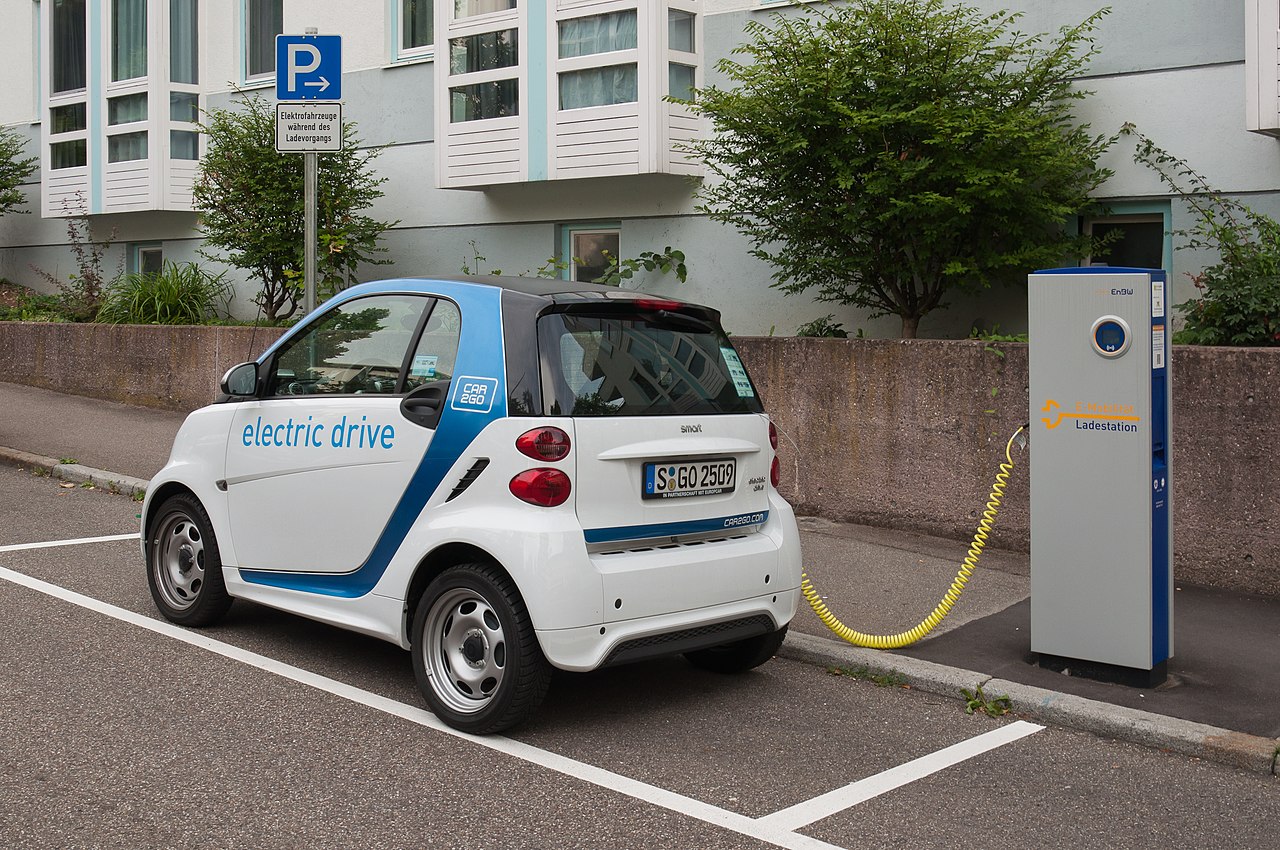


Main parts and characteristics
Key elements that define an electric vehicle include its electric motor, energy storage, and power electronics. Typical systems and components are:
- Electric motor: converts electrical energy into motion; motors may be AC or DC and vary in size and configuration.
- Energy storage: rechargeable batteries (most common) or hydrogen fuel cells that generate electricity on demand.
- Power electronics and control: inverters, converters and software that manage motor speed, torque and charging.
- Charging interface: connectors and onboard chargers allow replenishing energy from the grid or dedicated chargers.
- Regenerative braking: recaptures kinetic energy and returns it to the battery to improve efficiency.
Historical development
Electric propulsion for transport predates the dominance of gasoline. Early electric trains and road vehicles were demonstrated in the 19th century, and in the late 19th and early 20th centuries electric cars competed with steam and gasoline rivals. As affordable petroleum-powered cars and improved internal-combustion technology spread, electric cars became less common for much of the 20th century. Interest resurged around the turn of the 21st century due to concerns about air quality and fuel dependence.
Types and contemporary use
Modern categories include battery-electric vehicles (BEVs), plug-in hybrid electric vehicles (PHEVs), conventional hybrids (HEVs) that combine engines and motors, and fuel-cell electric vehicles (FCEVs). EVs appear across scales and applications: small urban vehicles, passenger cars, buses and commercial delivery vans, industrial machines such as forklifts, and fixed-rail systems like trams. Specialized low-speed or utility vehicles include golf carts and airport ground support vehicles used near aircraft.
Advantages, limitations and infrastructure
Electric vehicles offer lower local emissions and can be quieter and more energy-efficient than internal-combustion vehicles. Their environmental footprint depends on how the electricity is produced and on battery manufacture and recycling. Limitations often cited are driving range, charging time and upfront cost, though advances in battery chemistry and charging networks are reducing these obstacles. Public and private charging infrastructure ranges from slow, low-power chargers to high-power fast chargers and depot charging for fleets.
Distinctions and notable facts
EVs are distinct from vehicles that use electric assist or auxiliary electric systems; some vehicles use electricity only for accessories or for starting an engine. Electric traction has long been used where emissions or noise must be minimized, for example in indoor settings or densely populated areas. Renewed investment and policy incentives in many countries aim to increase EV adoption as part of broader strategies to address urban air quality and greenhouse gas emissions.
For more technical details, terminology and standards, see resources on motors, historical transport, human- and animal-powered vehicle comparisons, and the evolution of fuel-based propulsion. Further reading on environmental and policy aspects is available through dedicated energy and transport links such as public transit and airside operations, and analyses of emissions and pollution reduction strategies at environmental information portals.
For introductory definitions and practical advice on ownership, charging and maintenance consult general guides and manufacturer documentation via manufacturer sites or industry portals noted above.
Questions and answers
Q: What is an electric vehicle?
A: An electric vehicle is a vehicle that uses electricity to move, with its wheels being driven by electric motors.
Q: When were electric trains and cars built?
A: Electric trains and cars were built in the 1830s.
Q: Were there more electric cars or gasoline-powered cars in the early 1900s?
A: There were more electric cars than gasoline-powered cars in the early 1900s.
Q: What became the most common kind of car for most of the last 100 years?
A: Cars powered by gasoline or diesel fuel became the most common kind of car for most of the last 100 years.
Q: Where have electric vehicles been long used?
A: Electric vehicles have been long used in some special cases, such as forklifts, golf carts, trolley bus or certain vehicles used around airplanes at an airport.
Q: Why are people using more electric and hybrid vehicles again in the early 21st century?
A: People are using more electric and hybrid vehicles again as a way to reduce pollution and use less gasoline in the early 21st century.
Q: What was one of the first kinds of vehicles that did not use horse or human power?
A: Electric vehicles were one of the first kinds of vehicles that did not use horse or human power.
Related articles
Author
AlegsaOnline.com Electric vehicle: overview, components, history and uses Leandro Alegsa
URL: https://en.alegsaonline.com/art/30688
Sources
- inventors.about.com : "Inventors of Electric Vehicles"
- edisontechcenter.org : "History of Electric Cars"
- www1.eere.energy.gov : "Vehicle Technologies - HEV"
- www1.eere.energy.gov : "Vehicle Technologies - PHEV"
- science.howstuffworks.com : "How Stuff Works - locomotives"
- fueleconomy.gov : "Advantage/Disadvantage of EVs"