
Economic system
A structured set of institutions, rules and practices that coordinate production, allocation, exchange and distribution of goods and services within a society or territory.
Overview
An economic system is the organized way a community or country manages the production, resource allocation, distribution and exchange of goods and services. It specifies who decides what is produced, how inputs such as labor and capital are assigned, who receives output, and which institutions enforce rules. An economic system operates within a particular society or geographic area, but it is shaped by culture, technology and politics as well as by markets and planning.
Image gallery
1 Image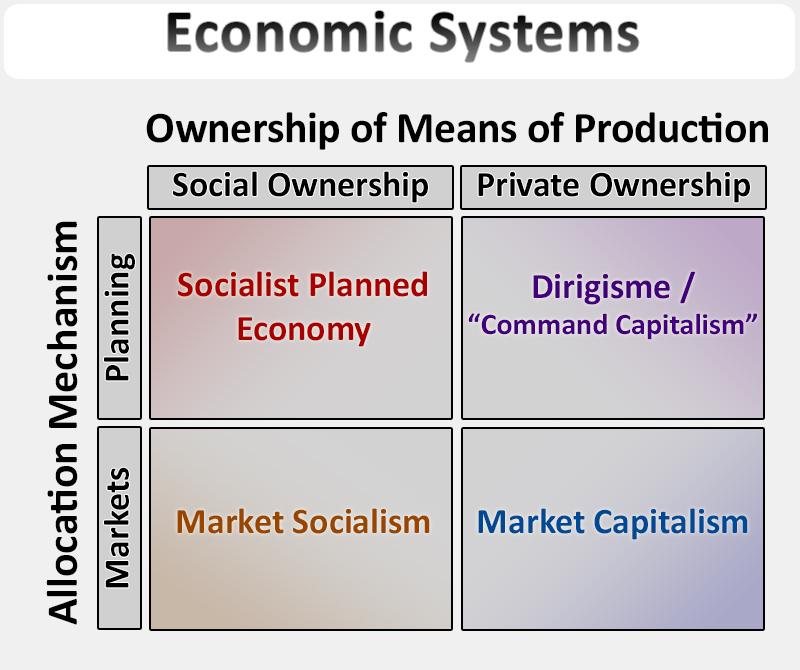
Key characteristics and components
Most systems combine several elements: markets where buyers and sellers meet, mechanisms of price formation, forms of ownership, and public institutions. Typical components include:
- Markets and trade — organized exchange and trade networks that match supply and demand.
- Money and finance — means of payment and stores of value such as money, banks and credit systems.
- Legal and regulatory framework — property rights, contracts, and laws and regulations that govern transactions.
- Institutions — firms, cooperatives, government agencies and informal arrangements that implement decisions.
Brief historical development
Economic systems have evolved from small-scale subsistence and barter arrangements to complex national and global systems. The invention of money, the rise of markets, industrialization and improvements in transportation and communication expanded specialization and trade. In the 20th century, large-scale planning appeared in some countries, while others relied increasingly on market mechanisms; many modern economies are mixed, combining public policy with private enterprise.
Types and examples
Analysts commonly distinguish several ideal types, recognizing that real systems are often hybrids:
- Market economies — decisions largely driven by private actors and prices.
- Planned or command economies — central authorities set production goals and allocation.
- Mixed economies — a blend of markets and government intervention to achieve social goals.
- Traditional economies — customs and community norms determine production and distribution.
Importance, examples and modern challenges
Economic systems determine living standards, employment patterns and the distribution of wealth. They influence incentives for innovation, the management of common resources, and responses to crises such as recessions or pandemics. Contemporary debates focus on inequality, environmental sustainability, the effects of globalization and digital platforms, and how policy tools can balance efficiency, equity and resilience. Understanding an economic system requires attention to both formal rules and informal practices that shape economic behavior.
For further reading on specific mechanisms and country cases, consult resources that examine how institutions, technology and policy interact to produce different outcomes.
Related articles
Author
AlegsaOnline.com Economic system Leandro Alegsa
URL: https://en.alegsaonline.com/art/29965