
Ebers Papyrus: Ancient Egyptian Medical Treatise
A summary of the Ebers Papyrus, its contents, historical background, medical and magical remedies, notable examples, and its significance for the history of medicine.
Overview
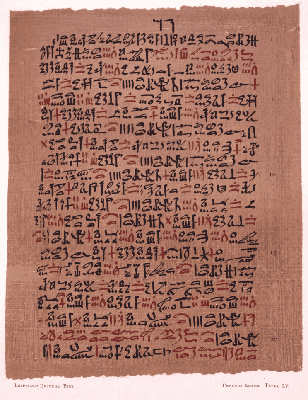
The Ebers Papyrus is one of the best known surviving medical documents from ancient Egypt. Dated to the New Kingdom period, it presents a mixture of empirical observations, materia medica, and ritual or magical instructions used by Egyptian practitioners. The text is written in hieratic script on a long papyrus roll and reads like a handbook for a range of ailments, combining pragmatic treatments with incantations and protective measures.
Image gallery
2 Images
Contents and structure
The papyrus functions largely as a compendium of remedies and case descriptions. It lists hundreds of single ingredients and compound prescriptions, many drawn from plants, minerals and animal products. Remedies are organized according to the part of the body or the type of complaint, and the entries vary from concise notes to longer formulae.
- Common categories include digestive disorders, eye diseases, skin problems, gynecological and dental issues, and maladies affecting the head and chest.
- Entries mix practical treatments — poultices, topical applications, and ingested preparations — with spells, amulets and ritual actions intended to counter supernatural causes.
Notable remedies and examples
Some remedies recorded in the papyrus are recognizable in their therapeutic intent: for example, the use of opium as an analgesic and various plant-based preparations to relieve pain or inflammation. Other prescriptions reflect symbolic or magical thinking by modern standards, such as the instruction to tap a sufferer’s head with a fish for a headache or to employ spoken formulas alongside a physical treatment. The document shows how medicine and magic were interwoven in ancient practice.
History and provenance
The manuscript was copied in ancient Egypt and preserved on a long roll of papyrus. In the 19th century it entered modern scholarly awareness through European collectors and Egyptologists; the publication and study of the text played a key role in bringing ancient Egyptian medical knowledge to broader attention. For modern readers it is often discussed alongside other medical texts from Egypt, which together illuminate different aspects of ancient medical theory and technique. See a general description at medical treatise.
Importance and distinctions
The Ebers Papyrus is important because it represents one of the earliest extensive pharmacopoeias: a repertoire of substances and recipes used systematically for therapy. It documents a range of substances still familiar today, and it preserves evidence of non-pharmaceutical elements of care, such as diet, hygiene, and ritual. Scholars compare it with more surgical texts to understand how Egyptians distinguished between wounds and internal disease. For a survey of remedies and their contexts see pharmacopoeia overview and text studies.
Legacy and study
Modern historians of medicine treat the papyrus as both a scientific and cultural source: it informs the development of ancient pharmacology and illustrates how medical practice responded to social and religious beliefs. Ongoing translation and commentary work continues to refine our understanding of specific prescriptions and terminology. For a focused discussion on individual recipes and notable items such as opium see drug examples and for broader historical context consult background resources.
Related articles
Author
AlegsaOnline.com Ebers Papyrus: Ancient Egyptian Medical Treatise Leandro Alegsa
URL: https://en.alegsaonline.com/art/29834