
Echocardiography (Cardiac Ultrasound)
Echocardiography is a noninvasive imaging technique that uses ultrasound to visualize heart structure and function, including 2D, 3D and Doppler methods used in diagnosis and patient management.
Overview
Echocardiography, often called a cardiac ultrasound or echocardiogram, uses high-frequency sound waves to create moving images and audible representations of the heart. It provides real-time assessment of chamber size, wall motion, valve form and flow, and pericardial anatomy without ionizing radiation. Many hospitals and clinics perform echocardiograms; portable systems and handheld devices have expanded access to bedside studies.
Image gallery
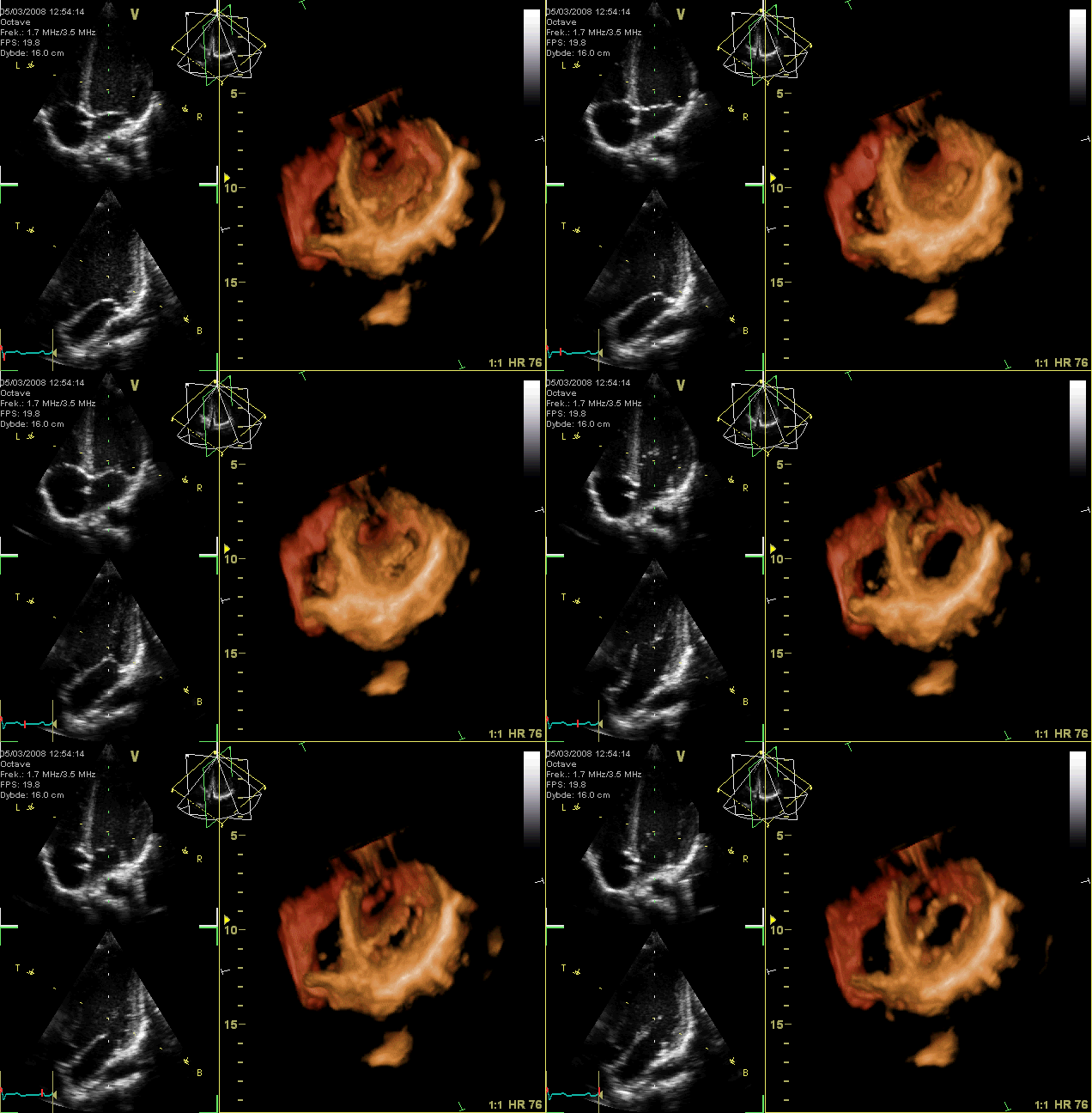
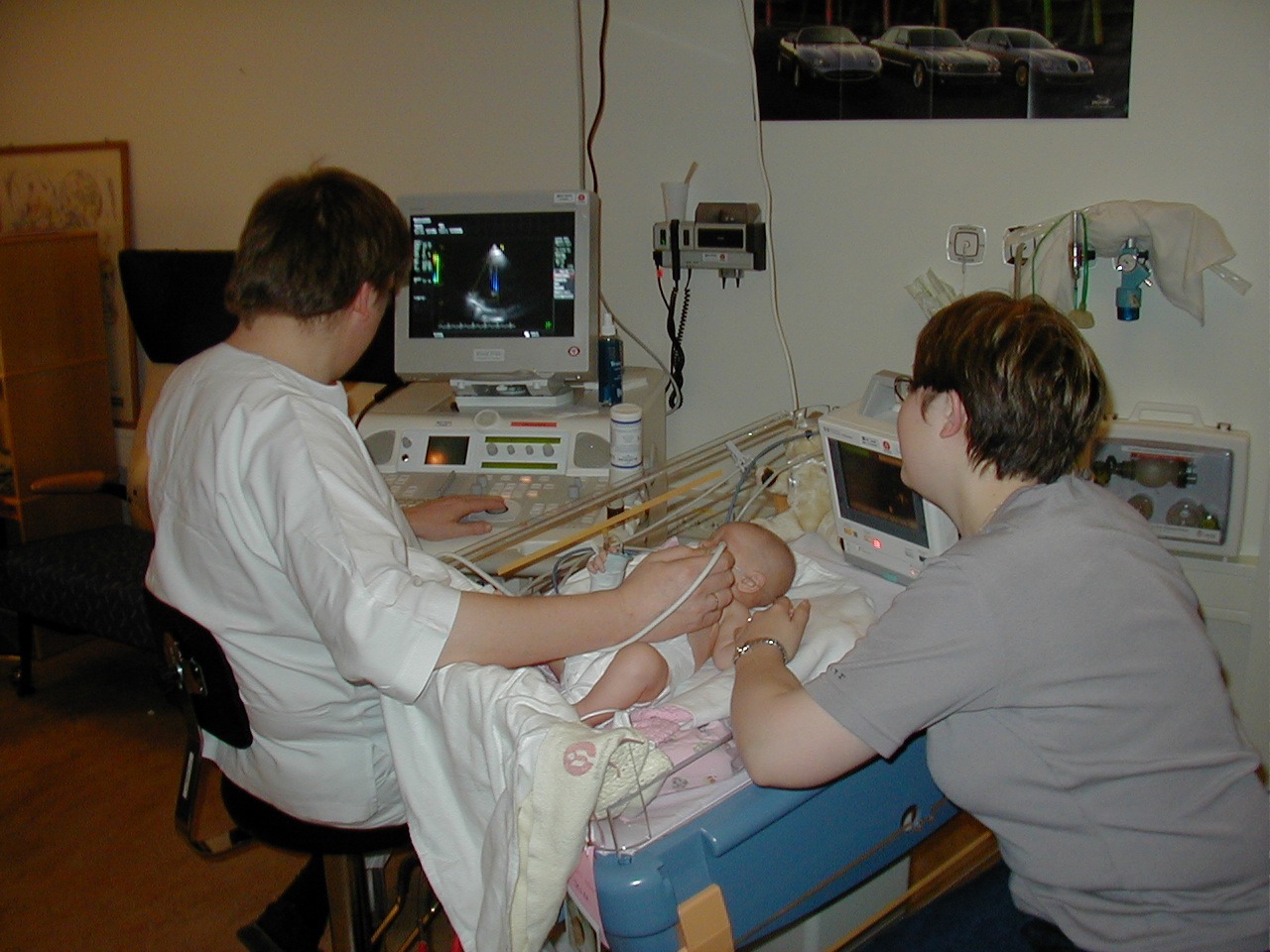
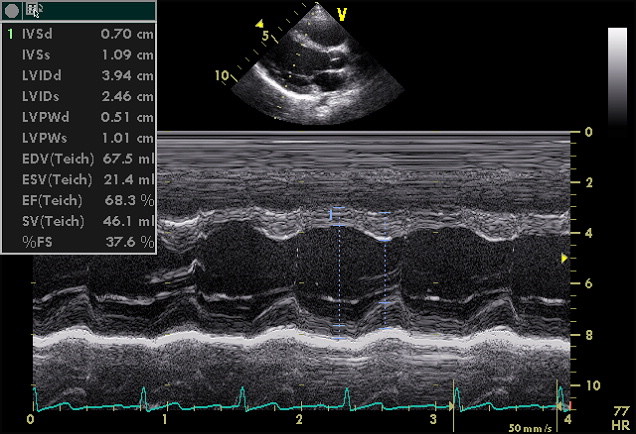
5 Images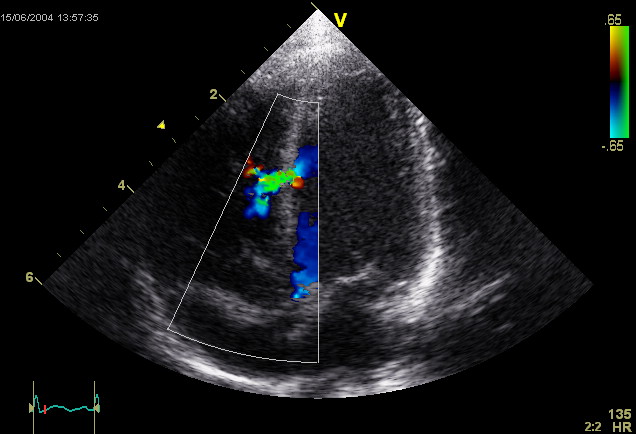

Techniques and main components
Modern echocardiography combines several complementary techniques. Typical components include a transducer, signal processor, and display software that reconstruct images. Common modes are:
- Two-dimensional (2D) imaging: anatomic views and motion of heart structures.
- Three-dimensional (3D) imaging: volumetric data useful for complex valve assessment.
- Doppler methods: measure blood flow velocity and direction across valves and vessels.
- Transesophageal echocardiography (TEE): a probe in the esophagus provides higher-resolution views and is semi-invasive.
- Stress echocardiography: images obtained during exercise or pharmacologic stress to detect ischaemia.
Clinical uses and examples
Echocardiography is widely used to diagnose and monitor heart disease. Typical indications include evaluation of suspected valve disease, heart failure and cardiomyopathy, regional wall-motion abnormalities after suspected myocardial infarction, congenital heart defects, pericardial effusion, and intracardiac masses or thrombi. It also guides some procedures and is used perioperatively to assess function and device placement.
History and development
The first clinical applications of diagnostic cardiac ultrasound emerged in the 1950s. Pioneering work by physicians and physicists, notably Inge Edler and Carl Helmuth Hertz, adapted ultrasonic techniques for imaging the moving heart. Since then, advances in transducer design, digital processing and Doppler physics have greatly increased image quality and diagnostic capability.
Advantages, limitations and notable facts
Advantages include safety, real-time imaging and broad availability. Limitations stem from acoustic windows (body habitus, lung interference), operator dependence, and reduced accuracy in some prosthetic valve settings. TEE offers superior detail when transthoracic images are inadequate but requires sedation and carries procedural risks. Echocardiography remains fundamental in cardiology for diagnosis, monitoring and procedural support.
For concise clinical summaries and practice guidance see Echocardiography resources.
Questions and answers
Q: What is echocardiography?
A: Echocardiography is an ultrasound used to view and hear the heart.
Q: What type of images can echocardiography create?
A: Echocardiography can create two-dimensional, three-dimensional, and Doppler ultrasound images and sounds of the heart.
Q: Where are echocardiography machines commonly used?
A: Echocardiography machines are mainly used in hospitals.
Q: Who invented echocardiography?
A: Echocardiography was invented by Carl Helmuth Hertz and Inge Edler in the 1950s.
Q: How does echocardiography work?
A: Echocardiography works by using ultrasound waves to create images and sounds of the heart.
Q: What are some of the benefits of using echocardiography?
A: Some of the benefits of using echocardiography include non-invasive testing, real-time imaging, and the ability to diagnose a range of heart conditions.
Q: Can echocardiography be used to diagnose heart conditions in infants?
A: Yes, echocardiography can be used to diagnose heart conditions in infants.
Related articles
Author
AlegsaOnline.com Echocardiography (Cardiac Ultrasound) Leandro Alegsa
URL: https://en.alegsaonline.com/art/29892