
All's Well That Ends Well
A Shakespearean play blending comedy and moral ambiguity: Helena’s determined pursuit of Bertram, debates about consent and class, sourced from Boccaccio and printed in the First Folio (1623).
All's Well That Ends Well is a play by William Shakespeare that blends comic episodes with serious moral questions. Often described as a comedy, its tone and outcome have provoked debate among critics: some emphasize its humorous scenes, others its troubling resolution. The story draws on a narrative from Boccaccio's Decameron and was probably composed around 1600–1603; its earliest surviving printed text appears in the First Folio of 1623.
Image gallery
5 Images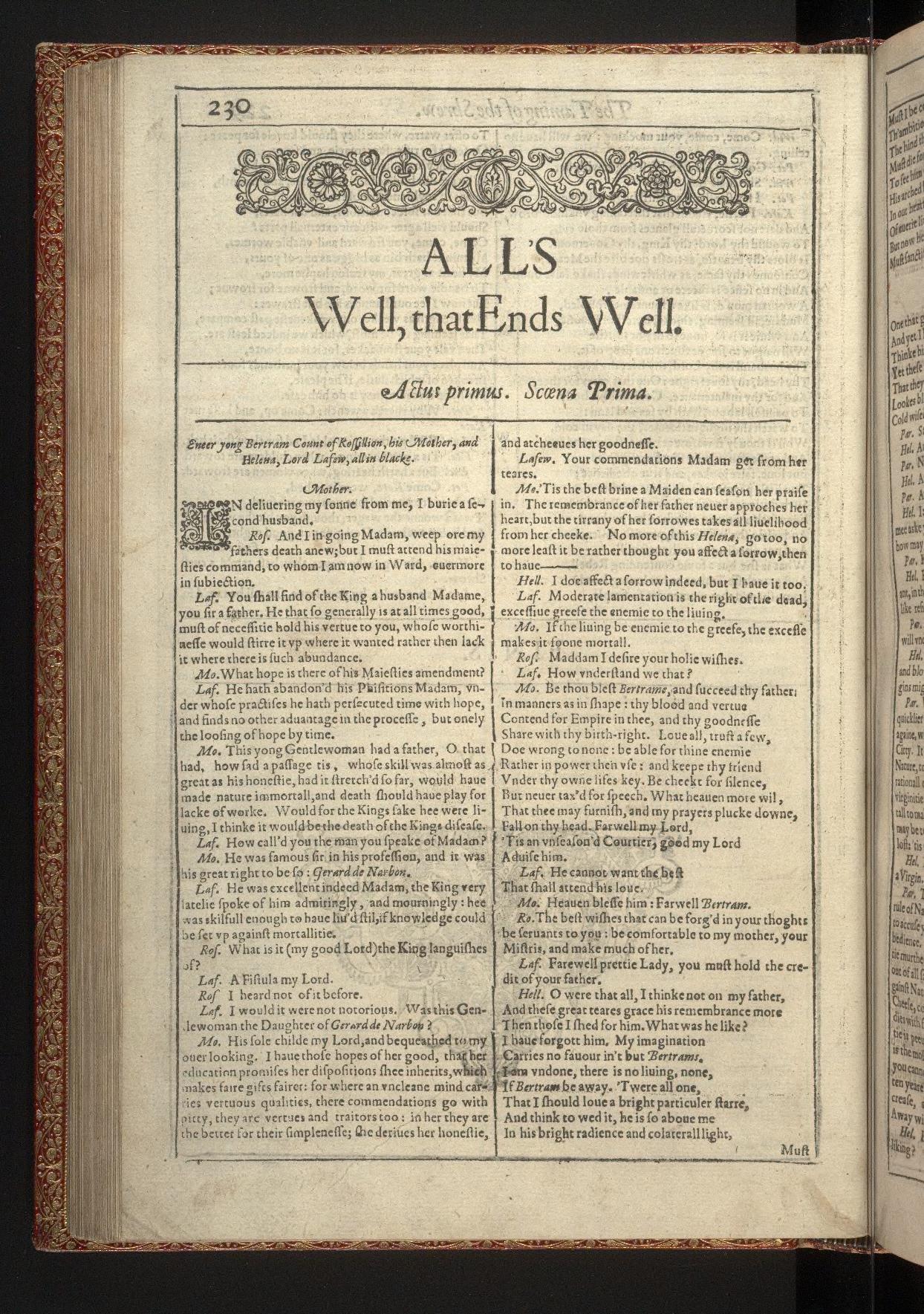



Overview
The play centers on Helena, a resourceful young woman of lower social standing who cures the King of France and is rewarded with permission to choose a husband from among the king's favored nobles. She chooses Bertram, a proud count who rejects her and departs to serve in the wars. Much of the drama follows Helena's determination to win Bertram's acceptance and the methods she uses to fulfill the conditions he lays down.
Characters and structure
The work follows the conventional five-act structure of Shakespeare's stage plays and pairs comic portraits with more serious figures. Principal characters include:
- Helena — intelligent, loyal, and medically skilled.
- Bertram — a restless young noble whose honor and desires drive much of the conflict.
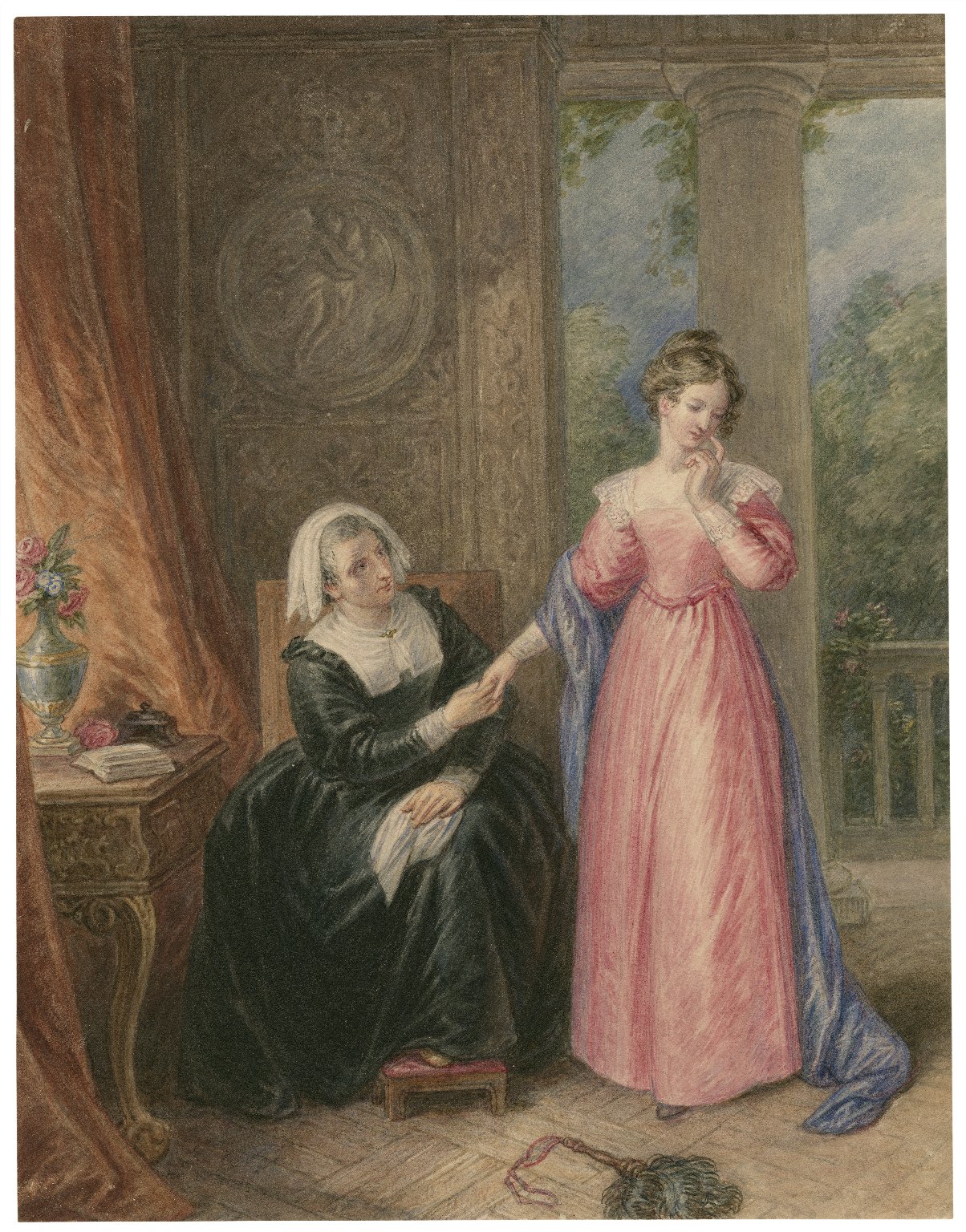
- The Countess — Bertram's mother, a figure of grief and dignity.
- Parolles — a boastful soldier who provides comic relief and whose exposure forms a key episode.
- The King and the old lord Lafew — represent authority, judgment, and counsel.
Themes and critical debate
Major themes include social mobility, the obligations of marriage, the limits of male honor, and the ethics of deception. Scholars frequently classify the play among Shakespeare's "problem plays" because its ending mixes reconciliation with unresolved moral tensions: Helena's agency and the manner in which she secures Bertram's return raise questions about consent and power that directors and readers continue to discuss.
Sources, history, and performance
Shakespeare adapted the main plot from an Italian tale and reshaped it for English audiences, adding characters and comic subplots. The exact date of composition is uncertain but is commonly placed in the early 1600s. The play's performance history has been uneven; it was less popular than many comedies in earlier centuries but has attracted renewed attention from modern critics and theatre companies interested in its psychological complexity and staging challenges.
Reception and adaptations
All's Well That Ends Well has inspired varied responses: some productions emphasize its humour and craft a reconciliatory finale, while others foreground its darker implications. The play has been adapted for stage and screen in diverse ways, with modern productions often reinterpreting characters and relationships to address contemporary concerns about gender and autonomy.
Related articles
Author
AlegsaOnline.com All's Well That Ends Well Leandro Alegsa
URL: https://en.alegsaonline.com/art/2865
Sources
- william-shakespeare.info : All's Well That Ends Well