
Dmitri Kogan (1978–2017) — Russian violinist and cultural organiser
Dmitri Kogan, Russian violinist (1978–2017), Honoured Artist of the Russian Federation; noted for international festival appearances, teaching and promoting classical music across Russia; died of lymphoma.
Overview
Dmitri Pavlovich Kogan (27 October 1978 – 29 August 2017) was a Russian violinist celebrated for expressive playing and active engagement in cultural projects. Born in Moscow, he combined a performing career with festival direction, teaching and initiatives to bring classical music to new audiences.
Image gallery
1 Image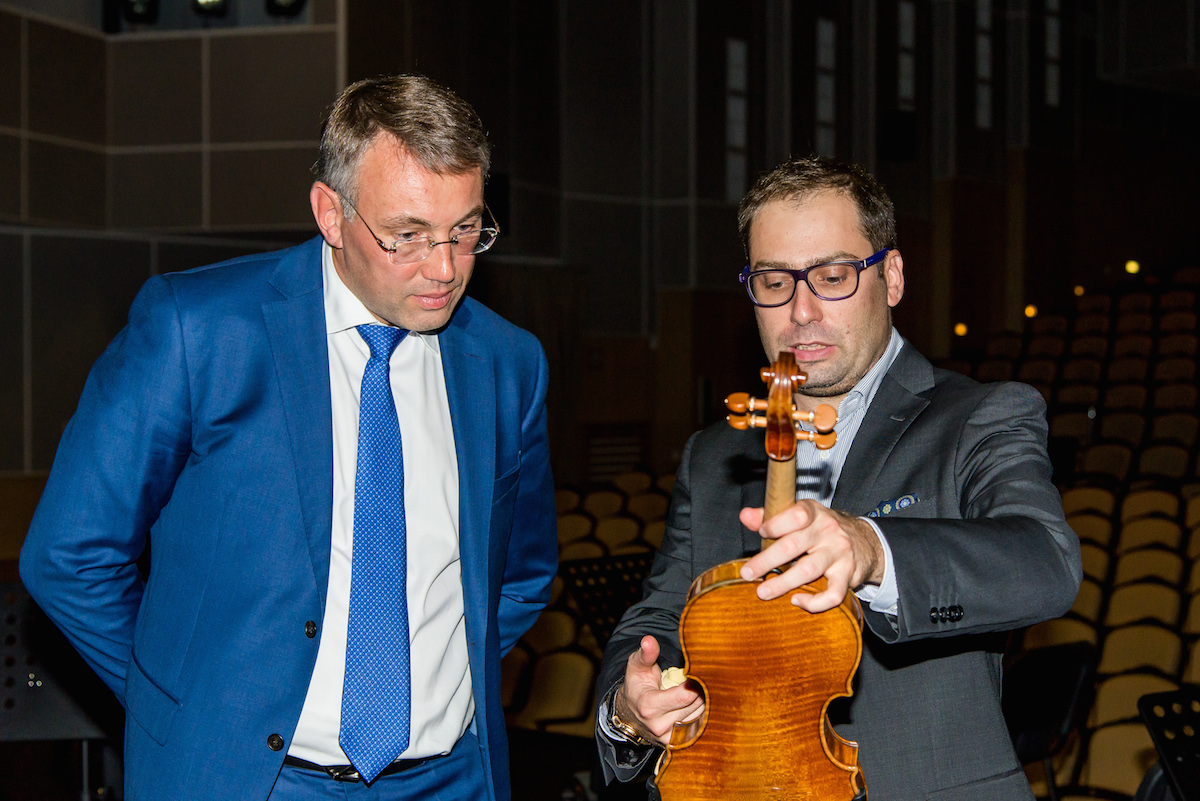
Education and early career
Kogan began violin studies at the age of six at the Central Music School of the Moscow State P.I. Tchaikovsky Conservatory. Trained in the Russian violin tradition, he developed a repertoire spanning solo sonatas, concerto literature and chamber works. Over the course of his career he gave recitals, concertos with orchestras and participated in masterclasses as both student and teacher.
Festival appearances and collaborations
Throughout his career Kogan appeared at major international and domestic festivals, often performing in programs that ranged from classical core repertoire to cross-genre projects. Notable appearances included:
- Corinthian Summer Festival (Austria)
- Menton Music Festival and the Montreux Jazz Festival (Switzerland)
- Perth Festival (Scotland)
- Concerts in Athens, Vilnius, Helsinki, Shanghai and Ogden
- Frequent appearances at Russian festivals such as Chereshnevy Les Open-Art, Music Kremlin and Russian Winter (Russkaya Zima)
Artistic leadership and public roles
Kogan took on organisational and civic responsibilities in addition to performing. In September 2014 he served as Artistic Director of the inaugural First Arctic Classical Music Fest in the Nenets Autonomous Okrug, an effort to expand classical programming into Russia's northern regions. At the same time he was appointed a counsellor for cultural affairs to the governor of that region, a role in which he promoted music education and regional cultural projects.
Style, repertoire and influence
Kogan was often described as having a warm tone and committed, communicative stage presence. His programming balanced established concertos and sonatas with chamber repertoire and occasional crossover pieces intended to attract wider audiences. He was active in teaching and outreach, giving masterclasses and supporting young musicians, and is remembered for his efforts to make classical music accessible beyond major cultural centres.
Death and legacy
Dmitri Kogan died in Moscow on 29 August 2017, at the age of 38, after a battle with lymphoma. His early death was widely mourned in Russian musical circles. He is remembered both for his performances and for initiatives that aimed to broaden the reach of classical music in Russia, particularly through festivals and educational work.
For further reading and recordings, see artist profiles and festival archives linked from conservatory and festival pages.
Related articles
Author
AlegsaOnline.com Dmitri Kogan (1978–2017) — Russian violinist and cultural organiser Leandro Alegsa
URL: https://en.alegsaonline.com/art/28058