
Australian House of Representatives
The House of Representatives is the lower chamber of the Parliament of Australia. It has 151 members elected from single-member divisions, forms government and controls budget and confidence in federal politics.
The Australian House of Representatives is the lower chamber of the federal legislature and one of two houses that together make up the Parliament of Australia. Commonly called "the House", it works alongside the upper house, the Senate, to pass laws and hold the executive to account. Members of the House are often referred to as MPs (Members of Parliament) and normally serve terms of up to three years.
Image gallery
7 Images


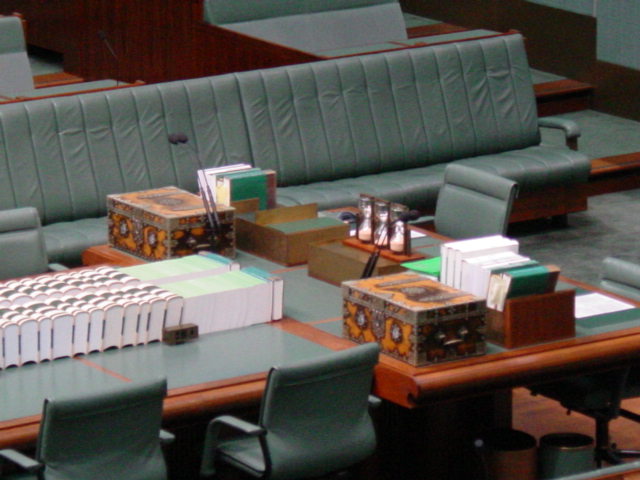
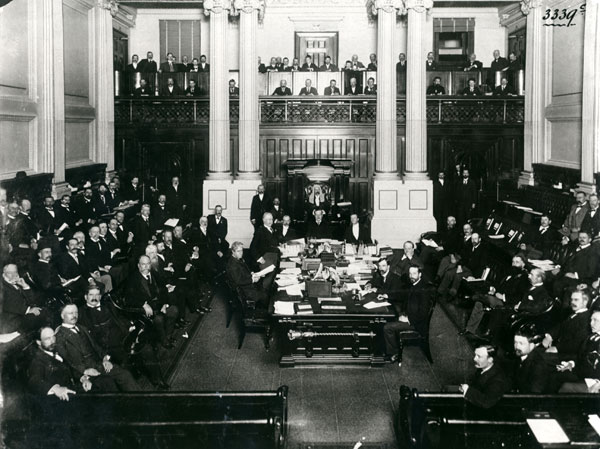
Composition and electoral system
The House has 151 single-member constituencies, officially known as divisions or electorates. Each MP represents one electorate and is elected by the voters who live there. The number and boundaries of electorates are adjusted to reflect population changes so that representation is distributed in proportion to the states and territories; these redistributions are administered by the Australian Electoral Commission. Voting in House elections uses full preferential (instant-runoff) voting in single-member seats, and enrolment and voting are compulsory for eligible citizens.
Main roles and powers
Although it is the "lower" chamber, the House of Representatives holds central responsibilities in federal government:
- Forming government: the party or coalition with majority support in the House normally provides the Prime Minister and Cabinet.
- Financial control: most appropriation and budget bills originate in the House, giving it a leading role in public finance.
- Accountability: ministers answer questions and defend policy during Question Time and committee inquiries.
- Legislation: it initiates, amends and votes on bills that, if passed by both houses, become law.
The House is presided over by the Speaker, and its day-to-day business is structured by standing orders, sittings, and a range of parliamentary committees that examine legislation and government conduct.
History and constitutional basis
The House of Representatives was established by the Australian Constitution at Federation in 1901. The Constitution requires that members be "directly chosen by the people" and includes a provision — often called the "nexus" — that links the size of the House to the number of Senators so that representation remains broadly balanced between the two chambers. The institution draws from the Westminster tradition but has features adapted for Australia's federal system.
Operation, examples and notable distinctions
House elections are typically held every three years, though the Prime Minister may advise the Governor‑General to call an early election. Because government depends on maintaining confidence in the House, its composition determines which party or coalition can govern. Electorates vary widely in geography and population density: urban divisions are compact while some rural and remote electorates cover very large areas. For a basic glossary and further procedural details see the entry on the lower house and the description of an electorate.
For official information about the Parliament and electoral rules consult resources maintained by parliamentary services and the AEC; introductory overviews are available from general parliamentary guides and public information pages. The Senate and upper house interact with the House through the legislative process, while inquiries and reports produced by House committees provide important scrutiny of national policy and administration.
Related articles
Author
AlegsaOnline.com Australian House of Representatives Leandro Alegsa
URL: https://en.alegsaonline.com/art/7490
Sources
- aec.gov.au : "Redistributions"