
Down to the Countryside Movement
A mass policy during China's Cultural Revolution that sent urban youth to rural areas for ideological education and labor, affecting millions and leaving a long social and cultural legacy.
Overview
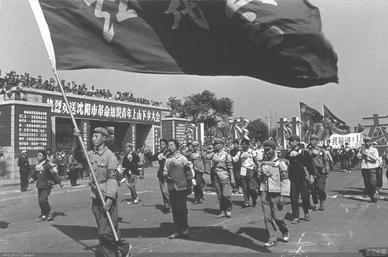
The Down to the Countryside Movement was a government campaign in the People's Republic of China, carried out primarily in the late 1960s and through the 1970s, that relocated large numbers of urban young people to rural villages and frontier regions. Launched in the context of the Cultural Revolution, its stated aim combined political education, social reform and economic relief: city youth were to learn from agricultural workers and peasants and be remade away from so‑called bourgeois influences.
Image gallery
3 Images

Origins and policy goals
Championed by leaders including Mao Zedong, the movement used the slogan "up to the mountains and down to the countryside." Officials described it as a way to re‑educate young people, reduce urban unemployment and ease social tensions. In practice the program mixed ideological motives with pragmatic calculations about labor distribution and political control during an unstable period.
Implementation and scale
Starting from directives and mass mobilizations in 1968, millions of recent school leavers and young workers were transported to farms, ranches and remote communes across China. Recipients included destinations in vast interior regions and border areas such as Inner Mongolia. Many participants became known as the "rusticated" or "sent‑down youth" (zhīqīng), living and working under village authority rather than in their home cities.
Experience and consequences
Life for sent‑down youth was often harsh: long hours of manual labor, limited access to formal education, and isolation from families. For a significant number, the move interrupted or ended plans for higher education and professional careers. After the Cultural Revolution ended and political controls relaxed, some returned to cities, while others remained in rural communities. Estimates place the total affected population in the millions; the episode shaped the life courses of a generation and influenced family structures and local economies.
Legacy, literature and debate
The movement left a contested legacy. Critics describe it as a traumatic social experiment that wasted human potential and caused suffering; defenders at the time argued it fostered solidarity with rural populations. The experience has been the subject of novels, memoirs and scholarly study. Writers and intellectuals who drew on their sent‑down youth experiences include figures such as Liu Xiaobo, Jiang Rong and Zhang Chengzhi, who used their memories to explore identity, history and the costs of political campaigns.
Notable facts and distinctions
- The policy was not uniform: conditions varied widely by location, from relatively integrated assignments to remote, demanding labor camps.
- Educational disruption was widespread; the resumption of national university entrance exams in the late 1970s opened new paths for some returnees.
- The term "sent‑down youth" remains a key reference in discussions of post‑1970s Chinese society, demographics and cultural memory.
Understanding the Down to the Countryside Movement requires attention to both its immediate effects on individuals and its broader role in shaping Chinese social and cultural life during and after the Cultural Revolution. For further context, see historical overviews and first‑person accounts that document the range of experiences and the long‑term consequences of this mass relocation program.
Related articles
Author
AlegsaOnline.com Down to the Countryside Movement Leandro Alegsa
URL: https://en.alegsaonline.com/art/28773