
Disulfur decafluoride (S2F10)
Disulfur decafluoride (S2F10) is a rare inorganic sulfur fluoride notable for its unusual bonding and high toxicity; it has no widespread commercial uses and is handled only under strict controls.
Overview
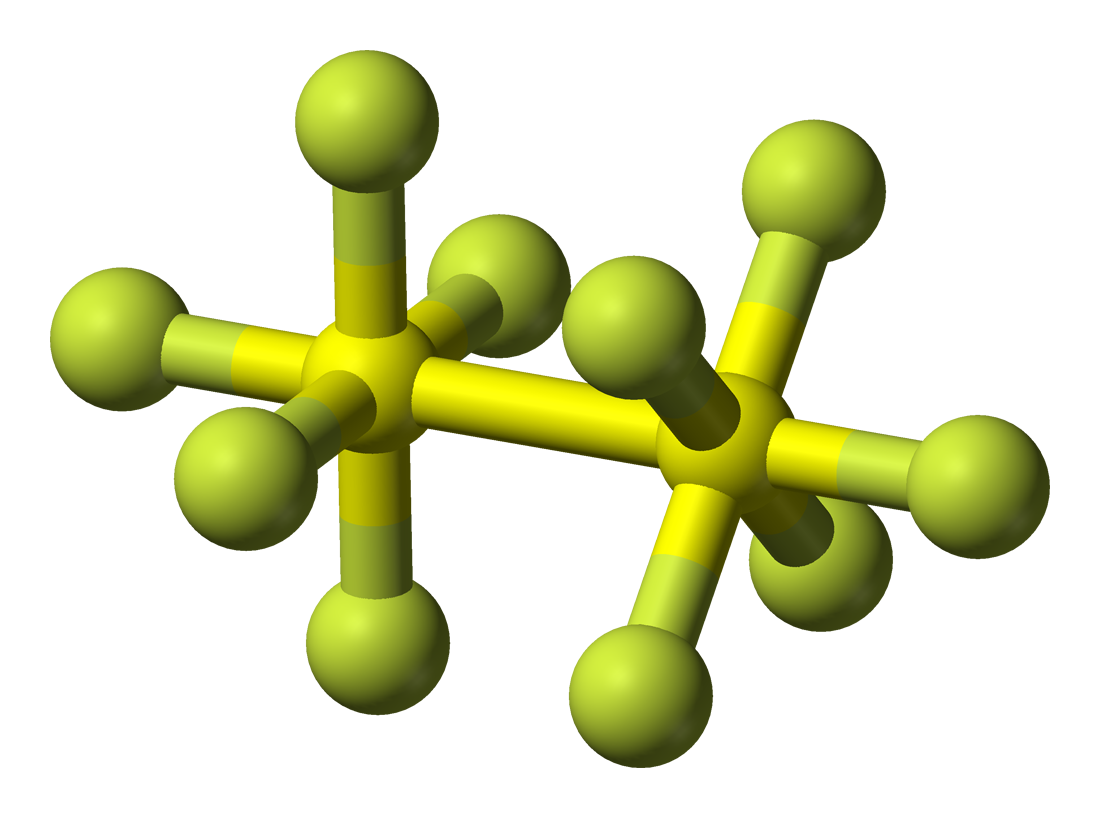
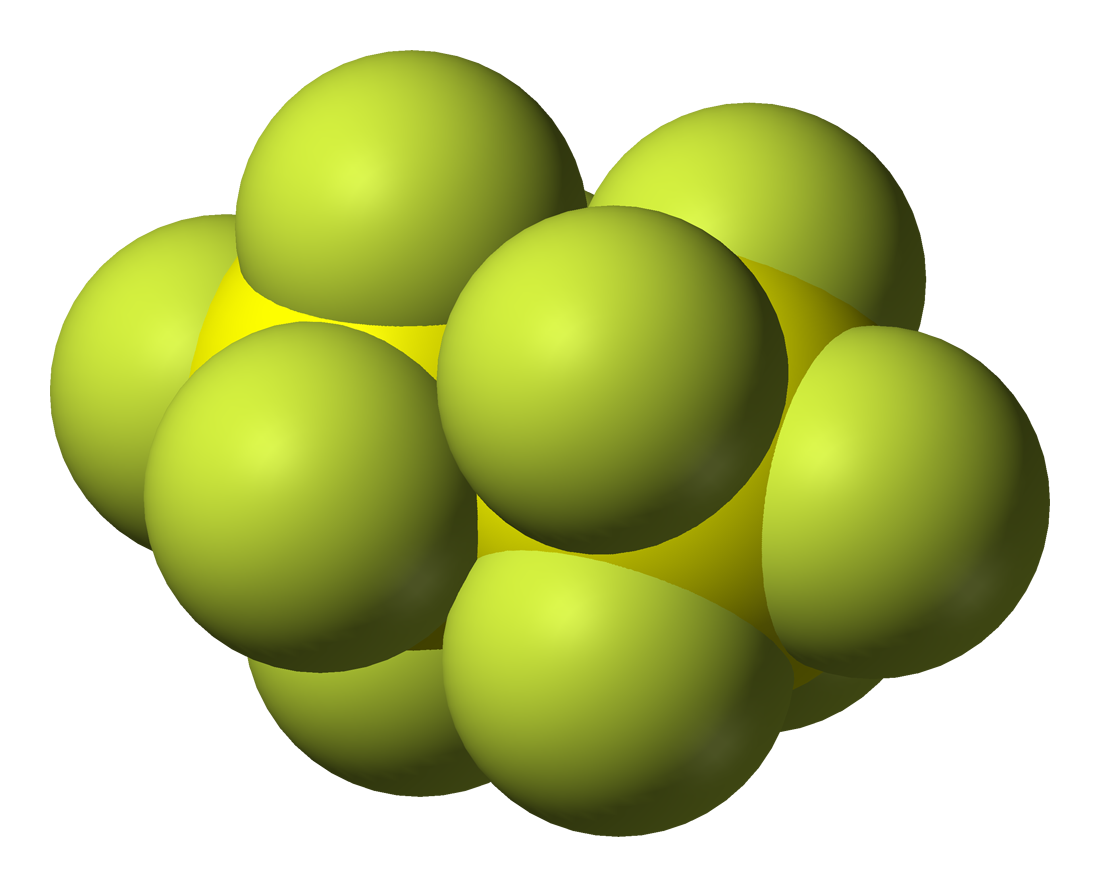
Disulfur decafluoride, chemical formula S2F10, is an inorganic sulfur fluoride sometimes called sulfur(V) fluoride. It can be described conceptually as two SF5 fragments joined by an S–S bond and is of interest chiefly to specialist fluorine chemists and industrial hygienists. General reference material about the compound appears in technical sources and safety summaries (see general reference).
Image gallery
3 Images
Structure and chemical characteristics
The molecule contains two equivalent sulfur centers formally in the +5 oxidation state. Its bonding places fluorine atoms around each sulfur so that the overall formula is often written as (SF5)2 with an S–S linkage. It is chemically distinct from the common gas sulfur hexafluoride (SF6) and shows very different reactivity and hazard traits. For concise chemical identifiers and basic data consult specialized databases (chemical data).
Occurrence, synthesis and uses
S2F10 is not produced for general commercial use. It can appear as a trace byproduct in some fluorination processes or electrical-insulation applications where sulfur fluorides are present. Because of its toxicity and lack of useful applications, it is treated as an undesirable impurity rather than a useful product. Historical accounts and preparative details are available in the fluorine chemistry literature (technical literature).
Safety, detection and handling
Disulfur decafluoride is noted for its extreme toxicity and potential to cause serious harm at low concentrations. It is handled only by trained personnel using controlled systems: closed equipment, dedicated detection, and engineered ventilation. Analytical detection is typically by gas-phase techniques capable of separating and identifying trace sulfur fluorides. Because of its hazardous nature, monitoring and rigorous control are the primary practical responses.
Notable distinctions
- S2F10 differs sharply from SF6: SF6 is chemically inert and used as an insulating gas, while S2F10 is a toxic byproduct and not used intentionally.
- It serves as an example of how relatively small changes in composition among sulfur fluorides produce large differences in properties and hazards.
Because S2F10 is uncommon outside specialist contexts, most public and industrial guidance emphasizes prevention of formation, reliable detection, and elimination of any contamination rather than utilization of the compound.
Related articles
Author
AlegsaOnline.com Disulfur decafluoride (S2F10) Leandro Alegsa
URL: https://en.alegsaonline.com/art/27778