
District line (London Underground)
A major sub-surface line of the London Underground, the District line links east and west London with several western branches and serves many central London stations.
The District line is one of the principal sub-surface lines of the London Underground. It runs from the eastern suburbs in the London Borough of Havering to multiple western termini, carrying millions of passengers each year and forming a key part of London's commuter network. On Tube maps it is shown in green and is notable for its branching western routes and extensive central-London coverage.
Image gallery
3 Images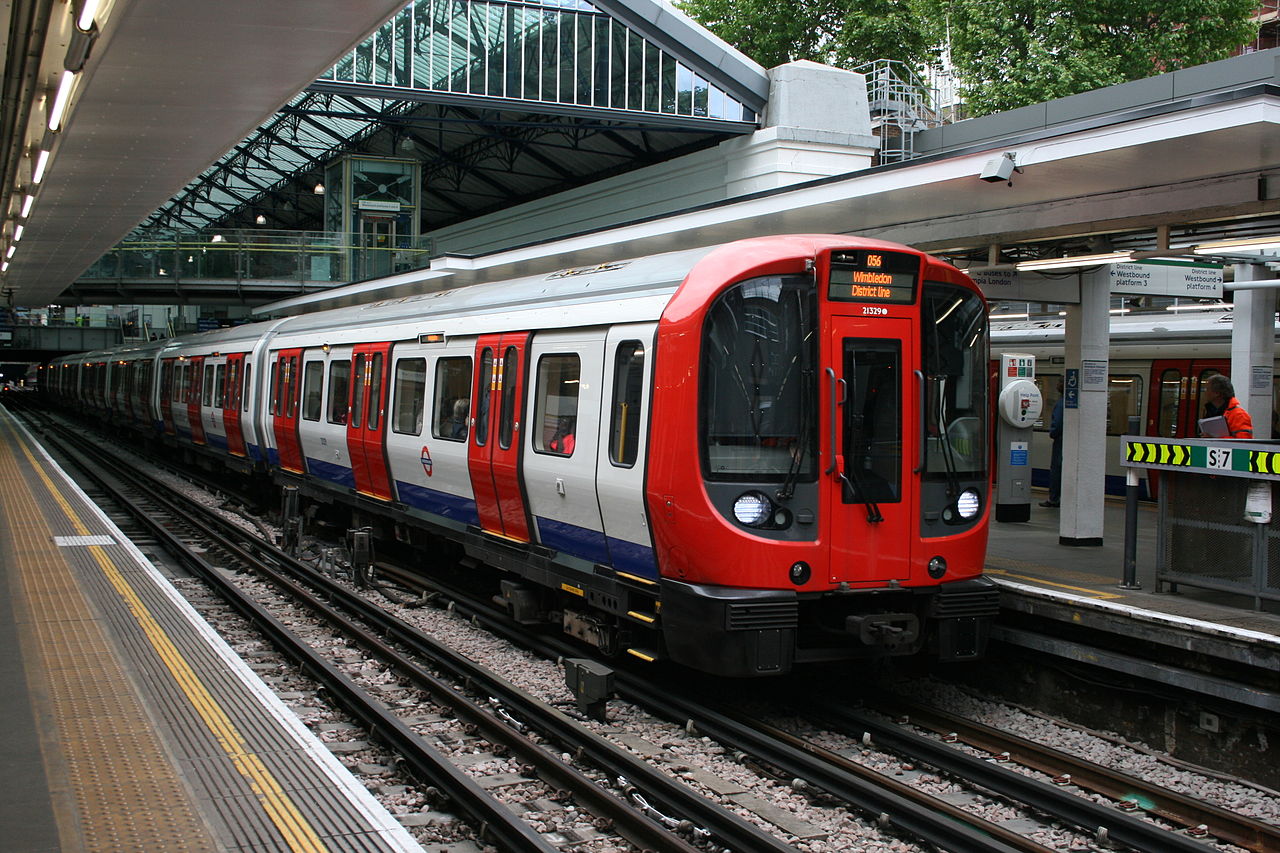


Route and characteristics
The line’s eastern terminus is in Havering at Upminster and, west of central London, it divides into several branches serving destinations such as Ealing Broadway, Richmond and Wimbledon. Much of its central section is shared with the Circle line and other services, so trains often run on the same tracks through the West End and along the Thames. As a sub-surface railway, the District line uses larger tunnels and rolling stock designed for that loading gauge.
History and development
The District line began life in the 19th century as the District Railway, one of the earliest underground railways constructed to relieve surface congestion and serve expanding suburbs. Over decades it was extended, re-routed and electrified in the early 20th century, then absorbed into the modern London Underground network. Many of its stations and alignments reflect Victorian-era urban growth and later 20th-century suburban development.
Stations, services and uses
The District line serves central London hubs and many suburban interchanges, making it important for commuters, shoppers and tourists alike. Notable interchanges and destinations include riverfront and parliamentary areas, museum districts and busy transfer stations. The line supports frequent stopping services and connects with national rail and other Underground lines at several points.
Branches and notable facts
- Eastern terminus: Upminster, in the London Borough of Havering.
- Western branches include routes to Ealing and to Richmond, with other services running toward Wimbledon.
- The District line is coloured green on official maps and shares central tracks with the Circle line.
Despite many modernisations, the line retains historic stations and alignments that trace London’s expansion. Its branching pattern and central role make it a distinctive and busy component of the city's rapid transit network.
Related articles
Author
AlegsaOnline.com District line (London Underground) Leandro Alegsa
URL: https://en.alegsaonline.com/art/27750
Sources
- tfl.gov.uk : "Performance: LU Performance Data Almanac"