
Die Feen (The Fairies): Wagner’s First Completed Opera
Die Feen (The Fairies) is Richard Wagner’s first finished opera, a three-act German libretto based on Carlo Gozzi’s tale. Composed in his youth, it foreshadows themes and techniques he developed later.
Die Feen (The Fairies) is a three-act opera by Richard Wagner with a German libretto prepared by the composer himself. Wagner based the plot on Carlo Gozzi’s fairy tale La donna serpente and translated the story into a romantic, supernatural drama. Although it represents Wagner’s earliest completed stage work, the piece was not presented during his lifetime and has remained outside the standard repertory.
Image gallery
3 Images
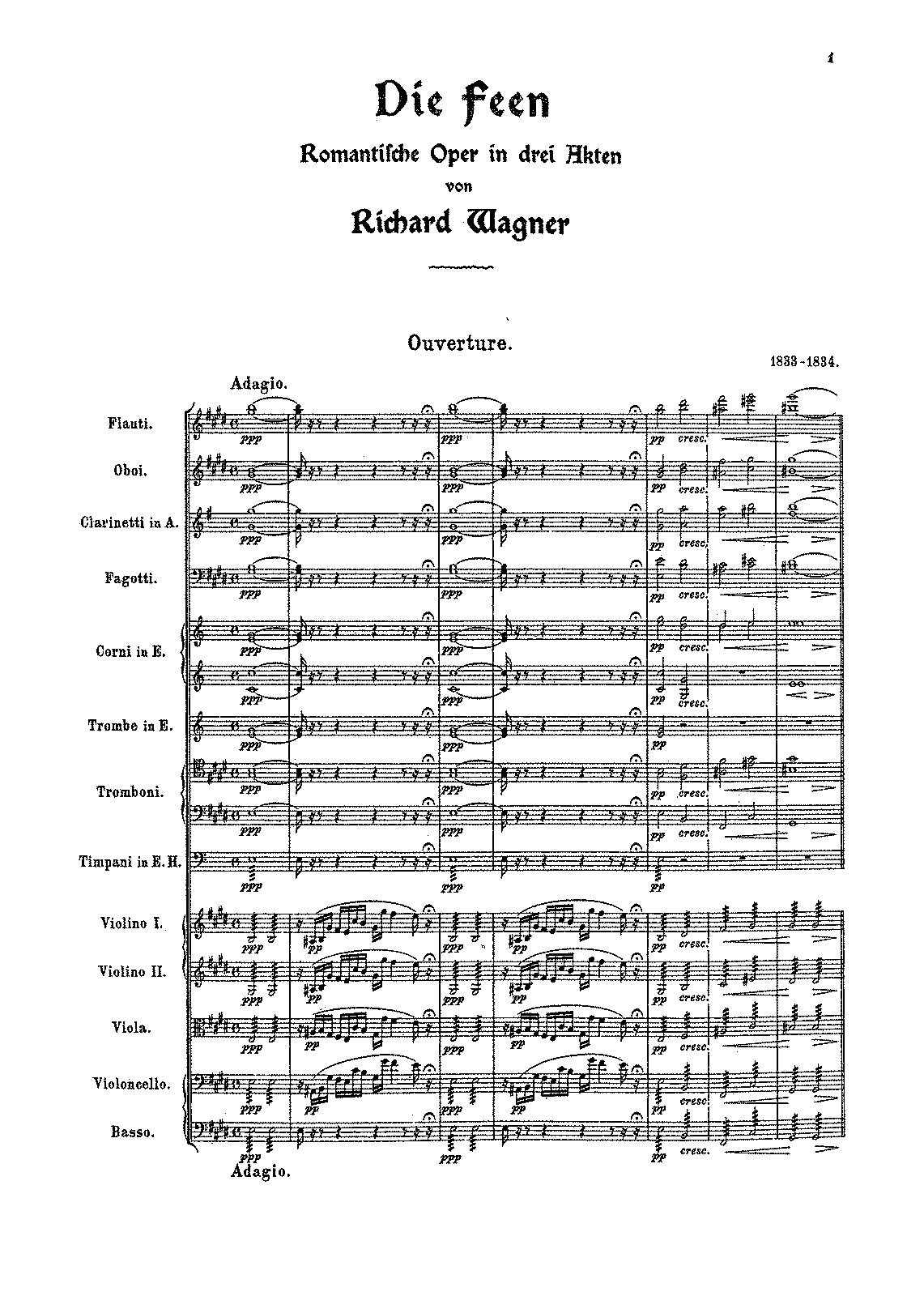

Composition and early history
Wagner composed Die Feen in the early phase of his career, when he was still experimenting with operatic forms and influences from established composers. The work survives as a youthful but ambitious attempt to combine spoken dramatic storytelling and richly textured orchestral writing. The score and the libretto reflect Wagner’s interest in blending mythic material with intense emotional conflicts, a tendency that would shape his later masterpieces.
Musical character and influences
The music of Die Feen shows the imprint of contemporaries who dominated German Romantic opera. Critics and historians detect the influence of earlier composers as well as affinities with the style of Carl Maria von Weber. At the same time, listeners can notice early instances of ideas Wagner would pursue further—dense orchestral textures, recurring motives associated with characters or ideas, and an inclination toward continuous musical flow rather than rigid number structures.
Plot themes and dramatic motifs
At its core Die Feen treats a familiar fairy-tale pattern: a mortal falls in love with a supernatural woman, a condition or prohibition tests their union, and the lovers face separation and trials that must be overcome for a final reconciliation. Themes of secrecy, transformation and redemption run through the drama; the moral or spiritual rescue of one character by another is a motif Wagner revisited repeatedly in his mature operas.
Structure, performance and reception
The opera is cast in three acts and includes an orchestral overture that is occasionally excerpted in concert programs. Though the overture has enjoyed sporadic life in concert, full stagings are rare and the work has never matched the popularity of Wagner’s later operas. Reasons for its infrequency onstage include its youthful unevenness, staging demands of supernatural elements, and the historical weight of Wagner’s subsequent reputation. Nonetheless, the piece is valuable to scholars and performers as a window into the composer’s formative methods and ambitions.
Legacy and notable points
- Die Feen offers early examples of Wagner’s dramatic thinking and tentative use of leitmotif-like techniques.
- The fairy-tale atmosphere anticipates mythic and supernatural subjects he favored later.
- Its posthumous performance history has left it largely marginal, though periodic revivals and recordings invite reassessment.
- The overture, in particular, is sometimes programmed on its own in concert contexts; listeners can encounter it even when the full opera is not staged (overture reference).
For those exploring Wagner’s development, Die Feen is important as a document of his earliest compositional voice. It displays both the debts he owed to the operatic tradition around him and the seeds of the dramatic and musical approaches that would culminate in his later, more famous works. Further reading and resources can be found via general music reference sources and specialist studies of Wagner’s early years (opera overview, composer biography, libretto text, overture notes, influence discussion, Weber and contemporaries).
Related articles
Author
AlegsaOnline.com Die Feen (The Fairies): Wagner’s First Completed Opera Leandro Alegsa
URL: https://en.alegsaonline.com/art/27256