
Diablada — Andean ceremonial dance of devils and archangels
Diablada is a traditional Andean dance from Bolivia, Peru and northern Chile that dramatizes the struggle between good and evil through masks, music and a syncretic mix of Catholic and indigenous imagery.
Overview
The Diablada is a ritual and theatrical dance of the central Andes, widely associated with the Oruro Carnival in Bolivia but also performed in parts of southern Peru and northern Chile. The choreography stages a moral contest in which dancers dressed as devils, demons and monstrous figures confront forces of good led by archangels and saints. The performance blends pre-Columbian beliefs, especially about underworld beings, with Spanish Catholic iconography and local festive customs, and is most often presented during Carnival and important religious festivals.
Image gallery
5 Images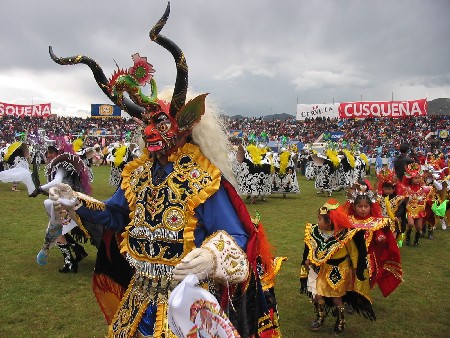



Costume, masks and music
Visual spectacle is central: performers wear highly stylized masks with horns, exaggerated facial features and bright paint, paired with embroidered capes and layered costumes. Costumes are richly ornamented with sequins, metallic trims and symbolic motifs. Music is driven by brass bands, percussion and Andean wind instruments, producing strong marching rhythms that accompany stamping steps and processional movement rather than balletic dance.
Origins and syncretism
Scholars consider the Diablada a syncretic tradition that developed during the colonial era, when indigenous cosmologies—where figures related to the underworld or to a deity often called Supay were important—interacted with Christian accounts of the devil and angels. Over time local communities refashioned these elements into ritual pageantry tied to patronal feasts and Carnival, creating distinct regional variants.
Occasions, regional variants and social role
- Major settings: Carnival processions, the festival of the Virgin of the Candelaria in parts of Peru, and civic and religious fiestas in northern Chile.
- Regional differences: the Bolivian Oruro style is highly ornate and ceremonially central, while Peruvian and Chilean versions may emphasize different steps, instruments or iconography.
- Community function: the dance is performed by troupes and traditional brotherhoods that transmit costume-making, choreography and ritual meaning across generations.
Today the Diablada remains a living tradition: it is preserved in rural and urban communities, staged for religious devotion and also adapted for parades, competitions and tourism. While modern performances can introduce new choreography and theatrical effects, the core dramatic theme—the confrontation between good and evil expressed through hybrid religious and indigenous imagery—continues to serve as a powerful emblem of Andean cultural identity.
Related articles
Author
AlegsaOnline.com Diablada — Andean ceremonial dance of devils and archangels Leandro Alegsa
URL: https://en.alegsaonline.com/art/27075