
Death Wish II (1982 film)
1982 American crime-action sequel starring Charles Bronson as vigilante Paul Kersey, directed by Michael Winner. Relocates the story to Los Angeles; noted for its explicit violence and mixed critical response.
Overview
Death Wish II is a 1982 American crime-action sequel that continues the story of Paul Kersey, a civilian who becomes a vigilante after personal tragedy. Directed by Michael Winner, the film reunited star Charles Bronson with supporting actress Jill Ireland and presents a more direct action approach than the original 1974 picture. The movie was released in early 1982 and became the first direct follow-up in what developed into a multi-film series.
Image gallery
1 Image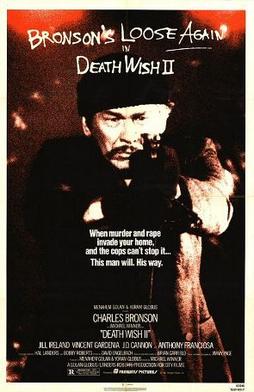
Premise and characters
The narrative follows Kersey as he relocates and confronts violent criminals in a new city setting. Bronson's portrayal emphasizes a taciturn, determined figure driven to retaliation. Jill Ireland appears in a prominent supporting role, and the cast includes several character actors typical of late 1970s and early 1980s genre cinema. The plot is structured around episodic encounters that foreground street-level crime and retribution without focusing on legal or procedural resolutions.
Production and setting
Unlike the original film's New York backdrop, much of Death Wish II is set and filmed in Los Angeles. The change of location and a shift toward straightforward action sequences are frequently noted by observers. Production choices favored stark, at times graphic depictions of violence and a leaner narrative structure intended to appeal to an audience expecting a revenge-driven thriller.
Release, reception and legacy
On release the film received mixed reviews: some viewers regarded it as an effective, mean-spirited action sequel, while critics often objected to its level of violence and simplification of moral themes present in the original. It helped cement Paul Kersey as a recurring antihero in American vigilante cinema and led to further sequels and debate about cinematic portrayals of revenge. For broader context on the series and its place in genre history see series notes.
Further information
For production details, cast lists and contemporary critical commentary consult archival sources and film databases: further reading. The film is often discussed in surveys of 1980s action cinema and in examinations of how mainstream movies treated urban crime and vigilante justice during that period.
Related articles
Author
AlegsaOnline.com Death Wish II (1982 film) Leandro Alegsa
URL: https://en.alegsaonline.com/art/26053