
Datura stramonium (jimson weed): description, chemistry, uses and risks
Datura stramonium, jimson weed, is a toxic annual in the nightshade family known for spiny seed capsules and tropane alkaloids. It has historical medicinal and ritual uses but can cause severe anticholinergic poisoning.
Datura stramonium is an erect annual herb in the Solanaceae (nightshade) family, commonly called jimson weed, thorn apple, devil's trumpet and several other regional names. Native to the Americas, it has been widely introduced and is now found throughout temperate and subtropical regions, particularly on disturbed ground, roadsides, field margins and waste places. The plant is recognizable by large toothed leaves, showy trumpet-shaped flowers and a distinctive prickly seed capsule.
Image gallery
7 Images


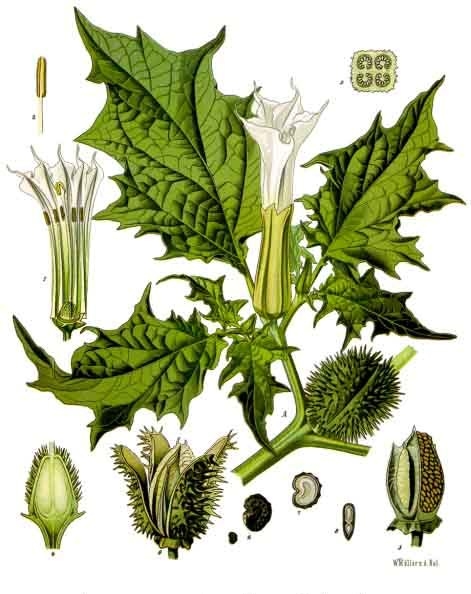
Identification and morphology
Plants typically range from about one to several feet tall with upright, often branched stems that may show green to purplish hues. Leaves are ovate to lanceolate with irregular serrations and a somewhat foul or musty smell when crushed. Flowers are trumpet-shaped, solitary in the leaf axils, and vary in color from white through pale violet; many open in the late afternoon or evening. The fruit is a globose to ovoid capsule covered in stout spines; when ripe it dehisces into several compartments that release numerous small, dark seeds.
Chemistry and toxicology
Datura produces tropane alkaloids, chiefly atropine, scopolamine (hyoscine) and hyoscyamine. These compounds act as antimuscarinic agents that block muscarinic acetylcholine receptors in the peripheral and central nervous systems. Effects are dose-dependent and unpredictable because alkaloid concentrations vary with plant part, age, growing conditions and genetic factors. All parts of the plant can be toxic; seeds and roots are frequently the most concentrated.
Clinical effects and first aid
Poisoning produces a characteristic anticholinergic syndrome: dry mouth, flushed skin, dilated pupils, blurred vision, rapid heart rate, urinary retention, hyperthermia, disorientation, agitation and hallucinations. In severe cases seizures, respiratory depression, cardiac complications or coma can occur. Management requires prompt medical evaluation. Initial measures may include decontamination (if recent ingestion) and supportive care; activated charcoal is sometimes used under professional guidance. Specific pharmacologic reversal, such as physostigmine, is reserved for clinically significant central anticholinergic toxicity and should only be administered by experienced clinicians.
Historical and cultural uses
Various cultures have used Datura preparations for medicinal, ritual and divinatory purposes, typically in small, controlled contexts because of the narrow margin between an active and a toxic dose. Historically the plant has been applied as an analgesic, antispasmodic and sedative agent in traditional systems, and it has been employed as an entheogen in some ceremonial practices. European common names such as "jimson weed" reference reported episodes of intoxication following accidental ingestion in colonial settings.
Ecology, propagation and control
Datura readily colonizes disturbed soils and can persist via a long-lived seed bank; seeds are small, numerous and capable of surviving seasonal cycles before germinating. It serves as a host plant for certain insects but is widely regarded as a weedy or invasive species in agricultural and natural settings because of its prolific seed production. Control methods include manual removal (taking care to avoid contact and ingestion), consistent mowing before seed set, and where appropriate, targeted herbicide application. Gloves and careful disposal of removed material are recommended to reduce risk.
Toxicity prevention and public health
Children and domestic animals are especially vulnerable to accidental ingestion of seeds or plant parts. Public education, clear labeling of cultivated specimens and limiting access can reduce accidental exposures. Anyone suspected of having ingested Datura should seek immediate medical attention rather than attempting home remedies; do not induce vomiting unless instructed by a medical professional or poison control center.
Distinction from related plants
Datura is sometimes confused with other solanaceous genera such as Brugmansia (also called "angel's trumpet"). Key differences include flower orientation and growth habit: Datura flowers are usually upright or spreading and the plants are herbaceous, while Brugmansia species are woody shrubs or small trees with pendulous, hanging flowers. Accurate identification is important for horticulture and toxicology.
Research and medicinal interest
Although tropane alkaloids have established pharmacologic uses (for example, certain derivatives in ophthalmology and motion-sickness medications), whole-plant preparations are unsafe because of unpredictable dosing and serious adverse effects. Scientific interest continues in understanding alkaloid biosynthesis, ecological roles and the potential for safer, standardized derivatives, but any therapeutic application of Datura compounds requires rigorous clinical evaluation and regulation.
Summary
Datura stramonium is a widely distributed, easily recognized plant with significant toxic potential due to tropane alkaloids. It has a long history of cultural and medicinal use but also a record of accidental and intentional poisonings. Awareness, careful handling, and prompt medical care for exposures are essential to reduce harm. Cultivators and the public should treat the species with respect and caution.
Related articles
Author
AlegsaOnline.com Datura stramonium (jimson weed): description, chemistry, uses and risks Leandro Alegsa
URL: https://en.alegsaonline.com/art/25659
Sources
- ars-grin.gov : "Datura stramonium information from NPGS/GRIN"