
Daegu: Inland Metropolis of South Korea — Geography, Economy and Culture
Daegu is a major South Korean city known for its basin geography, textile and medical industries, competitive education, notable districts such as Suseong, and a reputation for political conservatism.
Overview
Daegu (also romanized Taegu) is a major city in southeastern South Korea and the core of a large inland metropolitan area. Home to roughly 2.4 million residents, it functions as a regional center for commerce, education, medicine and transport. For municipal information see the official city site and for national context consult resources on South Korea.
Image gallery
10 Images
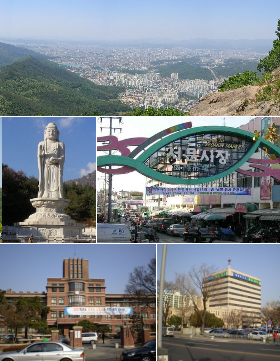




History and development
Daegu's history stretches back centuries as a market and transport hub on routes linking the interior of the Korean peninsula to coastal ports. In the 20th century it developed into an industrial and textile centre, later diversifying into fashion, manufacturing and services. The city has hosted national and international sporting events, including matches during the 2002 FIFA World Cup and the 2011 World Championships in Athletics, and has invested in cultural and urban renewal projects in recent decades.
Geography and climate
Located between the capital Seoul and the port city of Busan, Daegu sits in a basin surrounded by low mountains such as Palgong and Apsan. The topography influences local weather: summers can be notably hot and humid, while winters tend to be drier than coastal areas. Hills and parks offer recreation and viewpoints overlooking the city.
Economy and industry
Traditionally a textile and apparel manufacturing center, Daegu's economy now includes medical services, advanced textiles and small- and medium-sized enterprises in manufacturing and distribution. The city is home to hospitals, clinics and related health-technology firms that have boosted a regional medical cluster. Economic indicators vary by metric and over time; some measures place Daegu below Korea's largest metropolitan areas in per-capita GDP while others note high concentrations of private wealth in particular districts. For published economic data see regional analyses and economic sources.
Education and social profile
Daegu hosts several universities and colleges, including large regional institutions that draw students from across the country. The city is known for competitive secondary education and private academies; some districts, notably Suseong, are recognized for high-performing schools and relatively affluent residential neighborhoods. Comparisons are frequently made between select Daegu school zones and prestigious districts in Seoul; for discussion of school district issues see education resources.
Culture, festivals and landmarks
Daegu maintains a mix of traditional markets and contemporary cultural events. Seomun Market is one of the city's best-known traditional markets, and the Yangnyeongsi herbal medicine market and festival reflect a long local tradition in medicinal herbs. Annual events include music, performing arts and popular festivals—among them the city’s chicken-and-beer festival and musical theatre gatherings—which attract domestic and international visitors. Prominent natural and urban landmarks include Palgong Mountain, Apsan Park, and modern sports facilities such as the Daegu World Cup Stadium.
Transport and infrastructure
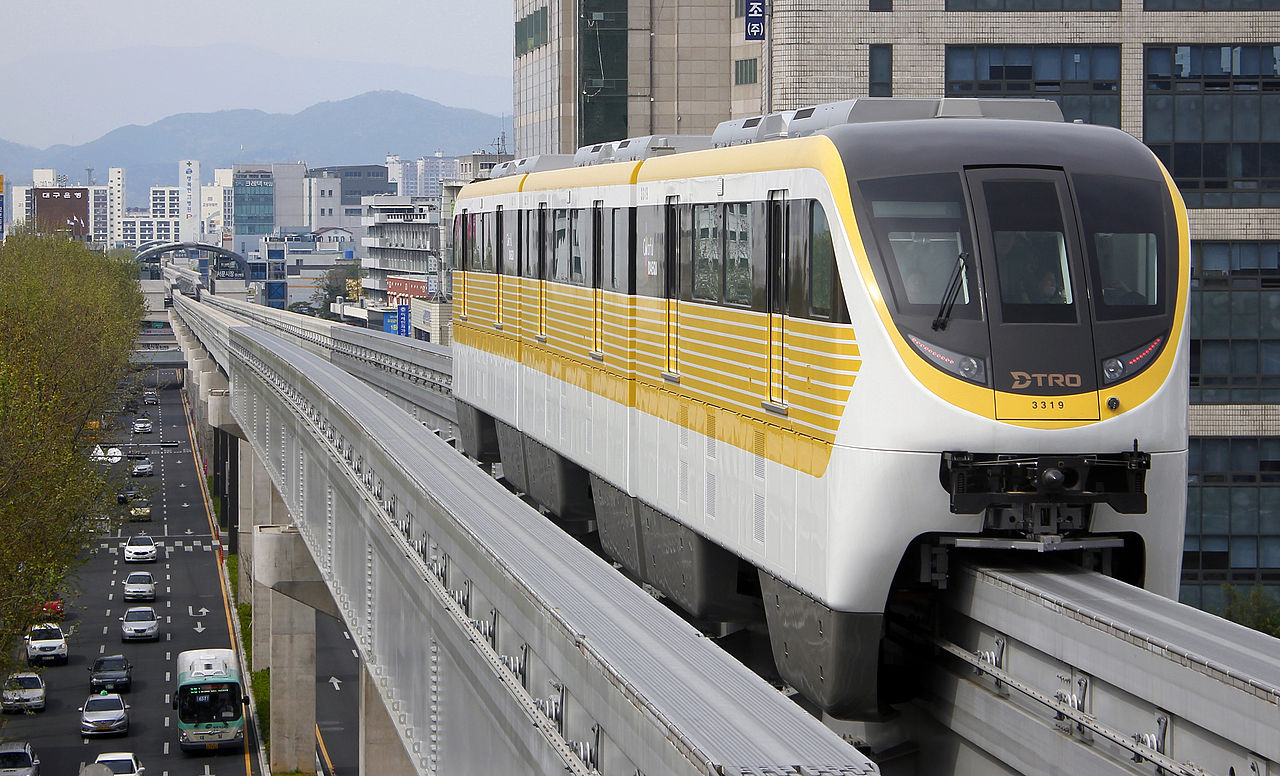
Daegu is served by a regional airport, an urban subway system, intercity rail connections (including high‑speed services at major stations) and a network of expressways. Public transport and road links connect the city with neighbouring provinces and the national transport grid, supporting business travel and tourism.
Demographics, politics and contemporary issues
Daegu’s population and social life reflect both long-standing local traditions and recent urban change. The city is often characterized in national media as relatively conservative in its voting patterns and political culture; such generalizations describe trends rather than every resident. Urban planners and civic groups continue to address challenges such as socio-economic disparity between affluent districts like Suseong and other neighborhoods, aging infrastructure in parts of the city, and ongoing efforts to boost innovation and quality of life.
Practical notes
Visitors should note Daegu’s seasonal climate, its convenient transport links to Seoul and Busan, and the variety of cultural offerings from markets to festivals. For further reading and perspectives on local politics, culture and development see regional summaries and commentaries at political and social resources.
- Key features: basin geography, strong medical and textile sectors, active cultural calendar.
- Notable districts: Suseong (residential and educational hub), traditional market areas and growing business zones.
- Transport: airport, subway, intercity rail and highway connections.
For official municipal services and visitor information consult the city portal and for broader country-level guidance consult sources on South Korea. Additional economic and educational material may be found through economic sources and education resources.
Questions and answers
Q: What is Daegu?
A: Daegu is a city in South Korea.
Q: Where is Daegu located in South Korea?
A: Daegu is located between Seoul and Busan, but it is closer to Busan.
Q: How large is Daegu?
A: Daegu is the fourth largest city in South Korea with a population of about 2.4 million people.
Q: Is Daegu a wealthy city in terms of GDP per capita?
A: No, it is not. Among South Korea's 16 cities and provinces, Daegu is the poorest in terms of GDP per capita 2010 at $18,887 according to the IMF.
Q: How is the wealth disparity within Daegu city?
A: The wealth disparity within the city is wider than many other cities in Korea. For example, Suseong district is one of the wealthiest districts in the nation, while Daegu is the poorest in terms of GDP per capita.
Q: What is Suseong district famous for?
A: Suseong district is renowned for ultracompetitive and mostly gender-segregated public high schools, following closely the School District Eight in Gangnam and Seocho with their performance.
Q: How are the residents of Daegu regarded by other South Koreans?
A: Daegu residents are regarded by all other South Koreans as the widely ultraconservative.
Related articles
Author
AlegsaOnline.com Daegu: Inland Metropolis of South Korea — Geography, Economy and Culture Leandro Alegsa
URL: https://en.alegsaonline.com/art/25058
Sources
- kosis.nso.go.kr : "행정구역(동읍면)별 인구, 가구 및 주택"