
Cytomegalovirus (CMV)
A common herpesvirus (Human Herpesvirus 5) that establishes lifelong latent infection; usually harmless in healthy adults but a major cause of congenital disease and serious illness in immunocompromised people.
Overview
Cytomegalovirus (CMV), also known as Human Herpesvirus 5 (HHV‑5), is an enveloped double‑stranded DNA virus in the Herpesviridae family. Its name reflects the tendency of infected cells to become enlarged; the etymology is often explained by the Greek roots of the words for "cell" and "large"—see etymology. CMV is widespread worldwide: many people acquire the virus in childhood or adulthood and then carry it in a latent form for life. For a concise definition of the general term virus, see linked resource.
Image gallery
3 Images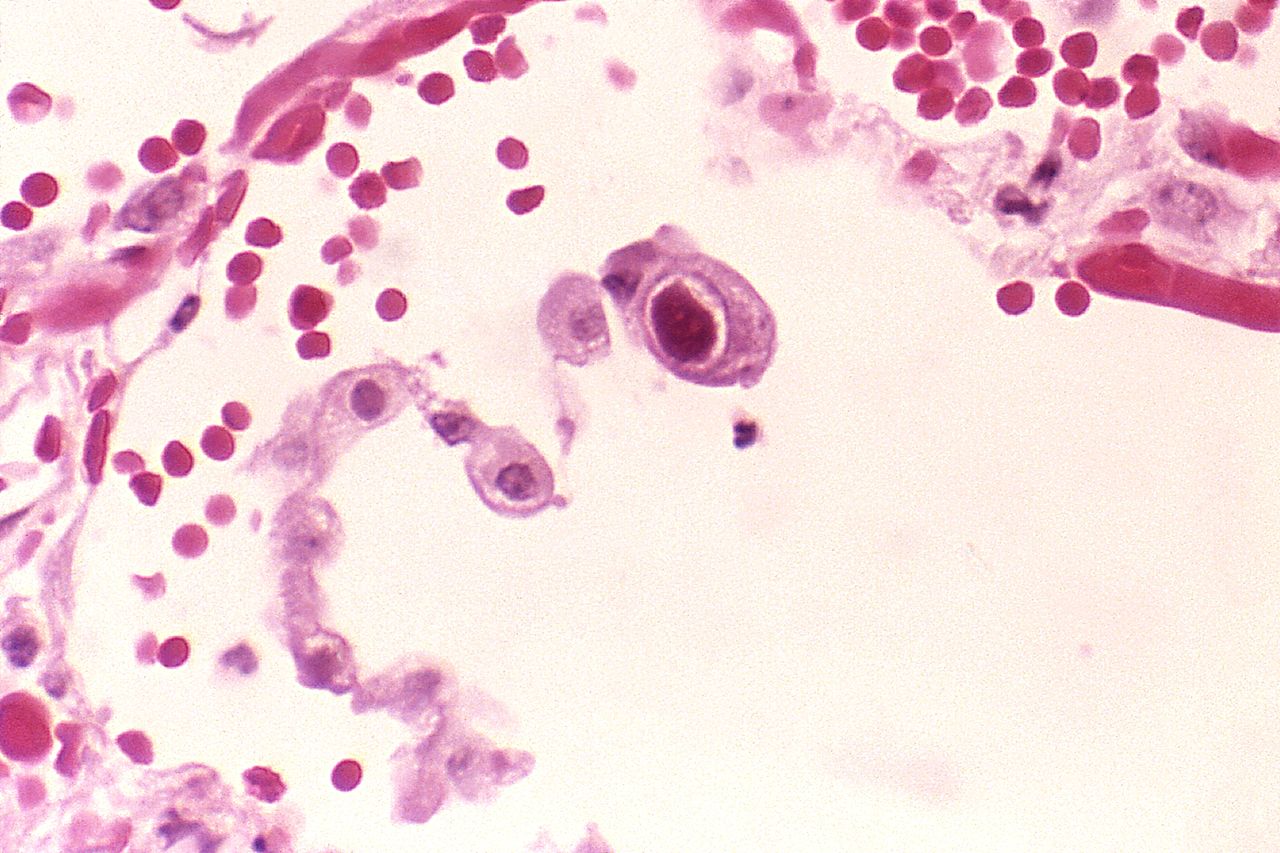


Biology and transmission
CMV belongs to the Betaherpesvirinae subfamily and has a large genome typical of herpesviruses. After initial infection the virus establishes latency in a range of cell types, including monocytes and other cells of the immune system. From these reservoirs it can reactivate later, particularly when the immune system is weakened. Transmission occurs through bodily fluids: saliva, urine, blood, semen, breast milk and organ transplants. Close contact, sexual activity, and exposure to infected infants are common routes.
Clinical significance
In otherwise healthy adults CMV infection is most often asymptomatic or causes a mild, mononucleosis‑like illness with fatigue, fever and swollen glands. In contrast, CMV can cause severe disease in fetuses, newborns and people with impaired immunity. Congenital CMV — when a primary maternal infection or reactivation occurs during pregnancy — is an important infectious cause of sensorineural hearing loss, developmental delay and other neurologic problems in children. In immunocompromised patients (for example, transplant recipients or people with advanced HIV) CMV can produce pneumonia, gastrointestinal ulceration, retinitis and systemic illness.
Diagnosis and management
Laboratory diagnosis relies on detection of the virus or the host immune response. Common methods include PCR to identify viral DNA, viral culture in specialized labs, and serologic tests for CMV‑specific IgM and IgG antibodies to distinguish recent from past infection. Antiviral drugs such as ganciclovir, valganciclovir and foscarnet are used to treat severe or life‑threatening CMV disease, but they do not eradicate latent virus. Management of congenital infection and immunocompromised patients often requires a combination of antiviral therapy and careful clinical monitoring.
Prevention and research
There is no licensed vaccine yet, although several vaccine candidates have been in development for decades because of the virus's impact on newborns and transplant patients. Preventive measures emphasize hygiene (handwashing, avoiding contact with saliva or urine of young children), blood screening for transfusion safety and donor screening in transplantation. Pregnant people at risk may be counseled about exposure reduction and monitored when indicated.
History and notable facts
CMV was recognized as a distinct human pathogen in the mid‑20th century after cellular changes were observed in infected tissues. Since then its role as a common latent infection and as a cause of congenital and opportunistic disease has been well documented. Key distinguishing features of CMV include its capacity for lifelong latency, frequent asymptomatic carriage in the population, and disproportionate effects on fetuses and immunocompromised hosts.
Quick facts and typical presentations
- Typical healthy adult: asymptomatic or mild, flu‑like illness.
- Congenital infection: may cause hearing loss, neurodevelopmental impairment, or be asymptomatic at birth and cause later sequelae.
- Immunocompromised host: risk of retinitis, colitis, pneumonitis, and systemic disease.
Research continues on vaccines and safer antivirals; meanwhile public health efforts focus on screening high‑risk populations, infection control in healthcare settings and education about routes of transmission.
Related articles
Author
AlegsaOnline.com Cytomegalovirus (CMV) Leandro Alegsa
URL: https://en.alegsaonline.com/art/24961