
Cricket ball
A cricket ball is a hard, stitched leather ball used in the sport of cricket. Its weight, size, construction and colour affect play, and different types are specified for Test, limited-overs and other formats.
Overview
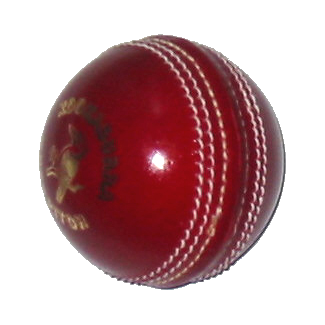
A cricket ball is the specially manufactured, hard ball used in the sport of cricket. Its weight, circumference and construction are regulated by the sport’s laws and playing authorities because those properties affect bounce, pace and how bowlers and batters play. For reference, the standard men's ball weighs between 5.5 and 5.75 ounces (137.5–143.8 g) and measures roughly 8 13/16 to 9 inches (220–225 mm) in circumference.
Image gallery
8 Images




Construction and characteristics
The modern cricket ball has several distinct parts and features that determine its behaviour on the pitch. Typical elements include:
- Core: a cork or composite cylinder forms the centre.
- Winding: layers of string are tightly wound around the core to build mass and stiffness.
- Cover: two hemispheres of leather are fitted over the winding and stitched together along a raised seam.
- Seam: the prominent stitched seam joins the leather sections and gives bowlers a gripping and aerodynamic reference.
- Finish: the outer leather is usually polished and lacquered to a degree that contributes to shine and durability.
Colours, formats and use
Different colours of ball are used depending on playing conditions and match format. Traditionally red balls are used in daytime multi-day matches, white balls are used in limited-overs games under floodlights and pink balls have been introduced for day–night multi-day fixtures to improve visibility. Many manufacturers produce balls to meet competition standards; see a general reference on the ball itself via cricket ball details and governing rules via playing regulations.
How the ball affects play
The condition of the ball—its shine, roughness on one side and the state of the seam—has a major impact on bowling. Bowlers use the seam and differential surface polish to generate movement in the air (swing) or off the pitch (seam movement), while spin bowlers use the seam and grip to make the ball turn after pitching. Teams manage the ball’s condition deliberately by polishing one side and roughing the other to influence these effects.
History, manufacture and maintenance
Cricket balls evolved from simple leather-covered cores hand-stitched by craftsmen to the industrially produced, standardised items used today. Typical balls are hand-stitched with multiple rows of thread around the seam, and a final coat of lacquer is applied for durability and shape retention. Players and umpires may replace a ball if it becomes damaged; in multi-day cricket a new ball may be taken after a specified number of overs as set by competition rules. For distinctions between red, white and pink balls and their intended uses see more on coloured-ball cricket via coloured balls and manufacturing guidance at ball manufacture.
Notable facts and variations
There are variations for junior and women's cricket: these use slightly different sizes and weights determined by the sport’s authorities. Different manufacturers may produce balls with subtle performance differences that can influence seam prominence, durability or how long a ball retains its shine. For official standards and further reading consult an authoritative resource on laws and equipment equipment standards.
Related articles
Author
AlegsaOnline.com Cricket ball Leandro Alegsa
URL: https://en.alegsaonline.com/art/24174