
COVID-19 pandemic in the Netherlands
Overview of the emergence, public-health response, social and economic impacts, and later developments of the COVID-19 pandemic in the Netherlands.
Overview
The global COVID-19 pandemic — caused by the SARS-CoV-2 virus — reached the Netherlands when the first confirmed case was reported on 27 February 2020. The outbreak led to successive waves of infection, driven by changes in social behaviour and the emergence of new viral variants. National authorities and regional health services adapted policies over time to limit transmission, protect vulnerable populations, and maintain healthcare capacity. For general background on the disease see COVID-19, and for information specific to the country see Netherlands.
Image gallery
10 Images




Public health response
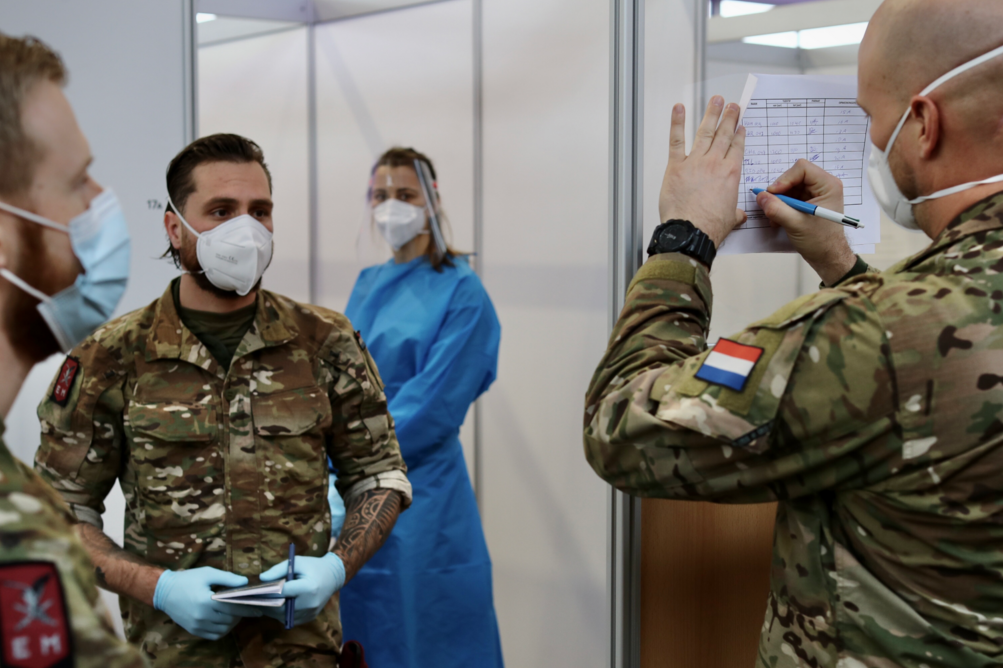
Dutch authorities implemented a mix of measures that evolved across the pandemic. Early measures included social distancing, limits on gatherings, closures of schools and many businesses, and restrictions on travel. The government described its initial package as an "intelligent lockdown," aiming to balance infection control with economic and social impacts.
- Testing, contact tracing and isolation were scaled up and coordinated by municipal health services (GGD).
- Digital exposure notification tools and the CoronaMelder app were deployed to support tracing efforts.
- At times stricter actions such as curfews or partial lockdowns were introduced in response to rising hospital pressure.
Healthcare and vulnerable settings
Hospitals and intensive care units experienced surges that required redistribution of patients across regions and, at peak moments, increased reliance on emergency capacity. Care homes and long-term care facilities were especially affected early in the pandemic; protecting residents became a central priority of testing and vaccination strategies. The crisis prompted reviews of pandemic preparedness and capacity for critical care.
Vaccination and later phases
Vaccination campaigns began once vaccines received authorization, with priority given to older people, health and care workers, and other high‑risk groups. Over subsequent months booster doses and adjustments to eligibility aimed to maintain protection as immunity waned and variants emerged. As population immunity rose and treatments improved, policy emphasis shifted toward targeted protection, surveillance and managing COVID-19 as an endemic respiratory infection.
Social and economic impacts
The pandemic altered daily life, accelerating remote work, changing educational delivery, and disrupting cultural and hospitality sectors. Economic support measures were introduced to limit job losses and business failures. Public discussion frequently balanced public-health objectives with civil liberties and economic concerns, and the response generated political debate and social protest at various times.
Legacy and notable facts
The COVID-19 experience in the Netherlands led to renewed attention to public-health infrastructure, digital tracing tools, and the resilience of care systems. Lessons reported include the importance of testing capacity, timely communication, and protecting long‑term care residents. Ongoing surveillance, vaccination updates and healthcare planning continue to shape responses to future respiratory threats.
Related articles
Author
AlegsaOnline.com COVID-19 pandemic in the Netherlands Leandro Alegsa
URL: https://en.alegsaonline.com/art/23831
Sources
- rivm.nl : "Current information about the novel coronavirus (COVID-19)"
- dutchnews.nl : "Coronavirus in the Netherlands: the questions you want answered"
- rivm.nl : "Patiënt met nieuw coronavirus overleden"
- volkskrant.nl : "Are we doing enough? RIVM boss Van Dissel: 'As soon as something indicates infection in the family: isolation'"
- nltimes.nl : "Coronavirus cases surge to 3,631 as 30 more Dutch patients die"
- nrc.nl : "Groeiende kritiek experts op gebrek aan testen in Nederland"