
Alexander Fleming — discoverer of penicillin
Scottish bacteriologist Alexander Fleming (1881–1955) discovered penicillin in 1928; his observation and follow-up research initiated the antibiotic era and earned a shared 1945 Nobel Prize.
Overview
Alexander Fleming (1881–1955) was a Scottish physician and researcher whose careful observation of a mould contaminant led to the discovery of penicillin, the first widely used antibiotic. Trained in medicine and laboratory science, Fleming combined clinical experience with laboratory work to study bacterial infections and agents that could inhibit them. His finding in 1928 marked the beginning of a new era in the treatment of infectious disease.
Image gallery
10 Images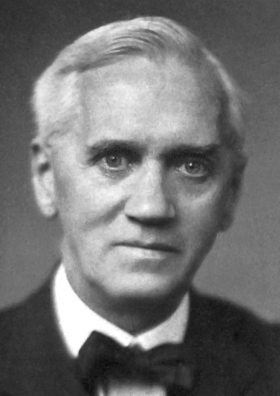



Early life and education
Fleming was born in Scotland and later moved to London to pursue medical training. He developed laboratory skills and an interest in microbes while working at St Mary's Hospital. His scientific background encompassed disciplines sometimes described as biology and pharmacology, reflecting a career at the interface of basic science and clinical application.
Military service and influence
During World War I Fleming served as a captain in the Royal Army Medical Corps. He treated wounded soldiers and witnessed the devastating effects of infected wounds and sepsis, experiences that shaped his later interest in antibacterial agents. The high toll of post‑injury infections impressed on him the need for more effective treatments.
Discovery of penicillin
In 1928 Fleming observed that a culture plate contaminated with a blue‑green mould showed a zone in which staphylococci would not grow. He identified the mould as a species of Penicillium and showed that it produced a substance capable of killing a range of bacteria. Fleming named the active agent penicillin and published his observations and preliminary experiments demonstrating antibacterial activity in cultured bacteria.
Development, collaboration and impact
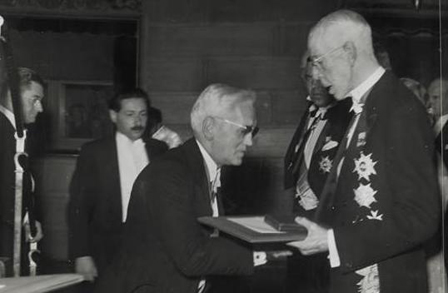
Fleming's initial work established the significance of penicillin, but further chemical extraction, purification and clinical testing were advanced later by other scientists. Notably, Howard Florey and Ernst Chain developed methods to purify and produce penicillin in sufficient quantities for clinical use, work for which they shared the 1945 Nobel Prize in Physiology or Medicine with Fleming. The combined efforts of researchers and industry transformed penicillin from a laboratory observation into a life‑saving therapeutic.
- Penicillin inaugurated the era of modern antibiotics and dramatically reduced deaths from wound infections and bacterial diseases.
- During and after World War II, penicillin played a major role in treating infected wounds and systemic infections.
- Fleming continued to study antibacterial agents and cautioned against improper use, anticipating later concerns about antimicrobial resistance.
Later life, honors and legacy
Fleming received numerous honors for his contributions to medicine, including the shared Nobel Prize. He remained engaged with research and public discussion until his death from a heart attack in London in 1955 and was buried in St. Paul's Cathedral. His career exemplified how clinical insight and laboratory observation can produce breakthroughs with profound public‑health consequences.
Scientific context and cautionary notes
Fleming's work was rooted in observational technique and experimental follow‑up typical of early twentieth‑century bacteriology. The mould (Penicillium) he observed inhibited bacterial growth, and while the initial finding is often described as accidental, it required skill to recognize and investigate. Fleming also warned about overuse: he noted that incomplete dosing and indiscriminate application could promote resistant organisms, a concern that remains central to antibiotic stewardship.
Fleming's personal experiences with infected wounds in wartime, his scientific training in biology and pharmacology, and his work at St Mary's contributed to a legacy that reshaped twentieth‑century medicine. For more detailed accounts, consult biographies, collections of primary papers and institutional histories that document his life, experiments and the subsequent development of antibiotics. More on Fleming and historical studies provide context for his discovery and its global impact.
Related articles
Author
AlegsaOnline.com Alexander Fleming — discoverer of penicillin Leandro Alegsa
URL: https://en.alegsaonline.com/art/2354