
County Down (Northern Ireland)
County Down is a historic county in eastern Northern Ireland, noted for the Mourne Mountains, Strangford Lough, coastal towns, archaeological sites and links to early Christian tradition.
County Down (Irish: Contae an Dúin) lies on the eastern side of Northern Ireland. It is one of the six counties that form Northern Ireland and also one of the nine counties of the ancient province of Ulster. The county covers about 2,448 km² and has had population estimates in recent decades ranging from several hundred thousand to about half a million (population estimates). The traditional county town is Downpatrick and the largest town is Bangor, each serving as local centres for administration, history and commerce.
Image gallery
5 Images


Geography and landscape
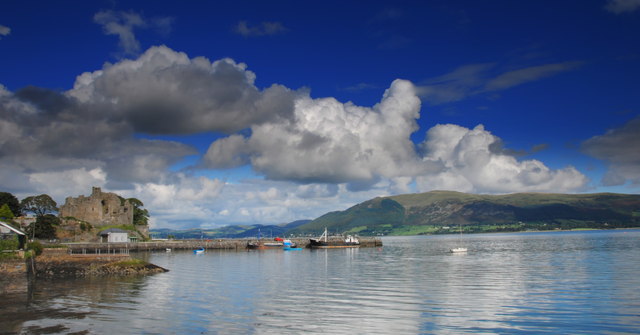
Down contains a variety of landscapes in a relatively compact area. To the south the granite summits of the Mourne Mountains rise sharply from lowland and coastline; Slieve Donard is the county's highest peak and a well-known walking destination. The eastern shore is indented by Strangford Lough, a large sea lough with strong tidal currents, islands and rich birdlife. The Ards Peninsula and the coastal plain around Belfast Lough contrast with the gently rolling farmland of Lecale and small estuaries that support fishing and nature conservation.
History and heritage
The area now called County Down has a long human history, with evidence of prehistoric settlement and a sequence of medieval Gaelic and later Anglo-Norman lordships. Downpatrick is traditionally associated with Saint Patrick and contains ecclesiastical sites and medieval ruins that attract visitors and researchers. Historic estates and gardens, including some well-known houses with designed landscapes, reflect later periods of landed culture and changing land use.
Economy, transport and towns
The county economy includes agriculture, fisheries, light manufacturing, services and a significant tourism sector. Many communities have commuter links to the Belfast conurbation, and road and rail connections serve market towns and coastal resorts. Ports and ferry services operate around Strangford Lough and on the Ards Peninsula, supporting local trade and visitor access. Typical towns besides Bangor and Downpatrick include Newtownards, Portaferry and Kilkeel, each with local markets, harbours or cultural attractions.
Nature, recreation and conservation
Strangford Lough and parts of the Mournes are important for wildlife, with protected habitats for birds, marine life and upland flora. The county offers a wide range of outdoor recreation: hillwalking in the Mournes, sailing and birdwatching on the lough, and coastal trails. Conservation efforts balance visitor access with safeguarding ecological and archaeological features.
Places of interest
- Mourne Mountains — extensive upland scenery and walking routes around Slieve Donard.
- Strangford Lough — tidal waters, wildlife, islands and boating; ferry crossings link the Ards to the peninsula.
- Downpatrick and Inch Abbey — historic and ecclesiastical sites associated with early Christian tradition.
- Historic houses and gardens — several established estates open to visitors, showcasing architecture and designed landscapes.
- Coastal towns such as Bangor and Portaferry — maritime heritage, promenades and local festivals.
Administratively, County Down's functions are now shared across modern district councils and regional bodies, but the county identity remains important in culture, sport and tourism. For further visitor information, maps and official statistics see local government and tourism guidance (Irish name and cultural resources, regional context, Northern Ireland services, provincial history, area details, population data, town and visitor information).
Related articles
Author
AlegsaOnline.com County Down (Northern Ireland) Leandro Alegsa
URL: https://en.alegsaonline.com/art/23519