
Cosmological Argument
Philosophical arguments that infer a first cause or necessary being to explain why anything exists, including major variants, history, and common objections.
The cosmological argument is a family of philosophical claims that seek to explain why there is something rather than nothing by appealing to a first cause, necessary being, or grounding principle. Rather than starting from divine attributes, these arguments begin with the existence, change, contingency, or motion found in the world and infer that this set of facts requires an ultimate explanation. Proponents typically maintain that an infinite regress of causes is impossible or implausible, and so the chain of explanation must terminate in a being or reality that itself does not require a cause.
Image gallery
3 Images
Basic structure and key concepts
Most cosmological arguments share a few core ideas: that things in the universe are contingent (they might not have existed), that causation or dependence demands explanations, and that explanatory chains cannot extend indefinitely without failing to explain why the chain exists at all. From these premises one can argue for a first cause, a necessary being, or a sustaining ground of being. Advocates often link these conclusions to the traditional concept of God, though the argument itself is intended to be metaphysical rather than necessarily theological.
- Contingency: Some things exist but could have failed to exist; there must be an explanation for their existence.
- Necessary being: To avoid infinite regress, there must be an entity whose existence is non-contingent.
- First cause: Every effect has a cause, so tracing causes back leads to an uncaused first cause.
- Kalam variant: Focuses on the beginning of the universe to argue that the universe has a cause.
Historical development
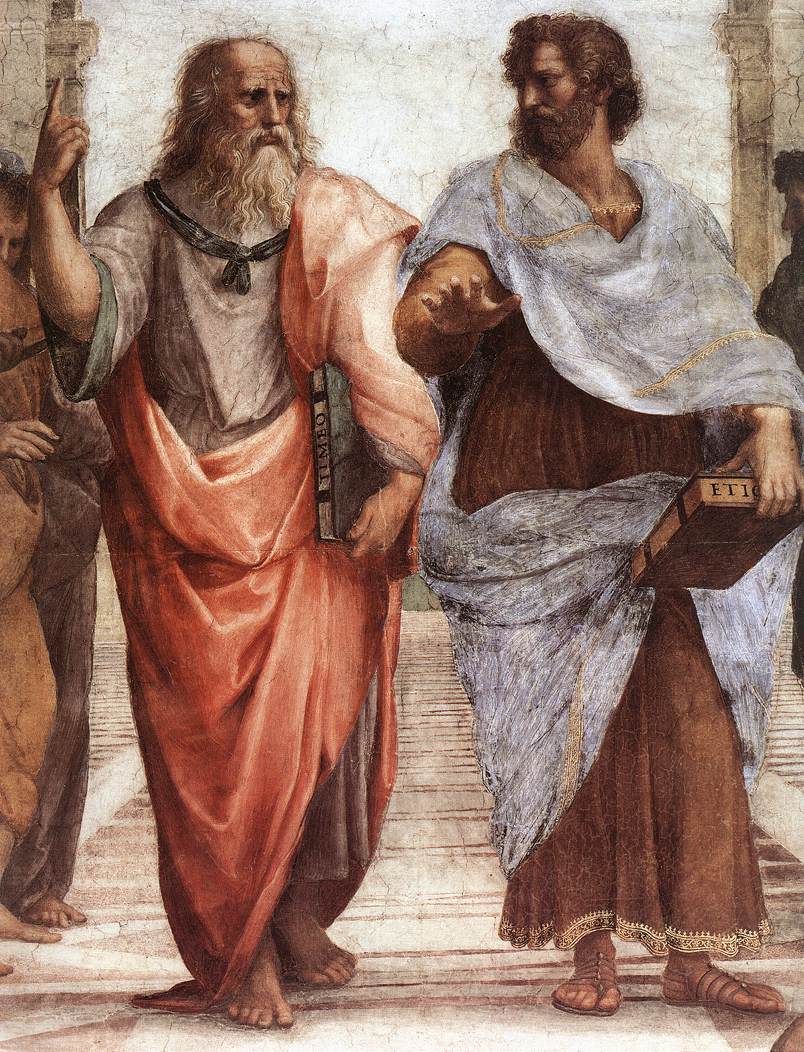
Versions of cosmological reasoning appear in ancient and medieval philosophy. Aristotle argued for an unmoved mover that explains motion without itself being moved. In medieval Christian thought Thomas Aquinas formulated several 'ways' to argue for a first cause and distinguishing between dependent and independent beings; his writings are a formative expression of contingency-style arguments. Later thinkers such as Leibniz advanced the Principle of Sufficient Reason, holding that every fact requires an explanation, which he used to argue for a necessary being. In the modern period the Kalam cosmological argument, rooted in medieval Islamic thought, has been revived by contemporary defenders who emphasize the universe's beginning.
Notable variants
- Contingency-based argument: Argues from the existence of contingent beings to a necessary being that grounds them.
- First Cause/Unmoved Mover: Traces causal chains and posits an uncaused cause to terminate the regress.
- Kalam cosmological argument: Contends that because the universe began to exist, it must have a cause for that beginning.
Support and typical uses
Advocates use cosmological arguments to provide a rational basis for belief in a transcendent explanation for existence. Historically these arguments played a central role in natural theology, aiming to show that the concept of God is compatible with reason and experience. In contemporary philosophy of religion, cosmological arguments are presented as part of a cumulative case for theism alongside moral, teleological, and experiential considerations. Readers can find introductions and more detailed discussions through general resources about cosmological reasoning and related thinkers such as Thomas Aquinas and theologians who discuss the first cause concept (God as conclusion in classical presentations).
Common objections and counterpoints
- Challenge to the principle of universal causation: Philosophers such as Hume questioned whether cause and effect apply beyond observed regularities, and modern physics presents phenomena (e.g., quantum events) that are sometimes described as lacking determinate causes.
- Infinite regress is not impossible: Some critics argue that an infinite causal series can be coherent, so positing a terminator is unnecessary.
- Special pleading: Critics ask why the first cause itself should be exempt from explanation or causation.
- Category error or fallacy of composition: Inferring a cause for the whole universe from causes within the universe may conflate metaphysical categories.
Respondents offer replies: defenders refine what 'cause' means at the cosmological scale, appeal to metaphysical principles like the Principle of Sufficient Reason, or claim that scientific descriptions of cosmic origins presuppose metaphysical explanation. Debates continue about whether cosmological reasoning establishes a personal deity, a metaphysical grounding, or merely a feature of deeper physical reality.
The cosmological argument remains influential because it addresses the most basic metaphysical question—why anything exists at all—and connects philosophical inquiry with scientific cosmology and theological reflection. For further reading and primary sources, readers may consult general overviews and specific works linked to historical figures and contemporary proponents via introductory resources such as discussions of supernatural first causes, surveys of the universe in cosmological argument literature, and treatments of the argument's claim that something must explain the cause of existence.
Related articles
Author
AlegsaOnline.com Cosmological Argument Leandro Alegsa
URL: https://en.alegsaonline.com/art/23311