
Cornett (cornetto, zink) — early lip-vibrated wind instrument
A lip‑vibrated wind instrument of the Medieval–Baroque eras, the cornett (cornetto or zink) is a wooden, curved or straight instrument with finger holes and a small cup mouthpiece used in sacred and secular ensembles.
The cornett, also called cornetto or zink, is an early lip‑vibrated wind instrument prominent from the late Medieval through the Baroque periods. Although it is often discussed alongside brass instruments because the player uses a small cup‑shaped mouthpiece, the cornett is typically made from wood and has a series of finger holes like a recorder. Its distinctive sound and agility made it a staple of both church choirs and courtly bands for several centuries. For general context on historical wind instruments see historical wind instruments.
Image gallery
10 Images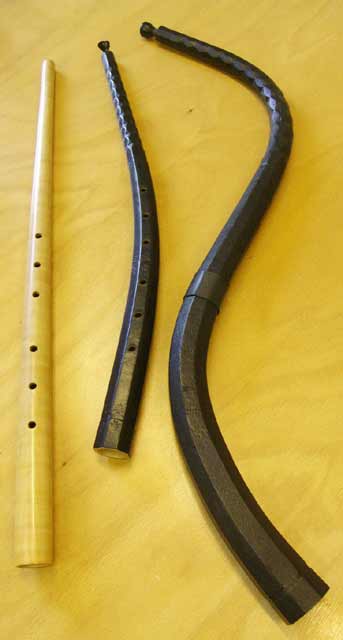


Construction and characteristics
Cornetts were most commonly carved from a single length of wood, hollowed and then covered in leather, though some examples were made from several pieces glued together. Two principal shapes exist: the curved or "cornetto curvo," which often ends in an animal‑like carved head, and the straight, or "cornetto diritto." The instrument has finger holes like a woodwind but is sounded by buzzing the lips into a small, shallow cup mouthpiece similar to that of a trumpet. This hybrid design produced a bright, flexible tone capable of quick articulation and expressive nuance.
How it was played
- Players used lip vibration to excite the air column, shaping pitch with finger holes rather than a long slide or valves.
- Skilled cornettists could execute rapid passagework and dynamic shading, often matching the human voice in timbre.
- It is frequently paired with the sacbut (an early trombone) and voices in ensemble settings.
Historical manuals and surviving instruments indicate that teaching and technique emphasized matching intonation and blending with singers. For modern reconstructions and performance practice, see resources such as period performance guides and instrument makers documented by specialists in early music.
History and repertoire
The cornett appears in iconography and music from the 15th to the 17th centuries and was used across Europe, especially in Italy, Germany and England. Composers of the Renaissance and early Baroque wrote parts for cornetts in polyphonic sacred music and for instrumental consorts. Its use declined in the later Baroque as keyed woodwinds and valved brass gained prominence, but the instrument remained in some liturgical traditions longer than in secular ensembles.
Today the cornett is revived by early‑music specialists, appearing in historically informed performances and recordings. Collections of original parts and modern editions make its repertoire accessible, and contemporary makers produce reconstructions based on museum examples. To learn more about surviving examples and modern makers, consult specialist catalogues and conservational studies available through early‑music networks and instrument collections dedicated to historical instruments.
Related articles
Author
AlegsaOnline.com Cornett (cornetto, zink) — early lip-vibrated wind instrument Leandro Alegsa
URL: https://en.alegsaonline.com/art/23149