
Cooperton, Oklahoma
Cooperton is a small rural town in Kiowa County, Oklahoma, United States, known for its open prairie setting and agricultural character within a sparsely populated region.
Overview
Cooperton is a small town in Kiowa County in the southwestern part of Oklahoma, in the United States. It is one of many compact rural communities in the region that serve as local centers for farming, ranching and the social life of surrounding countryside. Like similar towns in the Southern Plains, Cooperton is characterized by low population density and wide-open landscapes.
Image gallery
2 Images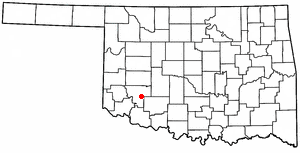

Setting and geography
The town sits within an agricultural and ranching landscape of mixed grass prairie and cropland. Its immediate surroundings are typically flat to gently rolling, with long sightlines and a climate that features hot summers and cool winters. Residents rely on nearby larger towns and county services for many utilities, medical care and shopping, while Cooperton retains a distinct small-town identity.
History and development
Cooperton emerged as a local settlement in the era when small towns were founded across Oklahoma to support farming, ranching and local trade. Its development reflects broader patterns in the region: settlement tied to land use, periodic population change, and the consolidation of services such as schools and businesses over the 20th century. Specific founding dates and local milestones are recorded in county archives and local histories held by regional repositories.
Community and economy
The local economy centers on agriculture—cattle, hay and field crops are typical economic activities in this part of Oklahoma. The town itself contains a small number of residences and limited commercial or civic buildings; many residents work on nearby farms or commute to larger towns for employment. Community life in Cooperton, as in many small towns, often revolves around schools (historically), churches, volunteer organizations and seasonal events.
Notable features and context
- Cooperton exemplifies the small incorporated towns that dot the Southern Plains and contribute to regional rural culture.
- Its open landscapes make the area relevant for outdoor activities such as hunting and birdwatching, and for agricultural production.
- Because of its size, Cooperton illustrates broader trends in rural America, including population shifts and service centralization.
Where to learn more
For official data and local records consult county or state resources, historical societies and regional planning agencies. Local histories and county archives provide the most detailed accounts of Cooperton’s founding, demographic changes and civic life; many such sources are available through municipal, county or state libraries and historical associations.
Related articles
Author
AlegsaOnline.com Cooperton, Oklahoma Leandro Alegsa
URL: https://en.alegsaonline.com/art/22911
Sources
- www2.census.gov : "2018 U.S. Gazetteer Files"
- census.gov : "Population and Housing Unit Estimates"
- census.gov : "U.S. Census website"
- geonames.usgs.gov : "US Board on Geographic Names"