
Convair B-36 Peacemaker — Cold War Strategic Bomber
The Convair B-36 Peacemaker was a U.S. strategic bomber of the early Cold War, noted for exceptional range, large bomb capacity, and a distinctive combination of piston and jet propulsion.
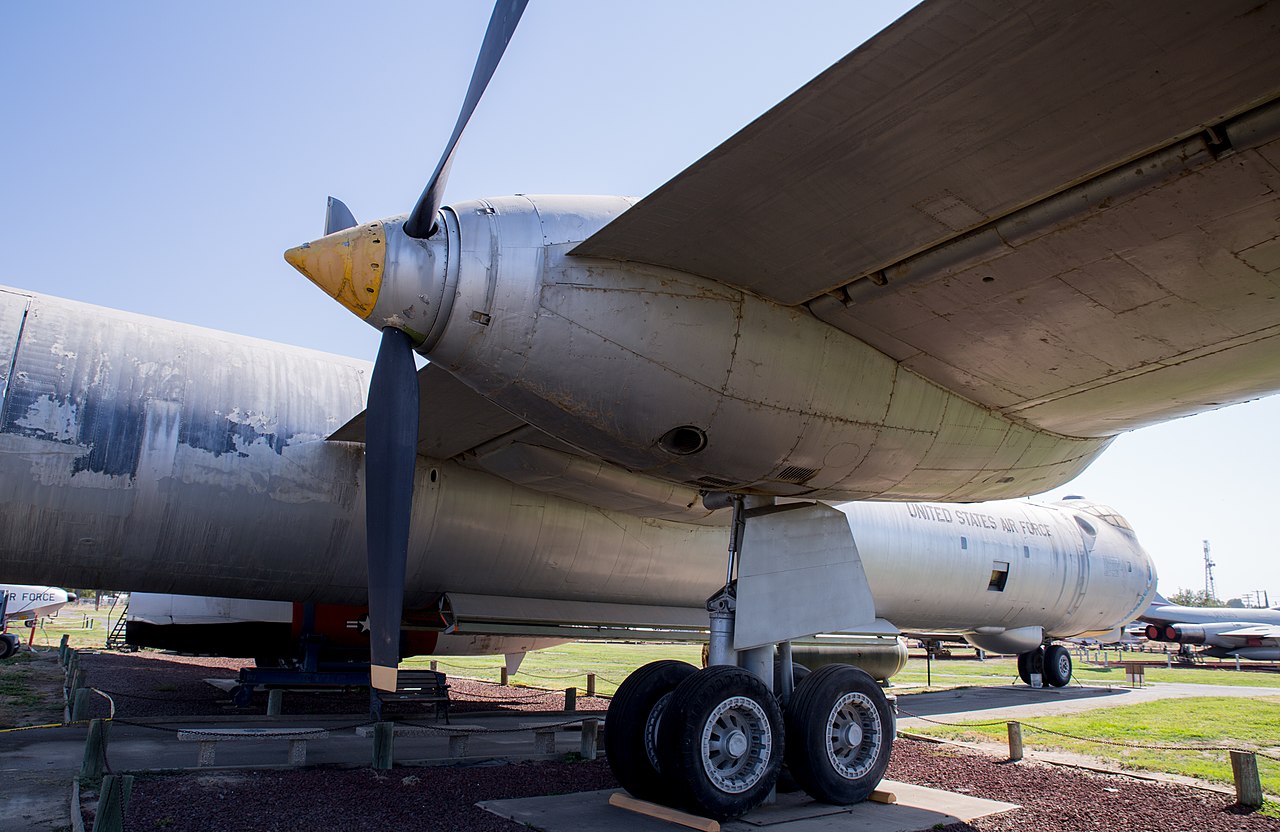
The Convair B-36 Peacemaker was a large strategic bomber developed for the United States in the closing years of World War II and deployed during the early Cold War. Built by Convair for the United States Air Force, the B-36 provided a long-range nuclear and conventional strike capability at a time when intercontinental reach and endurance were primary strategic needs.
Image gallery
10 Images



Overview and role
As a part of America's Strategic Air Command deterrent force, the B-36 served mainly as a stand-off platform able to reach distant targets without en route refueling. It never saw combat but played a prominent role as a visible element of deterrence, and it later appeared in popular culture, including the film Strategic Air Command. By the late 1950s advances in jet technology and aerial refueling made earlier piston-driven long-range designs less central.
Design and key characteristics
The B-36 was notable for several distinctive features. It had one of the largest wingspans of any combat aircraft of its era and used an unusual propulsion arrangement: multiple large piston engines driving pusher propellers, with later production variants adding turbojet engines for extra speed during takeoff and dash segments. The aircraft carried extensive defensive armament in multiple turrets and accommodated a large crew to operate navigation, bombing, and defensive systems.
- Range and endurance: Designed for very long missions, it could remain airborne for extended periods, making intercontinental flights without refueling possible.
- Payload: The B-36 could carry very large conventional or nuclear loads, including single heavy bombs weighing more than 20,000 pounds in some mission profiles.
- Propulsion: Combination of piston-driven propellers and, on later models, auxiliary turbojet pods for improved performance.
Development and operational history
Development began during World War II to provide America with strategic reach; production and testing continued into the late 1940s. The type entered service in the late 1940s and was a mainstay of SAC through the 1950s. It was gradually phased out as faster, higher-flying jet bombers and advances in aerial refueling and missile technology took over strategic roles. By the end of the 1950s the B-36 had been retired from front-line service.
Importance and notable facts
The Peacemaker was a landmark in aviation for its scale and for demonstrating long-range strategic bombing concepts during the early nuclear age. Although it never dropped bombs in wartime, its existence influenced strategic planning and aircraft design in the Cold War. The B-36 remains notable to historians and aviation enthusiasts as a symbol of early intercontinental strategic air power.
Variants and technical refinements throughout its production run addressed performance, defensive systems, and the addition of jet power. Today the B-36 is remembered both for its engineering ambition and for its role as a deterrent during a pivotal period of twentieth-century military history.
Related articles
Author
AlegsaOnline.com Convair B-36 Peacemaker — Cold War Strategic Bomber Leandro Alegsa
URL: https://en.alegsaonline.com/art/22816