
Constituent (linguistics): units of syntax
A constituent is a word or group of words that functions as a single unit within a sentence’s hierarchical structure. This article explains types, tests, history, and relevance in grammar and parsing.
Overview
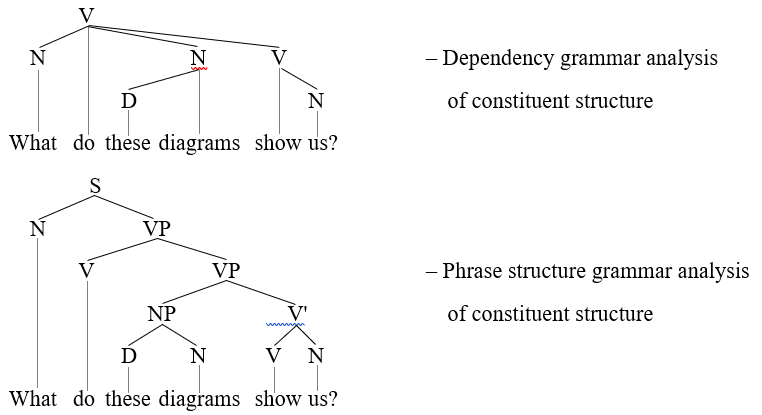
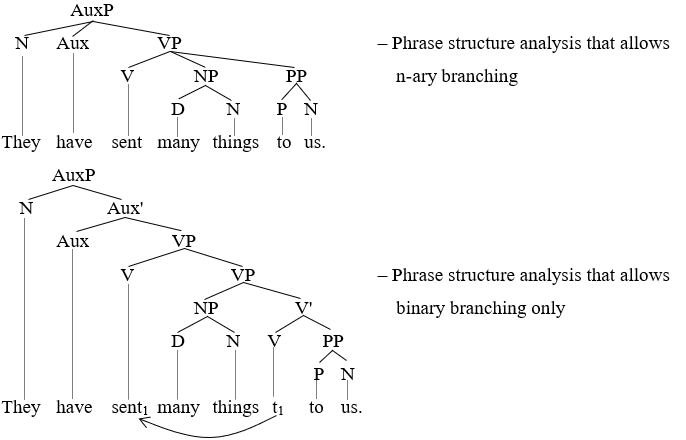
In syntax, a constituent is any word or combination of words that behaves as a single unit within a sentence’s hierarchical organization. The idea is central to syntactic analysis: constituents are the nodes that make up phrase structure trees and other representations of how sentences are built. Recognizing constituents helps describe how words combine into larger expressions and how those expressions relate to each other in a sentence.
Image gallery
3 Images
Types and basic features
Common types of constituents include headed phrases such as noun phrases (NP), verb phrases (VP), adjective phrases (AP), and entire clauses. These phrases often function as subjects, objects, modifiers or complements. A subordinate clause can itself be a constituent of a larger clause, for example when a clause serves as the object of a verb. Constituents are organized in a hierarchical structure, so smaller constituents group into larger ones.
How to identify constituents
Linguists use several informal tests to determine whether a string of words is a constituent. No single test is decisive in every language, but together they provide strong evidence:
- Substitution: replace the candidate with a single word or pro-form. E.g. "I didn't hear what you said" → "I didn't hear it." If substitution yields a grammatical sentence, the replaced string is likely a constituent.
- Movement: move the string to a different position in the sentence (fronting, topicalization). If the moved sentence remains grammatical, the string often forms a unit.
- Coordination: join the candidate with a similar unit using "and" or "or". Two items that can be coordinated usually belong to the same syntactic category.
- Clefting or focusing: place the candidate in a focused slot ("It is X that ..."). If this yields a grammatical cleft, X is likely a constituent.
History and theoretical context
The constituent concept appears in traditional grammar and was formalized in modern phrase-structure approaches. Generative grammar introduced precise rules and tree representations to capture constituency, and later frameworks like X-bar theory refined how heads and phrases are related. Other frameworks, such as dependency grammar, emphasize relations between words and sometimes treat constituency differently; comparing these viewpoints is a major topic in syntactic theory.
Uses, importance, and limitations
Identifying constituents is essential for teaching grammar, building treebanks, and designing parsers in natural language processing. Constituency tests also reveal cross-linguistic differences: some languages permit discontinuous constituents or have freer word order that complicates simple tests. Ambiguity is another practical concern—different tree structures can assign different constituency groupings to the same sentence, and empirical evidence (semantics, prosody, corpus data) helps decide among alternatives.
Notable distinctions
Constituency should be distinguished from related notions such as grammatical function (subject vs. object) and semantic roles (agent vs. patient). A constituent identifies structural unity; grammatical function names the syntactic role that unit plays. Understanding this distinction clarifies many analyses in both theoretical and applied linguistics.
Author
AlegsaOnline.com Constituent (linguistics): units of syntax Leandro Alegsa
URL: https://en.alegsaonline.com/art/22666