
Hierarchy: systems of ranking and organizing people or things
An overview of hierarchies: definition, structure, origins, common examples, uses, and important distinctions in social, technical, and biological systems.
Overview
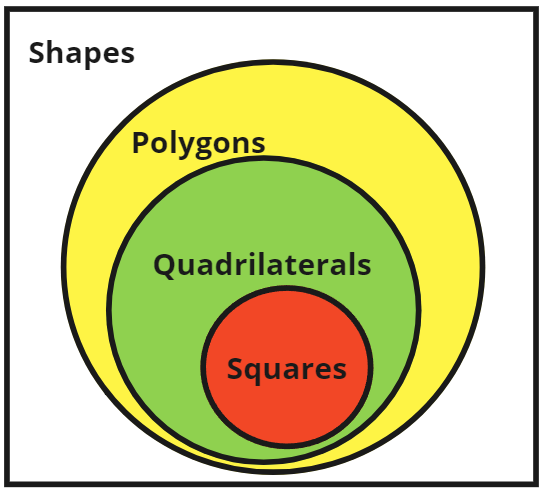
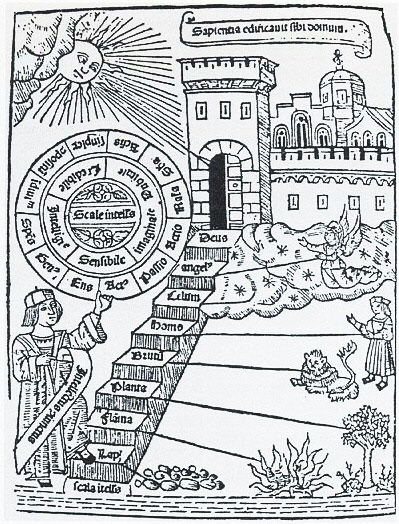
A hierarchy is an arrangement in which elements are ranked above, below or at the same level as others. It organizes roles, responsibilities or categories so that authority, influence or precedence flows in a predictable direction. The concept traces to social institutions and natural classifications and is widely used to describe organizational charts, command chains, taxonomies and layered technical systems. For an etymological note see Greek origin.
Image gallery
5 Images

Key characteristics
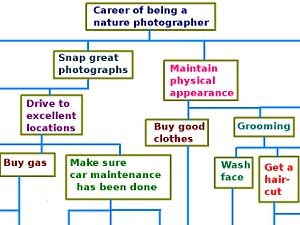
Typical features of a hierarchical system include a top or root node, intermediate levels, and base elements. Each unit normally reports to, or is subordinate to, a parent element and may oversee several child elements, producing a pyramidal or tree-like shape. Hierarchies often define who makes decisions and who implements them, how information flows, and how resources are allocated. Visual metaphors such as a pyramid are common. Variations include strict chains of command, federated hierarchies with semi-autonomous branches, and flat or matrix structures that mix reporting lines.
History and origin of the idea
The practice of ranking people and things predates modern institutions. Religious, military and royal systems formalized rank early, giving rise to titles and fixed precedence. In modern times, bureaucratic organizations and corporations refined hierarchical roles to coordinate large groups; see a simple corporate structure with executives and staff in many accounts (corporate chart, companies). Military hierarchies still exemplify clear rank progression: generals, colonels, sergeants and privates are familiar examples (executive, workers, armies, general, colonel, corporal, sergeant, private).
Examples and uses
Hierarchies appear in many domains. In politics, electoral systems and party structures create layers of representation and decision-making; democratic processes aim to make leadership choices accountable while preserving order (democracy, elections, leaders, competing networks, political parties, civil conflict). In authoritarian systems, a single center of power enforces decisions and suppresses opposition (dictatorship, exile, imprisonment).
- Biology: taxonomic ranks (kingdom, phylum, class, etc.) order life forms.
- Computing: file systems and class inheritance create layered control and reuse.
- Organizations: reporting lines determine budgets, promotions and accountability.
Distinctions and notable considerations
Hierarchy is not synonymous with oppression, though power imbalances can be abused. Systems with clear rank can enhance coordination and clarify responsibility, but they may also slow decision-making and reduce local autonomy. Many modern organizations experiment with flatter or networked designs to increase flexibility; others preserve hierarchy to maintain order and scale. The terms authority and power describe different aspects of where influence lies within any hierarchy (authority, power).
Understanding hierarchy involves recognizing its form (tree, pyramid, matrix), its function (control, classification, coordination), and its limits (rigidity, inequality). For further reading on specific manifestations—administrative charts, military ranks, political systems and technical architectures—follow the embedded references above to consult topic-specific resources.
Questions and answers
Q: What is a hierarchy?
A: A hierarchy is a way of ranking and organizing things or people. It is like a pyramid structure where each part of the hierarchy is below some other part, and it is used to decide who can make decisions and who must comply with those decisions.
Q: What are some examples of hierarchies?
A: Examples of hierarchies include the structure of a company, an army, democracy, and dictatorship. In each example, those higher up in the hierarchy have more authority and power than those lower down.
Q: How does democracy work as a hierarchy?
A: In democracy, people are educated on issues then vote in an election to choose leaders or in a referendum to choose one option from several. Competing power networks form political parties that offer only one leader or one option to simplify decision-making. After the decision has been made they typically do not fight it but wait for the next election.
Q: How does dictatorship work as a hierarchy?
A: In dictatorship, one powerful person makes all decisions which everyone else must follow or face exile, imprisonment, or death - even if the decision isn't very important since refusal to follow it is seen as challenging the power structure itself. There is only one power network and all others must become part of it or fight it. Civil war is much more common in dictatorships than democracies.
Q: What happens when someone refuses to follow decisions made by those higher up in the hierarchy?
A: In democracies those who refuse to follow decisions typically don't fight them but wait for another election; however in dictatorships anyone who refuses will be exiled, imprisoned, or killed since refusal challenges the power structure itself.
Related articles
Author
AlegsaOnline.com Hierarchy: systems of ranking and organizing people or things Leandro Alegsa
URL: https://en.alegsaonline.com/art/44078